Gutscheinbedingungen

**Gültig nur für Bestellungen an die Wunsch-Poststation bis 10.06.2026 auf Spielzeug, Schreibwaren, Filme, Geschenke & Trends, Musik, tolino eReader & Zubehör, Hörbücher und Hörbuch-Downloads (außer Abo), nicht preisgebundene Bücher und Kalender online auf thalia.at und in der Thalia App. Einzelne Artikel können ausgeschlossen sein. Aufgrund der Buchpreisbindung sind deutschsprachige Bücher und eBooks ausgenommen. Zusätzlich ausgenommen sind preisgebundene Artikel, Abos & Flatrates, eBooks, Games, Geschenkkarten/-boxen, Shelfies, Software, Zeitschriften sowie einzelne Artikel von tonies®. Pro Einkauf einmal einlösbar. Kein Click & Collect möglich. Keine Barauszahlung. Nicht kombinierbar mit anderen Aktionen und Gutscheinen. Gutschein wird auf max. 500€ Bestellwert angerechnet. Nicht gültig für Versandkosten und Services.

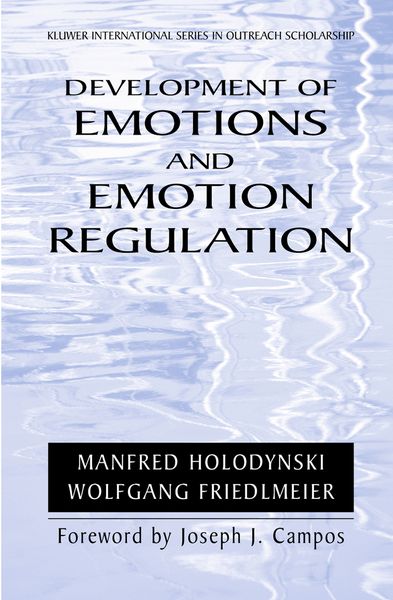
  • Produktbild: Development of Emotions and Emotion Regulation
  • Produktbild: Development of Emotions and Emotion Regulation
Band 8 - 11%

Development of Emotions and Emotion Regulation

11% sparen

96,99 € UVP 109,99 €

inkl. gesetzl. MwSt., Versandkostenfrei


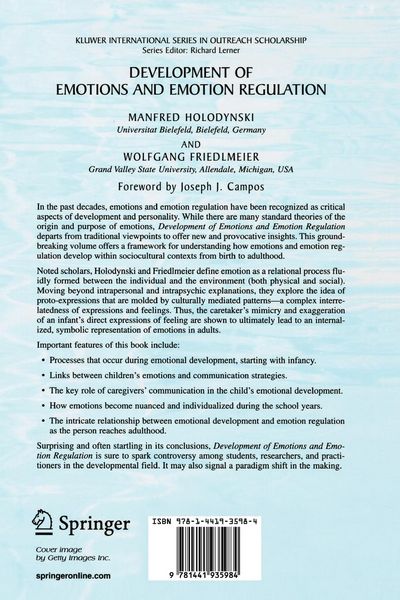
Beschreibung

Produktdetails

Einband

Taschenbuch

Erscheinungsdatum

24.11.2010

Verlag

Springer Us

Seitenzahl

265

Maße (L/B/H)

23,5/15,5/1,6 cm

Gewicht

441 g

Auflage

Softcover reprint of hardcover 1st ed. 2005

Übersetzt von

J. Harrow

Sprache

Englisch

ISBN

978-1-4419-3598-4

Beschreibung

Rezension

From the reviews:


"I have already adapted some of the book’s content into my undergraduate Developmental Psychology class … . This is an important book and one that will engage many others involved in developmental psychology (broadly) and emotional developmental and regulation (specifically). … a very nice book that will be read and reread by scholars interested in emotional development. … will become an important book for those interested in emotional development, especially as it relates to cultural impact." (F. Richard Ferraro, PsycCRITIQUES, August, 2006)

Produktdetails

Einband

Taschenbuch

Erscheinungsdatum

24.11.2010

Verlag

Springer Us

Seitenzahl

265

Maße (L/B/H)

23,5/15,5/1,6 cm

Gewicht

441 g

Auflage

Softcover reprint of hardcover 1st ed. 2005

Übersetzt von

J. Harrow

Sprache

Englisch

ISBN

978-1-4419-3598-4

Herstelleradresse

Springer-Verlag KG
Sachsenplatz 4-6
1201 Wien
AT

Email: ProductSafety@springernature.com

Kundinnen und Kunden meinen

0 Bewertungen

Informationen zu Bewertungen

Zur Abgabe einer Bewertung ist eine Anmeldung im Konto notwendig. Die Authentizität der Bewertungen wird von uns nicht überprüft. Wir behalten uns vor, Bewertungstexte, die unseren Richtlinien widersprechen, entsprechend zu kürzen oder zu löschen.

Die Bewertungen sind nach Format, Anzahl Sterne und Datum sortiert.

Verfassen Sie die erste Bewertung zu diesem Artikel

Helfen Sie anderen Kund*innen durch Ihre Meinung

Kundinnen und Kunden meinen

0 Bewertungen filtern

  • Produktbild: Development of Emotions and Emotion Regulation
  • Produktbild: Development of Emotions and Emotion Regulation
  • 1. Introduction      1.1 Perspectives on Emotional Development      1.2 A Preliminary Summary      1.3 The Design of This Book
    2. Research paradigms on emotion      2.1 The Structuralist Paradigm: Emotion as a Specific Psychological State           2.1.1 Premises          2.1.2 Empirical Findings          2.1.3 Discussion          2.1.4 Conclusions for an Integrative Approach
         2.2 The Functionalist Paradigm: Emotion as a Psychological Function           2.2.1 Premises          2.2.2 Empirical Findings          2.2.3 Discussion          2.2.4 Conclusions for an Integrative Approach          2.2.5 Differentiation of Levels of Emotional Processing and Emotion Regulation          2.2.6 Conclusions for an Integrative Approach
         2.3 The Dynamic-Systems Paradigm: Emotion as an Evolving System           2.3.1 Premises          2.3.2 Empirical Findings          2.3.3 Discussion          2.3.4 Conclusions for an Integrative Approach
         2.4 The Sociocultural Paradigm: Emotion as a Co-Constructed Psychological Function           2.4.1 Premises          2.4.2 Empirical Findings          2.4.3 Discussion          2.4.4 Conclusions for an Integrative Approach
    3. The Internalization Model of emotional development     3.1 Emotion as a Functional Psychological System           3.1.1 The Components of an Emotion System          3.1.2 The Interaction of the Components as a Feedback Model          3.1.3 Support for a Feedback Model of Feeling          3.1.4 The Internalization of Feedback From Expressive and Body Reactions
         3.2 From Interpersonal to Intrapersonal Regulation
         3.3 The Transformation of Expressive Reactions Into Signs           3.3.1 What Is an Expression Sign (Semantics)?           3.3.2 What Are Expression Signs For (Pragmatics)?           3.3.3 How Do New Expression Signs Emerge?           3.3.4 How Can Expression Signs Be Combined (Syntax)?           3.3.5 Summary
         3.4 Levels of Action Regulation          3.4.1 Actions and Volitional Regulation          3.4.2 Operations and Automatic Regulation          3.4.3 Emotions and Emotional Action Regulation          3.4.4 "Meta-Actions" and Reflective Regulation
    4. Ontogenesis of emotions and their regulation      4.1 Preadaptation of Infant and Caregiver           4.1.1 The Emotions of the Neonate          4.1.2 Sensorimotor Abilities for Engaging in Interpersonal Regulation          4.1.3 Intuitive Parenting          4.1.4 Summary
         4.2 The Emergence of Sign-Mediated Regulation in Infancy          4.2.1 The Emergence of Sign-Mediated Emotion Systems          4.2.2 The Emergence of Volitional Action Regulation          4.2.3 Precursors of Reflective Emotion Regulation in Infants and Toddlers          4.2.4 Interindividual Differences          4.2.5 Summary
         4.3 The Emergence of Intrapersonal Regulation Levels in Toddlers and Preschoolers          4.3.1 The Emergence of Intrapersonal Emotional Action Regulation          4.3.2 The Emergence of an Intrapersonal Volitional Action Regulation          4.3.3 The Emergence of an Intrapersonal Reflective Emotion Regulation          4.3.4 Summary
         4.4 The Internalization of Mental Means of Regulation From Age 6 Onward           4.4.1 The Internalization of Expression Signs          4.4.2 The Internalization of Speech Signs          4.4.3 The Development of Symbol Comprehension in Reflective Emotion Regulation
         4.5 Mental Emotions and Adult Emotion Regulation          4.5.1 Support for Miniaturized and Internalized Expression Signs          4.5.2 The Development of Reflective Emotion Regulation     4.6 Summary
    5. Culture and emotional development     5.1 How far are emotions culturally shaped?           5.1.1 Culture, Artifacts, and Psychological Development          5.1.2 A Reconstruction of the Phylogenesis of Emotions          5.1.3 Ethnotheories as Culture-Specific Patterns for Interpreting Emotional Phenomena     5.2 Emotional Development in the Cultural Context          5.2.1 Preadaptation of Infant and Caregiver as a Universal Baseline          5.2.2 The Emergence of Sign-Mediated Emotion Systems          5.2.3 The Emergence of the Intrapsychological Regulation of Emotion          5.2.4 The Internalization of Expression Signs     5.3 Summary and Outlook