Gutscheinbedingungen

**Gültig am 28.06.2026 auf Spielzeug, Schreibwaren, Filme, Geschenke & Trends, Musik, tolino eReader & Zubehör, Hörbücher und Hörbuch-Downloads (außer Abo), nicht preisgebundene Bücher und Kalender online auf thalia.at und in der Thalia App. Einzelne Artikel können ausgeschlossen sein. Aufgrund der Buchpreisbindung sind deutschsprachige Bücher und eBooks ausgenommen. Zusätzlich ausgenommen sind preisgebundene Artikel, Abos & Flatrates, eBooks, Games, Geschenkkarten/-boxen, Shelfies, Software, Zeitschriften sowie einzelne Artikel von tonies®. Pro Einkauf einmal einlösbar. Click & Collect nur bei Onlinevorabzahlung möglich. Keine Barauszahlung. Nicht kombinierbar mit anderen Aktionen und Gutscheinen. Gutschein wird auf max. 500€ Bestellwert angerechnet. Nicht gültig für Versandkosten und Services.

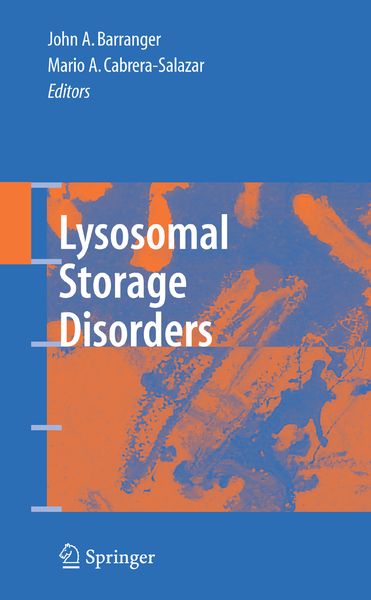
  • Produktbild: Lysosomal Storage Disorders
  • Produktbild: Lysosomal Storage Disorders

Lysosomal Storage Disorders

159,99 €

inkl. gesetzl. MwSt., Versandkostenfrei


Beschreibung

Produktdetails

Einband

Taschenbuch

Erscheinungsdatum

04.11.2010

Herausgeber

John A. Barranger + weitere

Verlag

Springer Us

Seitenzahl

564

Maße (L/B/H)

23,5/15,5/3,2 cm

Gewicht

872 g

Auflage

Softcover reprint of hardcover 1st ed. 2007

Sprache

Englisch

ISBN

978-1-4419-4366-8

Beschreibung

Rezension

From the reviews:


"The authors have brought together an excellent group of contributors to provide an introduction to lysosomal storage disorders (LSDs). … It is oriented to serve individuals working in the field of LSDs, but it also would provide a good base of knowledge for graduate students, medical residents, or clinical genetics physicians who wish to update their understanding of the lysosome pathology and function. … With this unique book, the authors have provided a well thought out source of information on lysosomal disorders." (Luis F. Escobar, Doody’s Review Service, July, 2009)

Portrait

John A. Barranger, M.D., Ph.D., is a tenured professor in the departments of human genetics, molecular genetics and biochemistry, and pediatrics at the University of Pittsburgh.
He is also director of the Human Gene Therapy Applications Laboratory, the Center for the Study and Treatment of Jewish Genetic Diseases, and the Comprehensive Gaucher Disease Treatment Center. Additionally, he is co-director of the Human Gene Therapy Center.
Previously, Dr. Barranger was a clinical associate at the National Institutes of Health (NIH), where, from 1976 to 1978, he served in the clinical investigations and therapeutics section, Developmental and Metabolic Neurology Branch (DMNB), National Institute of Neurological and Communicative Disorders and Stroke. He ultimately became chief of the molecular and medical genetics section of the DMNB and associate branch chief. Dr. Barranger received a doctorate and medical degree from the University of Southern California Los Angeles, and completed an internship and residency in pediatrics at the University of Minnesota.
Dr. Barranger has devoted his professional career to the study of inherited metabolic diseases, particularly lysosomal storage disorders. His research interests include biochemical and molecular genetics, enzyme therapy, gene transfer, and models of genetic disease. As a result of his investigation of the structure of glucocerebrosidase and receptors on macrophages, Dr. Barranger developed successful enzyme replacement therapy for Gaucher disease, an inherited, potentially lethal lysosomal disorder that affects more than 10,000 people in the United States.
This therapy received Food and Drug Administration approval in 1991 and serves as a treatment model for more than 50 related lysosomal storage disorders.
Currently, Dr. Barranger is focused on developing models of inherited diseases to study their pathobiology and treatment by enzyme and gene therapy.Included among Dr Barranger's honors are the March of Dimes Health Career Award, United States Public Health Service Commendation Medal, Arthur S. Flemming Award and the Scientific Achievement Award of the National Gaucher Foundation.
In addition to consulting for government and industry, Dr Barranger is a member of numerous professional organizations, including the American Society of Biochemistry and Molecular Biology, American Society of Human Genetics, Society for Inherited Metabolic Disorders, and the Society for Pediatric Research.
 
Mario A. Cabrera-Salazar, MD is a Staff Scientist at Genzyme Corporation in Framingham. MA. He is involved in the development of enzymatic and gene therapies for lysosomal storage disorders and for neurodegenerative diseases in the department of Genetic Disease Science.

Produktdetails

Einband

Taschenbuch

Erscheinungsdatum

04.11.2010

Herausgeber

Verlag

Springer Us

Seitenzahl

564

Maße (L/B/H)

23,5/15,5/3,2 cm

Gewicht

872 g

Auflage

Softcover reprint of hardcover 1st ed. 2007

Sprache

Englisch

ISBN

978-1-4419-4366-8

Herstelleradresse

Springer-Verlag KG
Sachsenplatz 4-6
1201 Wien
AT

Email: ProductSafety@springernature.com

Kundinnen und Kunden meinen

0 Bewertungen

Informationen zu Bewertungen

Zur Abgabe einer Bewertung ist eine Anmeldung im Konto notwendig. Die Authentizität der Bewertungen wird von uns nicht überprüft. Wir behalten uns vor, Bewertungstexte, die unseren Richtlinien widersprechen, entsprechend zu kürzen oder zu löschen.

Die Bewertungen sind nach Format, Anzahl Sterne und Datum sortiert.

Verfassen Sie die erste Bewertung zu diesem Artikel

Helfen Sie anderen Kund*innen durch Ihre Meinung

Kundinnen und Kunden meinen

0 Bewertungen filtern

  • Produktbild: Lysosomal Storage Disorders
  • Produktbild: Lysosomal Storage Disorders
  • From Lysosomes to Storage Diseases and Back: A Personal Reminiscence.- Lysosomal Biogenesis and Disease.- The Concept of Treatment in Lysosomal Storage Diseases.- Complex Lipid Catabolism.- Retroviral Vectors for Gene Therapy.- Adenovirus in Gene Therapy.- Setting Back the Clock: Adenoviral-Mediated Gene Therapy for Lysosomal Storage Disorders.- Adeno-Associated Viral-Mediated Gene Therapy of Lysosomal Storage Disorders.- Herpes Simplex Virus Vectors for Gene Therapy of Lysosomal Storage Disorders.- Gene Therapy of Lysosomal Storage Disorders by Lentiviral Vectors.- Substrate Reduction Therapy.- Newborn Screening for Lysosomal Storage Disorders.- Genetic Counseling for Lysosomal Storage Diseases.- Neural Stem Cell Therapy in Lysosomal Storage Disorders.- The GM1 Gangliosidoses.- The GM2 Gangliosidoses.- Acid Sphingomyelinase-Deficient Niemann–Pick Disease.- Krabbe Disease (Globoid Cell Leukodystrophy).- Metachromatic Leukodystrophy.- Fabry Disease.- Gaucher Disease: Review and Perspectives on Treatment.- Therapeutic Goals in the Treatment of Gaucher Disease.- The Neuronal Ceroid Lipofuscinoses: Clinical Features and Molecular Basis of Disease.- Mucopolysaccharidosis I.- Mucopolysaccharidosis II (Hunter Syndrome).- Sanfilippo Syndrome: Clinical Genetic Diagnosis and Therapies.- Mucopolysaccharidosis IV (Morquio Syndrome).- Mucopolysaccharidosis Type VI (Maroteaux–Lamy Syndrome).- Mucopolysaccharidosis Type VII (Sly Disease): Clinical, Genetic Diagnosis and Therapies.- Pompe Disease-Glycogenosis Type II: Acid Maltase Deficiency.- Lysosomal Free Sialic Acid Storage Disorders: Salla Disease and ISSD.- Cystinosis.- I-Cell Disease.