• Produktbild: Entomopathogenic Bacteria: from Laboratory to Field Application
  • Produktbild: Entomopathogenic Bacteria: from Laboratory to Field Application
- 13%

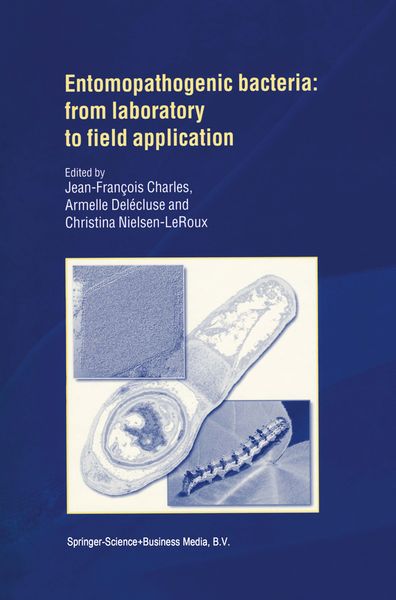
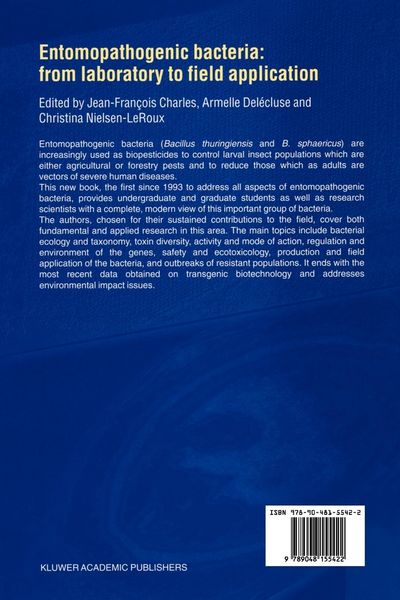
Entomopathogenic Bacteria: from Laboratory to Field Application

13% sparen

189,99 € UVP 219,99 €

inkl. gesetzl. MwSt., Versandkostenfrei


Beschreibung

Produktdetails

Einband

Taschenbuch

Erscheinungsdatum

09.12.2010

Herausgeber

J.F. Charles + weitere

Verlag

Springer Netherland

Seitenzahl

524

Maße (L/B/H)

23,5/15,5/3 cm

Gewicht

827 g

Auflage

1. Auflage

Sprache

Englisch

ISBN

978-90-481-5542-2

Beschreibung

Produktdetails

Einband

Taschenbuch

Erscheinungsdatum

09.12.2010

Herausgeber

Verlag

Springer Netherland

Seitenzahl

524

Maße (L/B/H)

23,5/15,5/3 cm

Gewicht

827 g

Auflage

1. Auflage

Sprache

Englisch

ISBN

978-90-481-5542-2

Herstelleradresse

Springer-Verlag GmbH
Tiergartenstr. 17
69121 Heidelberg
DE

Email: ProductSafety@springernature.com

Noch keine Bewertungen vorhanden

Verfassen Sie die erste Bewertung zu diesem Artikel

Helfen Sie anderen Kundinnen und Kunden durch Ihre Meinung.

Kundinnen und Kunden meinen

Bewertungen (0)

  • Produktbild: Entomopathogenic Bacteria: from Laboratory to Field Application
  • Produktbild: Entomopathogenic Bacteria: from Laboratory to Field Application
  • Contributors. Preface. Section 1: The Entomopathogenic Bacteria. 1.1. Biodiversity of the entomopathogenic, endosporeforming bacteria; F.G. Priest. 1.2. Natural occurrence and dispersal of Bacillus thuringiensis in the environment; P.H. Damgaard. 1.3. Virulence of Bacillus thuringiensis; B.M. Hansen, S. Salamitou. Section 2: Toxins and Genes. 2.1. The diversity of Bacillus thuringiensis delta-endotoxins; N. Crickmore. 2.2. Insecticidal proteins produced by bacteria pathogenic to agricultural pests; T. Yamamoto, D.H. Dean. 2.3. Vector-active toxins: structure and diversity; A. Delécluse, et al. 2.4. Toxin and virulence gene expression in Bacillus thuringiensis; D. Lereclus, H. Agaisse. 2.5. Genetic and genomic contexts of toxin genes; M.-L. Rosso, et al. Section 3: Mode of Action and Resistance. 3.1. Pathogenesis of Bacillus thuringiensis toxins; P. Lüthy, M.G. Wolfersberger. 3.2. Investigations of Bacillus thuringiensis Cry1 toxin receptor structure and function; S.F. Garczynski, M.J. Adang. 3.3. Membrane permeabilisation by Bacillus thuringiensis toxins: protein insertion and pore formation; J.-L. Schwartz, R. Laprade. 3.4. Insect resistance to Bacillus thuringiensis insecticidal crystal proteins; J. Van Rie, J. Ferré. 3.5. Mode of action of Bacillus sphaericus on mosquito larvae: incidence on resistance; J.-F. Charles, et al. Section 4: Safety and Ecotoxicology.L.A. Lacey, J.P. Siegel. Section 5: Standardisation, Production and Registration. 5.1. Is Bacillus thuringiensis standardisation still possible? O. Skovmand, et al. 5.2. Industrial fermentation and formulation of entomopathogenic bacteria; T.L. Couch. 5.3. Rural production of Bacillus thuringiensis by solid state fermentation; E. Aranda, et al. 5.4. Registration of biopesticides; G.N. Libman, S.C. MacIntosh. Section 6: Field Application and Resistance Management. 6.1. Bacillus thuringiensis application in agriculture; A. Navon. 6.2. Application of Bacillus thuringiensis in forestry; K. van Frankenhuyzen. 6.3. Bacterial control of vector-mosquitoes and black flies; N. Becker. 6.4. Resistance management for agricultural pests; R.T. Roush. 6.5. Management of resistance to bacterial vector control; L. Regis, C. Nielsen-LeRoux. Section 7: Biotechnology and Risk Assessment. 7.1. Biotechnological improvement of Bacillus thuringiensis for agricultural control of insect pests: benefits and ecological implications; V. Sanchis. 7.2. Genetic engineering of bacterial insecticides for improved efficacy against medically important Diptera; B. Federici, et al. 7.3. Bacillus thuringiensis: risk assessment; A. Klier. Index.