KI-Beratung Beta

  • Produktbild: Bioavailability of Organic Xenobiotics in the Environment
  • Produktbild: Bioavailability of Organic Xenobiotics in the Environment
Band 64

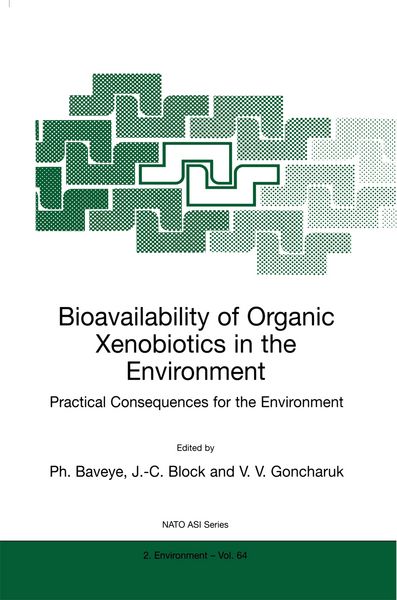
Bioavailability of Organic Xenobiotics in the Environment Practical Consequences for the Environment

189,99 €

inkl. gesetzl. MwSt., Versandkostenfrei


Beschreibung

Produktdetails

Einband

Taschenbuch

Erscheinungsdatum

27.01.2011

Herausgeber

P. Baveye + weitere

Verlag

Springer Netherland

Seitenzahl

504

Maße (L/B/H)

23,5/15,5/2,8 cm

Gewicht

780 g

Auflage

1. Auflage

Sprache

Englisch

ISBN

978-90-481-5311-4

Beschreibung

Produktdetails

Einband

Taschenbuch

Erscheinungsdatum

27.01.2011

Herausgeber

Verlag

Springer Netherland

Seitenzahl

504

Maße (L/B/H)

23,5/15,5/2,8 cm

Gewicht

780 g

Auflage

1. Auflage

Sprache

Englisch

ISBN

978-90-481-5311-4

Herstelleradresse

Springer-Verlag GmbH
Tiergartenstr. 17
69121 Heidelberg
DE

Email: ProductSafety@springernature.com

Noch keine Bewertungen vorhanden

Verfassen Sie die erste Bewertung zu diesem Artikel

Helfen Sie anderen Kundinnen und Kunden durch Ihre Meinung.

Kundinnen und Kunden meinen

Bewertungen (0)

  • Produktbild: Bioavailability of Organic Xenobiotics in the Environment
  • Produktbild: Bioavailability of Organic Xenobiotics in the Environment
  • I. Organic Pollutants and Bioremediation.- Persistent Organic Contaminants in the Environment: PAHs as a Case Study.- Evaluation of Contamination Level of Dnieper River Basin by Organic and Inorganic Toxicants.- Underground Pollution at a Former Military Installation in Valciunai (Lithuania).- Application of a Biodegradation-Redox Model for Predicting Bioremediation Performance *.- Bioremediation of Environments Contaminated with Organic Xenobiotics: Putting Microbial Metabolism to Work: What happens with the Contaminant once it has reached the Cell Surface?.- Factors Controlling the Biodegradation of Chemicals in Soils.- II. Assessment of Bioavailability.- The Use of Laboratory Model Systems to Elucidate the Mechanisms of Bioavailability of Hydrophobic Organic Compounds.- Pollutant Aging Studies in Soils. Relevancy of Bench Scale Assessments to Field Conditions *.- Factors Affecting the Evaluation of Long-Term PCB Biodegradation in Soils by White Rot Fungi *.- Quantifying the Intrinsic Bioremediation Potential and the Hazard Index of Organic Xenobiotics in Aquifers Based on their Bioavailability Rates *.- The Use of Whole-Cell Living Biosensors to Determine the Bioavailability of Pollutants to Micoorganisms *.- Abiotic Transformations of Organic Xenobiotics in Soils: A Compounding Factor in the Assessment of Bioavailability.- Evaluation of Soil Adsorption-Desorption Capacity for the Assessment of Pesticide Bioavailability.- Bioavailability of Organic Xenobiotics in the Environment: A Critical Perspective.- III. Processes that Control Bioavailability.- Physico-Chemical Characterization, Reactivity and Biodegradability of Soil-Organic Matter.- Organic Pollutants Associated with Macromolecular Soil Organic Matter and Natural Formation of Bound Residues.- Phase-Distributions of Hydrophobic Chemicals in the Aquatic Environment: Existing Portioning Models are Unable to Predict the Dissolved Component in Several Common Situations.- Bioavailability of Xenobiotic Organic Compounds to Remediate Soil Containing Clay Fractions: Limits of Engineering Solutions.- Effect of PAHs and Heavy Metals on Activity of Soil Microflora*.- Transport of Organic Xenobiotics in the Environment.- IV. Strategies to Modify Bioavailability in Situ.- Limited Bioavailability of Organic Contaminants in the Environment: Policy Implications.- The Role of Plants in the Remediation of Contaminated Soils: Phytoremediation of Soils.- Reduction of the Bioavailability of PAHS in Heavily Contaminated Soils and Sediments Treated via a Physico-Chemical Process.- Surfactants-Enhanced Bioremediation: A Review of the Effects of Surfactants on the Bioavailability of Hydrophobic Organic Chemicals in Soils.