Gutscheinbedingungen

**Gültig bis 06.07.2026 auf fremdsprachige Bücher online auf thalia.at, in der Thalia App ab einem Mindestbestellwert von 30€ und in allen Thalia Buchhandlungen in Österreich. In den Buchhandlungen nur gültig auf lagernde Ware. Einzelne Artikel können ausgeschlossen sein. Ausgenommen sind preisgebundene Artikel & eBooks. Pro Einkauf einmal einlösbar. Nur gültig gegen Vorlage oder im Onlineshop hinterlegter Bonuscard. Infos zur Einlösung in der Buchhandlung sind auf der Bonuscard-Vorteilspreisseite zu finden. Click & Collect nur bei Onlinevorabzahlung möglich. Keine Einlösung bei Scan & Go-Bezahlung. Keine Barauszahlung. Nicht kombinierbar mit anderen Aktionen und Gutscheinen. Gutschein wird auf max. 500€ Bestellwert angerechnet. Nicht gültig für Versandkosten und Services.

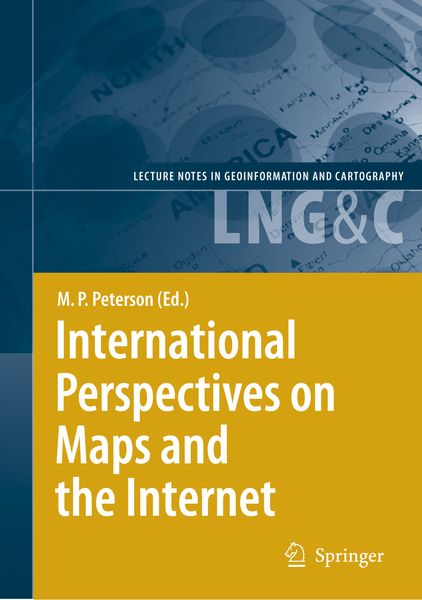
  • Produktbild: International Perspectives on Maps and the Internet
  • Produktbild: International Perspectives on Maps and the Internet

International Perspectives on Maps and the Internet

198,99 €

inkl. gesetzl. MwSt., Versandkostenfrei


Beschreibung

Produktdetails

Einband

Taschenbuch

Erscheinungsdatum

18.11.2010

Herausgeber

Michael P. Peterson

Verlag

Springer Berlin

Seitenzahl

441

Maße (L/B/H)

23,5/15,5/2,6 cm

Gewicht

710 g

Auflage

Softcover reprint of hardcover 1st ed. 2008

Sprache

Englisch

ISBN

978-3-642-09121-6

Beschreibung

Produktdetails

Einband

Taschenbuch

Erscheinungsdatum

18.11.2010

Herausgeber

Michael P. Peterson

Verlag

Springer Berlin

Seitenzahl

441

Maße (L/B/H)

23,5/15,5/2,6 cm

Gewicht

710 g

Auflage

Softcover reprint of hardcover 1st ed. 2008

Sprache

Englisch

ISBN

978-3-642-09121-6

Herstelleradresse

Springer-Verlag KG
Sachsenplatz 4-6
1201 Wien
AT

Email: GPSR Kontakt

Noch keine Bewertungen vorhanden

Verfassen Sie die erste Bewertung zu diesem Artikel

Helfen Sie anderen Kundinnen und Kunden durch Ihre Meinung.

Kundinnen und Kunden meinen

Bewertungen (0)

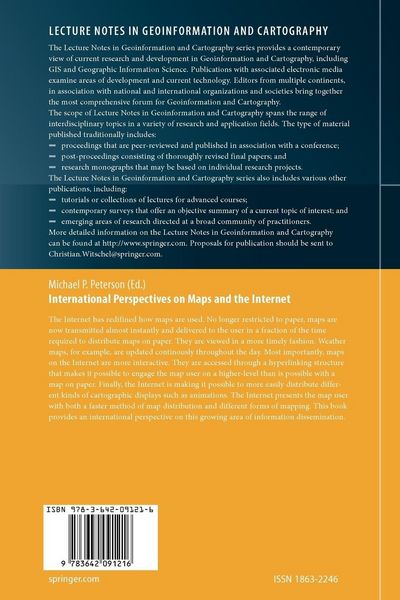
  • Produktbild: International Perspectives on Maps and the Internet
  • Produktbild: International Perspectives on Maps and the Internet
  • An Introduction.- International Perspectives on Maps and the Internet: An Introduction.- Delivering geospatial information with Web 2.0.- Map design for the Internet.- Web Cartography and the Dissemination of Cartographic Information about Coastal Inundation and Sea Level Rise.- An Elastic Map System with Cognitive Map-based Operations.- Technical Development.- New Approaches for Integrating GIS layers and Remote Sensing Imagery for Online Mapping Services.- Large format maps on the Internet.- Advancement of Web Standards and Techniques for Developing Hypermedia Maps on the Internet.- Spatial functionality based on SVG.- Google Earth and XML: Advanced Visualization and Publishing of Geographic Information.- GeoTagMapper: An Online Map-based Geographic Information Retrieval System for Geo-Tagged Web Content.- An Open Source Development Framework in Support of Cartographic Integration.- UMapIT© (Unrestricted Mapping Interactive Tool): Merging the datacube paradigm with an occurrence-based approach to support on-demand web mapping.- Application Development.- Distributed Research and Scientific Creativity: Accessible Data for the Social Sciences.- Teaching Cartography on the Web with a Multimedia GIS: A New Solution.- Issues in School web Atlas Use: The prototype atlas of Rio Claro — Brazil.- Maps in the Natural Disasters Networking Platform (NaDiNe) — Meeting the users’ needs: from static images to highly interactive real-time information integration.- Web-based health mapping — A short way from the data to the user.- Internet-Based Mapping for the Blind and People with Visual Impairment.- User-Centered Design Approaches for Web Mapping Applications: A Case Study with USGS Hydrological Data in the United States.- Journalistic Cartography on the Web: A Comparison of Print and Online Maps in Seven Major American Newspapers.- Web Cartography for World Heritage Cities: A survey and evaluation.- Conceptual Development.- Development and implementation of an electronic journal for publishing peer-reviewed GIS-based maps on the Web.- Lost and found, the importance of modelling map content semantically.- The effects of web mapping applications on user satisfaction: an empirical study.- Will Today’s Internet Maps be Available Tomorrow? The Preservation and Archiving of the Cybercartographic Atlas of Antarctica Through Action Research.