• Produktbild: The Collective Memory Reader
  • Produktbild: The Collective Memory Reader

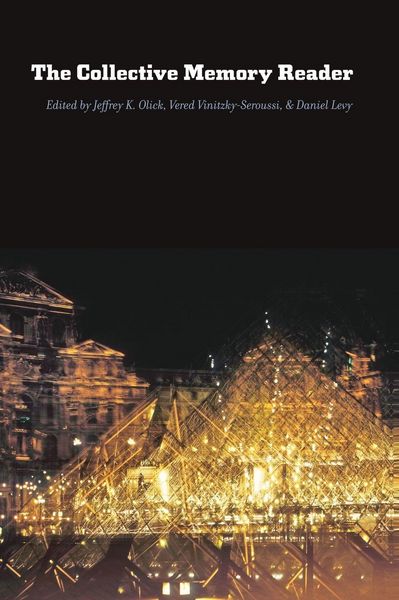
The Collective Memory Reader

Aus der Reihe Academic

222,99 €

inkl. gesetzl. MwSt., Versandkostenfrei


Beschreibung

Produktdetails

Einband

Gebundene Ausgabe

Erscheinungsdatum

01.06.2016

Herausgeber

Olick Jeffrey K. + weitere

Verlag

Oxford Academic

Seitenzahl

516

Maße (L/B/H)

26/18,3/3,2 cm

Gewicht

1155 g

Sprache

Englisch

ISBN

978-0-19-533741-9

Beschreibung

Produktdetails

Einband

Gebundene Ausgabe

Erscheinungsdatum

01.06.2016

Herausgeber

Verlag

Oxford Academic

Seitenzahl

516

Maße (L/B/H)

26/18,3/3,2 cm

Gewicht

1155 g

Sprache

Englisch

ISBN

978-0-19-533741-9

Herstelleradresse

Libri GmbH
Europaallee 1
36244 Bad Hersfeld
DE

Email: gpsr@libri.de

Noch keine Bewertungen vorhanden

Verfassen Sie die erste Bewertung zu diesem Artikel

Helfen Sie anderen Kundinnen und Kunden durch Ihre Meinung.

Kundinnen und Kunden meinen

Bewertungen (0)

  • Produktbild: The Collective Memory Reader
  • Produktbild: The Collective Memory Reader

    • Preface and Acknowledgments


    • Introduction: Jeffrey K. Olick, Vered Vinitzky-Seroussi, and Daniel Levy


    • 1.: Precursors and Classics


    • Introduction to Part One


    • Edmund Burke, from Reflections on the Revolution in France.


    • Alexis de Tocqueville, from Democracy in America.


    • Friedrich Nietzsche, from On the Uses and Disadvantages of History for Life


    • Ernst Renan, from What is a Nation?


    • Sigmund Freud, from Totem and Taboo: Resemblances between the Psychic Lives of Savages and Neurotics and Moses and Monotheism


    • Karl Marx, from The Eighteenth Brumaire of Louis Bonaparte


    • Karl Mannheim, from The Sociological Problem of Generations


    • Walter Benjamin, from The Storyteller and Theses on the Philosophy of History


    • Ernst Gombrich, from Aby Warburg: An Intellectual Biography


    • Theodor Adorno, from Valéry Proust Museum and In Memory of Eichendorff


    • Lev Vygotsky, from Mind in Society


    • Frederic Bartlett, from Remembering: A Study in Experimental and Social Psychology


    • Carl Becker, from Everyman his own Historian


    • George Herbert Mead, from The Nature of the Past


    • Charles Horton Cooley, from Social Process


    • Emile Durkheim, from The Elementary Forms of Religious Life


    • Maurice Halbwachs, from The Collective Memory


    • Marc Bloch, from Memoire Collective, Tradition et Coutume: A propos d'un Livre Recent [Collective Memory, Custom, and Tradition: About a Recent Book]


    • Charles Blondel, from Revue Critique: M. Halbwachs Les Cadres Sociaux de la Mémoire [Critical Review of M. Halbwachs Les Cadres Sociaux de la Mémoire]


    • Roger Bastide, from The African Religions of Brazil: Toward a Sociology of the Interpenetration of Civilizations.


    • Lloyd Warner, from The Living and the Dead: A Study of the Symbolic Life of Americans


    • E.E. Evans-Pritchard, from The Nuer: A Description of the Modes of Livelihood and Political Institutions of a Nilotic People


    • Claude Levi-Strauss, from The Savage Mind


    • 2.: History, Memory and Identity


    • Introduction to Part Two


    • Hans-Georg Gadamer, from Truth and Method


    • Edward Casey, from Remembering: A Phenomenological Study


    • Peter Burke, from History as Social Memory


    • Allan Megill, from History, Memory, Identity


    • Alon Confino, from Collective Memory and Cultural History: Problems of Method


    • Yosef Yerushalmi, from Zakhor: Jewish History and Jewish Memory


    • Jan Assmann, from Moses the Egyptian: The Memory of Egypt in Western Monotheism and Collective Memory and Cultural Identity


    • Peter Berger, from Invitation to Sociology: A Humanistic Approach


    • Eviatar Zerubavel, from Social Memories: Steps towards a Sociology of the Past


    • Jeffrey K. Olick, from Collective Memory: The Two Cultures


    • Robert Bellah, Richard Madsen, William M. Sullivan, Ann Swidler, Steven M. Tipton, from Habits of the Heart: Individualism and Commitment in American Life


    • Anthony Smith, from The Ethnic Origins of Nations


    • Yael Zerubavel, from Recovered Roots: Collective Memory and the Making of Israeli National Tradition


    • Barry Schwartz, from Abraham Lincoln and the Forge of American Memory


    • 3.: Power, Politics, and Contestation


    • Introduction to Part Three


    • Michel Foucault, from Film in Popular Memory: An Interview with Michel Foucault


    • Popular Memory Group, from Popular Memory: Theory, Politics, Method


    • Raphael Samuel, from Theatres of Memory


    • John Bodnar, from Remaking America: Public Memory, Commemoration and Patriotism in the Twentieth Century


    • Roy Rosenzweig and David Thelen, from The Presence of the Past: Popular Uses of History in American Life


    • Eric Hobsbawm, from Introduction: Inventing Traditions


    • Terence Ranger, from The Invention of Tradition Revisited: The Case of Colonial Africa


    • Orlando Patterson, from Slavery and Social Death: A Comparative Study


    • Richard Sennett, from Disturbing Memories


    • Michael Schudson, from The Past in the Present versus the Present in the Past


    • Gladys Lang and Kurt Lang, from Recognition and Renown: The Survival of Artistic Reputation


    • Lori Ducharme and Gary Alan Fine, from The Construction of Nonpersonhood and Demonization: Commemorating the 'Traitorous' Reputation of Benedict Arnold


    • Wulf Kansteiner, from Finding Meaning in Memory: A Methodological Critique of Collective Memory Studies


    • Ron Eyerman, from The Past in the Present: Culture and the Transmission of Memory


    • Jeffrey Alexander, from Toward a Cultural Theory of Trauma


    • 4.: Media and Modes of Transmission


    • Introduction to Part Four


    • André Leroi-Gourhan, from Gesture and Speech


    • Jack Goody, from Memory in Oral and Literate Traditions


    • Merlin Donald, from Origins of the Modern Mind: Three Stages in the Evolution of Culture and Cognition


    • Aleida Assmann, from Canon and Archive


    • Paul Connerton, from How Societies Remember


    • Harald Welzer, Sabine Moller, Karoline Tschuggnall, Olaf Jensen, Torsten Koch, from Opa war kein Nazi: Nationalsozialismus und Holocaust im Familiengedächtnis [Grandpa Wasn't a Nazi: National Socialism in Family Memory]


    • Marianne Hirsch, from The Generation of Postmemory


    • John Thompson, from Tradition and Self in a Mediated World


    • George Lipsitz, from Time Passages: Collective Memory and American Popular Culture


    • Barbie Zelizer, from Why Memory's Work on Journalism does not Reflect Journalism's Work on Memory


    • Daniel Dayan and Elihu Katz, from Media Events: The Live Broadcasting of History


    • Reinhardt Koselleck, from War Memorials: Identity Formations of the Survivors


    • James Young, from At Memory's Edge: After-Images of the Holocaust in Contemporary Art


    • Vered Vinitzky-Seroussi, From Commemorating a Difficult Past: Yitzhak Rabin's Memorials


    • M. Christine Boyer, from The City of Collective Memory: Its Historical Imagery and Architectural Entertainments


    • Danièle Hervieu-Léger, from Religion as a Chain of Memory


    • Harald Weinrich, from Lethe: The Art and Critique of Forgetting


    • Robin Wagner-Pacifici, from Memories in the Making: The Shapes of Things that Went


    • 5.: Memory, Justice, and the Contemporary Epoch


    • Introduction to Part Five


    • Edward Shils, from Tradition


    • Ian Hacking, from Memory Sciences, Memory Politics


    • Patrick Hutton, from History as Art of Memory


    • Anthony Giddens, from Living in a Post-Traditional Society


    • David Gross, from Lost Time: On Remembering and Forgetting in Late Modern Culture


    • Jay Winter, from Remembering War: The Great War between Memory and History in the Twentieth Century


    • Andreas Huyssen, from Present Pasts: Media, Politics, Amnesia


    • Pierre Nora, from Reasons for the Current Upsurge in Memory


    • Charles Maier, from A Surfeit of Memory? Reflections on History, Melancholy and Denial


    • Fred Davis, from Yearning for Yesterday: A Sociology of Nostalgia


    • Svetlana Boym, from Nostalgia and Its Discontents


    • Michel-Rolph Trouillot, from Abortive Rituals: Historical Apologies in the Global Era


    • Daniel Levy and Natan Sznaider, from Memory Unbound: The Holocaust and the Formation of Cosmopolitan Memory