Gutscheinbedingungen

**Gültig bis 06.07.2026 auf fremdsprachige Bücher online auf thalia.at, in der Thalia App ab einem Mindestbestellwert von 30€ und in allen Thalia Buchhandlungen in Österreich. In den Buchhandlungen nur gültig auf lagernde Ware. Einzelne Artikel können ausgeschlossen sein. Ausgenommen sind preisgebundene Artikel & eBooks. Pro Einkauf einmal einlösbar. Nur gültig gegen Vorlage oder im Onlineshop hinterlegter Bonuscard. Infos zur Einlösung in der Buchhandlung sind auf der Bonuscard-Vorteilspreisseite zu finden. Click & Collect nur bei Onlinevorabzahlung möglich. Keine Einlösung bei Scan & Go-Bezahlung. Keine Barauszahlung. Nicht kombinierbar mit anderen Aktionen und Gutscheinen. Gutschein wird auf max. 500€ Bestellwert angerechnet. Nicht gültig für Versandkosten und Services.

Produktbild: Theories of Team Cognition

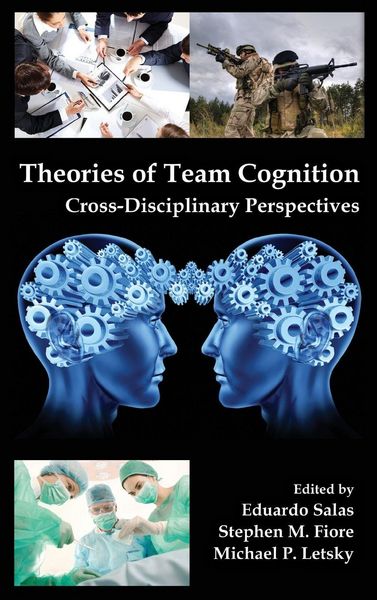
Theories of Team Cognition Cross-Disciplinary Perspectives

154,99 €

inkl. gesetzl. MwSt., Versandkostenfrei


Beschreibung

Produktdetails

Einband

Gebundene Ausgabe

Erscheinungsdatum

08.09.2011

Herausgeber

Eduardo Salas + weitere

Verlag

Taylor and Francis

Seitenzahl

664

Maße (L/B/H)

23,5/15,7/4 cm

Gewicht

975 g

Sprache

Englisch

ISBN

978-0-415-87413-7

Beschreibung

Produktdetails

Einband

Gebundene Ausgabe

Erscheinungsdatum

08.09.2011

Herausgeber

Verlag

Taylor and Francis

Seitenzahl

664

Maße (L/B/H)

23,5/15,7/4 cm

Gewicht

975 g

Sprache

Englisch

ISBN

978-0-415-87413-7

Herstelleradresse

Libri GmbH
Europaallee 1
36244 Bad Hersfeld
DE

Email: gpsr@libri.de

Noch keine Bewertungen vorhanden

Verfassen Sie die erste Bewertung zu diesem Artikel

Helfen Sie anderen Kundinnen und Kunden durch Ihre Meinung.

Kundinnen und Kunden meinen

Bewertungen (0)

Die Leseprobe wird geladen.
  • Produktbild: Theories of Team Cognition
  • Series Foreword J. N. Cleveland, K. R. Murphy, Why Cross-Disciplinary Theories of Team Cognition? Part 1. Team Cognition as a Field E. Salas, S. M. Fiore, M. Letsky, Why Cross-Disciplinary Thoeries of Team Cognition? S. H. J. Kozlowski, G. T. Chao, Macro Cognition, Team Learning, and Team Knowledge: Origins, Emergence, and Measurement. Part 2. Organizational Behavior Perspectives E. Santos, Jr., J. Rosen, K. Joo Kim, F. Yu, D. Li, Y. Guo, E. Jacob, S. Shih, J. Liu, L. Katona, Reasoning About Intentions in Complex Organizational Behaviors - Intentions in Surgical Handoffs. S. Mohammed, R. Tesler, K. Hamilton, Time and Team Cognition: Towards Greater Integration of Temporal Dynamics. T. Murase, C. J. Resick, M. Jimenez, E. Sanz, L. A. DeChurch, Leadership and Emergent Collective Cognition. J. R. Rentsch, I. Mot, Elaborating Cognition in Teams: Cognitive Similarity Configurations. Part 3. Human Factors and Cognitive Engineering Perspectives E. S. Patterson, R. Stephens, A Cognitive Systems Engineering Perspective on Shared Cognition: Coping with Complexity. N. J. Cooke, J. C. Gorman, C. Meyers, J. Duran, Theoretical Underpinning of Interactive Team Cognition. J. M. Carroll, M. Borge, C. Ganoe, M. B. Rosson, Articulating Collaborative Contributions to Activity Awareness. Part 4. Cognitive and Computer Science Perspectives V. B. Hinsz, J. L. Ladbury, Combinations of Contributions for Sharing Cognitions in Teams. R. Lyons, H. Lum, S. M. Fiore, E. Salas, N. Warner, M. Letsky, Considering the Influence of Task Complexity on Macrocognitive Team Processes. J. A. Espinosa, M. A. Clark, Team Knowledge: Dimensional Structure and Network Representation. G. Sukthankar, R. Shumaker, M. Lewis, Intelligent Agents as Teammates. M. D. McNeese, M. S. Pfaff, Looking at Macrocognition through a Multi-methodological Lens. J. L. Ladbury, V. B. Hinsz, Gaining Insight into Team Processes on Cognitive Tasks with Member Expectations and the Social Relations Model. Part 5. Social Psychology, Communication and Developmental Perspectives T. Koschmann, G. Dunnington, M. Kim, Team Cognition and the Accountabilities of the Tool Pass. A. B. Hollingshead, N. Gupta, K. Yoon, D. P. Brandon, Transactive Memory Theory and Teams: Past, Present and Future. M. S. Poole, Team Cognition, Communication, and Sharing. S. J. Beck, J. Keyton, Team Cognition, Communication, and Message Interdependence. P. Musaeus, Team Reason: Between Team Cognition and Societal Knowledge. G. Stahl, C. Penstein Rose, Group Cognition in Online Teams. S. A. McComb, D. M. Kennedy, Facilitating Effective Mental Model Convergence: The Interplay Among the Team's Task, Mental Model Content, Communication Flow, and Media. Part 6. The Road Ahead J. Elias, S. M. Fiore, Commentary on the Coordinates of Coordination and Collaboration. O. C. Riches, E. Salas, Some More Reflections on Team Cognition.