KI-Beratung Beta

Gutscheinbedingungen

**Gültig bis 11.11.2026 auf Spielzeug, Schreibwaren, Filme, Geschenke & Trends, Musik, tolino eReader & Zubehör, Hörbücher und Hörbuch-Downloads, nicht preisgebundene Bücher und Kalender online auf thalia.at und in der Thalia App. Einzelne Artikel können ausgeschlossen sein. Aufgrund der Buchpreisbindung sind deutschsprachige Bücher und eBooks ausgenommen. Zusätzlich ausgenommen sind Abos & Flatrates, Games, Geschenkkarten/-boxen, Shelfies, Software, Zeitschriften sowie einzelne Artikel von tonies®. Pro Einkauf einmal einlösbar. Click & Collect nur bei Onlinevorabzahlung möglich. Keine Barauszahlung. Nicht kombinierbar mit anderen Aktionen und Gutscheinen. Gutschein wird auf max. 500€ Bestellwert angerechnet. Nicht gültig für Versandkosten und Services.

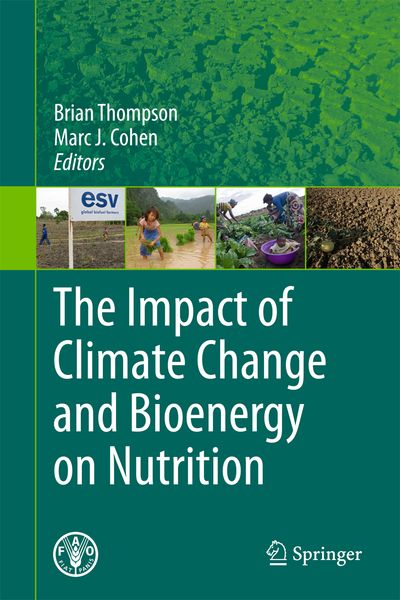
  • Produktbild: The Impact of Climate Change and Bioenergy on Nutrition
  • Produktbild: The Impact of Climate Change and Bioenergy on Nutrition
- 12%

The Impact of Climate Change and Bioenergy on Nutrition

12% sparen

95,99 € UVP 109,99 €

inkl. gesetzl. MwSt., Versandkostenfrei


Beschreibung

Climate changes will affect food production in a number of ways. Crop yields, aquatic populations and forest productivity will decline, invasive insect and plant species will proliferate and desertification, soil salinization and water stress will increase. Each of these impacts will decrease food and...

Beschreibung

Climate changes will affect food production in a number of ways. Crop yields, aquatic populations and forest productivity will decline, invasive insect and plant species will proliferate and desertification, soil salinization and water stress will increase. Each of these impacts will decrease food and nutrition security, primarily by reducing access to and availability of food, and also by increasing the risk of infectious disease.Although increased biofuel demand has the potential to increase incomes among producers, it can also negatively affect food and nutrition security. Land used for cultivating food crops may be diverted to biofuel production, creating food shortages and raising prices. Accelerations in unregulated or poorly regulated foreign direct investment, deforestation and unsustainable use of chemical fertilizers may also result. Biofuel production may reduce women’s control of resources, which may in turn reduce the quality of household diets. Each of these effects increases risk of poor food and nutrition security, either through decreased physical availability of food, decreased purchasing power, or increased risk of disease.The Impact of Climate Change and Bioenergy on Nutrition articulates the links between current environmental issues and food and nutrition security. It provides a unique collection of nutrition statistics, climate change projections, biofuel scenarios and food security information under one cover which will be of interest to policymakers, academia, agronomists, food and nutrition security planners, programme implementers, health workers and all those concerned about the current challenges of climate change, energy production, hunger and malnutrition.

Produktdetails

Einband

Gebundene Ausgabe

Erscheinungsdatum

01.03.2012

Abbildungen

XVI, 120 p.

Herausgeber Brian Thompson + weitere

Produktdetails

Einband

Gebundene Ausgabe

Erscheinungsdatum

01.03.2012

Abbildungen

XVI, 120 p.

Herausgeber
Verlag Springer Netherland
Seitenzahl

120

Maße (L/B/H)

24,1/16/1,3 cm

Gewicht

325 g

Auflage

2012

Sprache

Englisch

ISBN

978-94-007-0109-0

Herstelleradresse

Springer-Verlag KG
Sachsenplatz 4-6
1201 Wien
AT

Email: ProductSafety@springernature.com

Noch keine Bewertungen vorhanden

Verfassen Sie die erste Bewertung zu diesem Artikel

Helfen Sie anderen Kundinnen und Kunden durch Ihre Meinung.

Kundinnen und Kunden meinen

Bewertungen (0)

  • Produktbild: The Impact of Climate Change and Bioenergy on Nutrition
  • Produktbild: The Impact of Climate Change and Bioenergy on Nutrition

  • 1. Summary.- 2. Introduction.- 3.World Food Insecurity and Malnutrition: Scope, Trends, Causes and Consequences.- 4. Climate Change, Food Security and Nutrition.- 5. Nutrition and Bioenergy.- 6. Policies and Programmes for Improving Nutrition.- 7. Conclusions and Recommendations.- 8. References.- 9. Appendices.