KI-Beratung Beta

Produktbild: Do Bicycles Equal Development in Mozambique?

Do Bicycles Equal Development in Mozambique?

45,99 €

inkl. gesetzl. MwSt., Versandkostenfrei


Beschreibung

Is Mozambique an African success story? It has 7 percent a year growth rate and substantial foreign investment. Fifteen years after the war of destabilisation, the peace has held. Mozambique is the donors' model pupil, carefully following their prescriptions and receiving more than a billion dollars...

Beschreibung

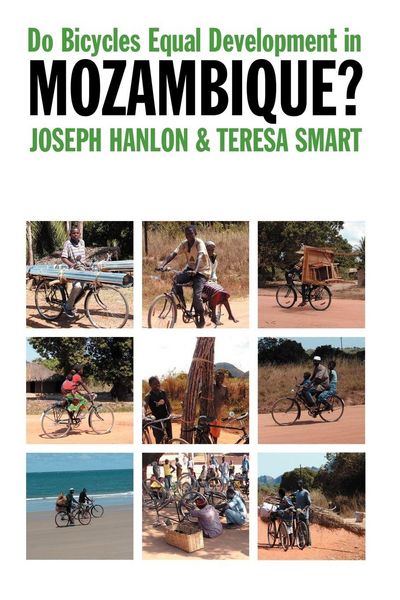
Is Mozambique an African success story? It has 7 percent a year growth rate and substantial foreign investment. Fifteen years after the war of destabilisation, the peace has held. Mozambique is the donors' model pupil, carefully following their prescriptions and receiving more than a billion dollars a year in aid. The number of bicycles has doubled and this is often cited as the symbol of development. In this book the authors challenge some key assumptions of both the donors and the government and ask questions such as whether there has been too much stress on the Millennium Development Goals, and too little support for economic development; if it makes sense to target the poorest of the poor, or would it be better to target those who create the jobs which will employ the poor; whether there has been too much emphasis on foreign investment and too little on developing domestic capital; and if the private sector really will end poverty, or must there be a stronger role for the state in the economy? This book is about more than Mozambique. Mozambique is an apparent success story that is used to justify the present 'post-Washington consensus' development model. Here, the case of Mozambique is situated within the broader development debate. Joseph Hanlon is Senior Lecturer at the Open University and the author of 'Beggar Your Neighbours'; 'Mozambique: Who Calls the Shots?'; and 'Peace without Profit' (all published by James Currey) which have all made influential interventions in the development debate; Teresa Smart is Director of the London Mathematics Centre, Institute of Education.

Produktdetails

Einband

Taschenbuch

Erscheinungsdatum

18.03.2010

Verlag James Currey
Seitenzahl

258

Produktdetails

Einband

Taschenbuch

Erscheinungsdatum

18.03.2010

Verlag James Currey
Seitenzahl

258

Maße (L/B/H)

22,9/15,2/1,5 cm

Gewicht

424 g

Sprache

Englisch

ISBN

978-1-84701-318-7

Herstelleradresse

Libri GmbH
Europaallee 1
36244 Bad Hersfeld
DE

Email: gpsr@libri.de

Noch keine Bewertungen vorhanden

Verfassen Sie die erste Bewertung zu diesem Artikel

Helfen Sie anderen Kundinnen und Kunden durch Ihre Meinung.

Kundinnen und Kunden meinen

Bewertungen (0)

Die Leseprobe wird geladen.
  • Produktbild: Do Bicycles Equal Development in Mozambique?
  • I IS THERE DEVELOPMENT IN MOZAMBIQUE? Introduction: more bicycles but,... War, peace, rapid change & slow recovery Can peasants pull Nampula out of poverty? The Manica miracle is over Cashew: from disaster to export model Has poverty decreased? II ACTORS & CONTENT Frelimo & the democratic one-party state Corruption, rent-seeking, reform & a divided elite Aid dependence & subservience: carrots & sticks Who pays for the IMF's mistakes? On the edge of the world III ALTERNATIVES & THE DEVELOPMENTAL STATE Questioning the cargo cult Step off the MDG bandwagon: supply, demand, money Radical solutions to kick-start increased demand Creating entrepreneurs & protecting workers & peasants Finance & the development bank Agriculture is the key to increasing production & demand Will donors & elites let Mozambique be a developmental state?