Gutscheinbedingungen

**Gültig bis 06.07.2026 auf fremdsprachige Bücher online auf thalia.at, in der Thalia App ab einem Mindestbestellwert von 30€ und in allen Thalia Buchhandlungen in Österreich. In den Buchhandlungen nur gültig auf lagernde Ware. Einzelne Artikel können ausgeschlossen sein. Ausgenommen sind preisgebundene Artikel & eBooks. Pro Einkauf einmal einlösbar. Nur gültig gegen Vorlage oder im Onlineshop hinterlegter Bonuscard. Infos zur Einlösung in der Buchhandlung sind auf der Bonuscard-Vorteilspreisseite zu finden. Click & Collect nur bei Onlinevorabzahlung möglich. Keine Einlösung bei Scan & Go-Bezahlung. Keine Barauszahlung. Nicht kombinierbar mit anderen Aktionen und Gutscheinen. Gutschein wird auf max. 500€ Bestellwert angerechnet. Nicht gültig für Versandkosten und Services.

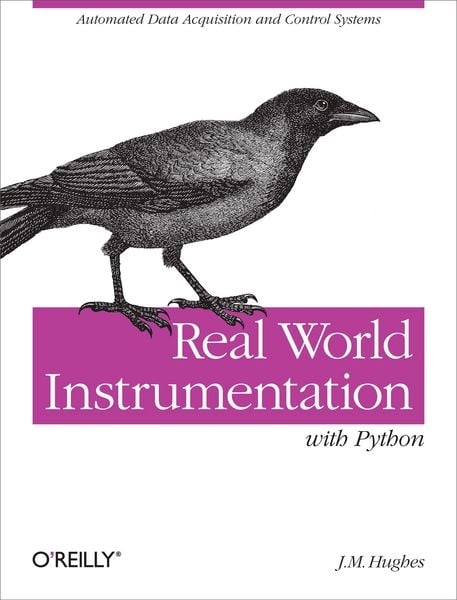
Produktbild: Real World Instrumentation with Python

Real World Instrumentation with Python Automated Data Acquisition and Control Systems

49,99 €

inkl. gesetzl. MwSt., Versandkostenfrei


Beschreibung

Produktdetails

Einband

Taschenbuch

Erscheinungsdatum

28.12.2010

Abbildungen

w. Illustrationen

Verlag

O'Reilly Media

Seitenzahl

624

Maße (L/B/H)

23,1/18/3,8 cm

Gewicht

823 g

Sprache

Englisch

ISBN

978-0-596-80956-0

Beschreibung

Produktdetails

Einband

Taschenbuch

Erscheinungsdatum

28.12.2010

Abbildungen

w. Illustrationen

Verlag

O'Reilly Media

Seitenzahl

624

Maße (L/B/H)

23,1/18/3,8 cm

Gewicht

823 g

Sprache

Englisch

ISBN

978-0-596-80956-0

Herstelleradresse

Libri GmbH
Europaallee 1
36244 Bad Hersfeld
DE

Email: GPSR Kontakt

Noch keine Bewertungen vorhanden

Verfassen Sie die erste Bewertung zu diesem Artikel

Helfen Sie anderen Kundinnen und Kunden durch Ihre Meinung.

Kundinnen und Kunden meinen

Bewertungen (0)

Die Leseprobe wird geladen.
  • Produktbild: Real World Instrumentation with Python
  • Preface;
    Who Is This Book For?;
    The Programming Languages;
    Why Python?;
    The Systems;
    Methodology;
    How This Book Is Organized;
    Conventions Used in This Book;
    Using Code Examples;
    Safari® Books Online;
    How to Contact Us;
    Acknowledgments;
    Chapter 1: Introduction to Instrumentation;
    1.1 Data Acquisition;
    1.2 Control Output;
    1.3 Applications Overview;
    1.4 Summary;
    Chapter 2: Essential Electronics;
    2.1 Electrical Charge;
    2.2 Electric Current;
    2.3 Basic Circuit Theory;
    2.4 Circuit Schematics;
    2.5 DC Circuit Characteristics;
    2.6 AC Circuits;
    2.7 Interfaces;
    2.8 Summary;
    2.9 Suggested Reading;
    Chapter 3: The Python Programming Language;
    3.1 Installing Python;
    3.2 The Python Programming Language;
    3.3 Python Development Tools;
    3.4 Summary;
    3.5 Suggested Reading;
    Chapter 4: The C Programming Language;
    4.1 Installing C;
    4.2 Developing Software in C;
    4.3 C Development Tools;
    4.4 Summary;
    4.5 Suggested Reading;
    Chapter 5: Python Extensions;
    5.1 Creating Python Extensions in C;
    5.2 Python's C Extension API;
    5.3 Using the Python C Extension API;
    5.4 Python's ctypes Foreign Function Library;
    5.5 Summary;
    5.6 Suggested Reading;
    Chapter 6: Hardware: Tools and Supplies;
    6.1 The Essentials;
    6.2 Advanced Tools;
    6.3 Supplies;
    6.4 New Versus Used;
    6.5 Summary;
    6.6 Suggested Reading;
    Chapter 7: Physical Interfaces;
    7.1 Connectors;
    7.2 Serial Interfaces;
    7.3 GPIB/IEEE-488;
    7.4 PC Bus Interface Hardware;
    7.5 Old Doesn't Mean Bad;
    7.6 Summary;
    7.7 Suggested Reading;
    Chapter 8: Getting Started;
    8.1 Defining the Project;
    8.2 Requirements;
    8.3 Designing the Software;
    8.4 Functional Testing;
    8.5 Implementation;
    8.6 User Documentation;
    8.7 Summary;
    8.8 Suggested Reading;
    Chapter 9: Control System Concepts;
    9.1 Basic Control Systems Theory;
    9.2 Control System Types;
    9.3 Implementing Control Systems in Python;
    9.4 Summary;
    9.5 Suggested Reading;
    Chapter 10: Building and Using Simulators;
    10.1 What Is Simulation?;
    10.2 Using Python to Create a Simulator;
    10.3 Serial Terminal Emulators;
    10.4 Displaying Simulation Data;
    10.5 Creating Your Own Simulators;
    10.6 Summary;
    10.7 Suggested Reading;
    Chapter 11: Instrumentation Data I/O;
    11.1 Data I/O Interface Software;
    11.2 Data I/O: Acquiring and Writing Data;
    11.3 Summary;
    11.4 Suggested Reading;
    Chapter 12: Reading and Writing Data Files;
    12.1 ASCII Data Files;
    12.2 Binary Data Files;
    12.3 Summary;
    12.4 Suggested Reading;
    Chapter 13: User Interfaces;
    13.1 Text-Based Interfaces;
    13.2 Graphical User Interfaces;
    13.3 Summary;
    13.4 Suggested Reading;
    Chapter 14: Real World Examples;
    14.1 Serial Interfaces;
    14.2 USB Example: The LabJack U3;
    14.3 Summary;
    14.4 Suggested Reading;
    Free and Open Source Software Resources;
    Instrument Sources;
    Manufacturers;
    Used Test Equipment Sources;
    Manuals;
    Colophon;