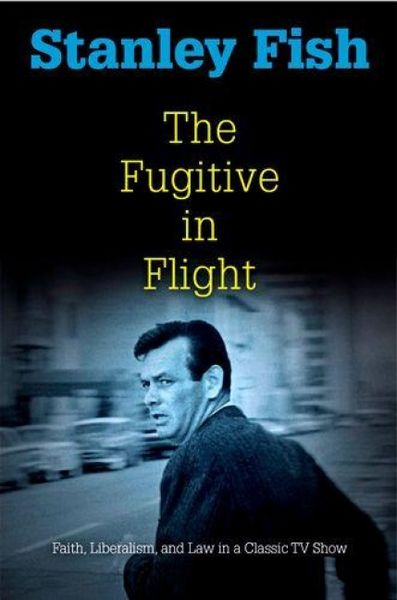
The Fugitive in Flight Faith, Liberalism, and Law in a Classic TV Show
42,99 €
inkl. gesetzl. MwSt.,
Beschreibung
Produktdetails
Einband
Gebundene Ausgabe
Erscheinungsdatum
11.11.2010
Abbildungen
55 illus.
Verlag
University Of Pennsylvania PressSeitenzahl
160
Maße (L/B/H)
23,1/14,9/2 cm
Gewicht
363 g
Sprache
Englisch
ISBN
978-0-8122-4277-5
"In the 1990s when I was watching reruns of The Fugitive on the Arts and Entertainment Network twice a day, I couldn't take my eyes off it. . . . No one in The Fugitive ever relaxes as you watch and you can't relax either, even though for long stretches absolutely nothing happens. It was the combination of nonstop tension with the (relative) absence of slam-bang action that attracted me, and as I now reflect on it, the same combination characterizes the literary works I have been reading and writing about for more than forty-five years."-Stanley Fish, from the Introduction
In the stark television drama The Fugitive, Dr. Richard Kimble, an innocent man convicted of murder, is on the run from the police and in pursuit of the real killer. The award-winning show, which aired on ABC from 1963 to 1967 and inspired a 1993 blockbuster movie, still has many devoted fans, none more passionate than literary and legal theorist and intellectual provocateur Stanley Fish. In The Fugitive in Flight, Fish examines the moral structure of the long-running series and explains why he thinks this may well be the greatest show ever aired on American network television.
Analyzing key episodes, The Fugitive in Flight goes beyond plot summaries and behind-the-scenes stories. For Fish, the real action of The Fugitive takes place in confined spaces where the men and women Richard Kimble encounters are forced to choose what kind of person they will be for the rest of their lives. Kimble is the catalyst of such choices and changes, but he himself never changes. Breaking free from the political and social problems of his time, he is always the bearer and exemplar of the very middle-class values informing the system that has misjudged him. Kimble is the perfect representative of a mid-twentieth-century liberalism that values above all independence, personal integrity, and the refusal to surrender oneself to obsessions or causes. He is so consistently faithful to his liberal vision of life that he displays both its virtues and its dark side, the side that flees attachments, entanglements, responsibilities, and human connections. Stanley Fish's Richard Kimble is the ultimate man in a gray flannel suit, even when he is wearing a windbreaker and walking down a dark, lonely road.
Noch keine Bewertungen vorhanden
Verfassen Sie die erste Bewertung zu diesem Artikel
Helfen Sie anderen Kundinnen und Kunden durch Ihre Meinung.
Kurze Frage zu unserer Seite
Vielen Dank für Ihr Feedback
Wir nutzen Ihr Feedback, um unsere Produktseiten zu verbessern. Bitte haben Sie Verständnis, dass wir Ihnen keine Rückmeldung geben können. Falls Sie Kontakt mit uns aufnehmen möchten, können Sie sich aber gerne an unseren Kund*innenservice wenden.
zum Kundenservice