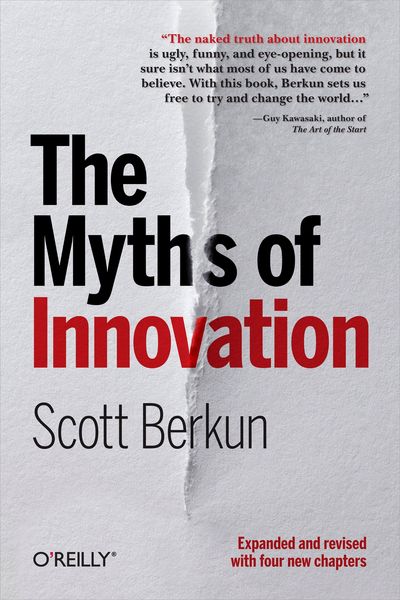
The Myths of Innovation
-
- Taschenbuch ausgewählt
- eBook
-
Sprache:Englisch
28,99 €
inkl. gesetzl. MwSt.,
- Kostenlose Lieferung ab 30 € Einkaufswert
- Versandkostenfrei für Bonuscard-Kund*innen
Beschreibung
Produktdetails
Einband
Taschenbuch
Erscheinungsdatum
28.09.2010
Verlag
O'Reilly MediaSeitenzahl
248
Maße (L/B/H)
21,6/14,1/2,2 cm
Gewicht
333 g
Sprache
Englisch
ISBN
978-1-4493-8962-8
You'll have fun while you learn:
Where ideas come from
The true history of history
Why most people don't like ideas
How great managers make ideas thrive
The importance of problem finding
The simple plan (new for paperback)
It has changed the way thousands of leaders and creators understand the world. Now in an updated and expanded paperback edition, it's a fantastic time to explore or rediscover this powerful view of the world of ideas.
"Sets us free to try and change the world."--Guy Kawasaki, Author of Art of The Start
"Small, simple, powerful: an innovative book about innovation."--Don Norman, author of Design of Everyday Things
"Insightful, inspiring, evocative, and just plain fun to read. It's totally great."--John Seely Brown, Former Director, Xerox Palo Alto Research Center (PARC)
"Will inspire you to come up with breakthrough ideas of your own."--Alan Cooper, Father of Visual Basic and author of The Inmates are Running the Asylum
"Brimming with insights and historical examples, Berkun's book not only debunks widely held myths about innovation, it also points the ways toward making your new ideas stick."--Tom Kelley, GM, IDEO; author of The Ten Faces of Innovation
Noch keine Bewertungen vorhanden
Verfassen Sie die erste Bewertung zu diesem Artikel
Helfen Sie anderen Kundinnen und Kunden durch Ihre Meinung.
Kurze Frage zu unserer Seite
Vielen Dank für Ihr Feedback
Wir nutzen Ihr Feedback, um unsere Produktseiten zu verbessern. Bitte haben Sie Verständnis, dass wir Ihnen keine Rückmeldung geben können. Falls Sie Kontakt mit uns aufnehmen möchten, können Sie sich aber gerne an unseren Kund*innenservice wenden.
zum Kundenservice