Gutscheinbedingungen

**Gültig bis 06.07.2026 auf fremdsprachige Bücher online auf thalia.at, in der Thalia App ab einem Mindestbestellwert von 30€ und in allen Thalia Buchhandlungen in Österreich. In den Buchhandlungen nur gültig auf lagernde Ware. Einzelne Artikel können ausgeschlossen sein. Ausgenommen sind preisgebundene Artikel & eBooks. Pro Einkauf einmal einlösbar. Nur gültig gegen Vorlage oder im Onlineshop hinterlegter Bonuscard. Infos zur Einlösung in der Buchhandlung sind auf der Bonuscard-Vorteilspreisseite zu finden. Click & Collect nur bei Onlinevorabzahlung möglich. Keine Einlösung bei Scan & Go-Bezahlung. Keine Barauszahlung. Nicht kombinierbar mit anderen Aktionen und Gutscheinen. Gutschein wird auf max. 500€ Bestellwert angerechnet. Nicht gültig für Versandkosten und Services.

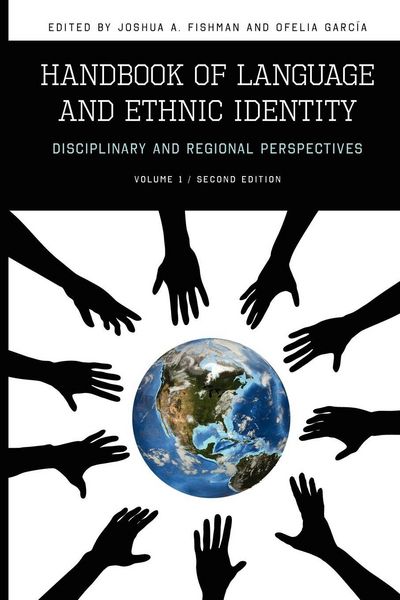
Produktbild: Handbook of Language & Ethnic Identity, Volume I

Handbook of Language & Ethnic Identity, Volume I Disciplinary & Regional Perspectives

88,99 €

inkl. gesetzl. MwSt., Versandkostenfrei


Beschreibung

Produktdetails

Einband

Taschenbuch

Erscheinungsdatum

01.04.2010

Herausgeber

Fishman Joshua A. + weitere

Verlag

Oxford University Press

Seitenzahl

584

Maße (L/B/H)

23,4/15,6/3,1 cm

Gewicht

839 g

Auflage

2. überarbeitete Auflage

Sprache

Englisch

ISBN

978-0-19-537492-6

Beschreibung

Produktdetails

Einband

Taschenbuch

Erscheinungsdatum

01.04.2010

Herausgeber

Verlag

Oxford University Press

Seitenzahl

584

Maße (L/B/H)

23,4/15,6/3,1 cm

Gewicht

839 g

Auflage

2. überarbeitete Auflage

Sprache

Englisch

ISBN

978-0-19-537492-6

Herstelleradresse

Libri GmbH
Europaallee 1
36244 Bad Hersfeld
DE

Email: gpsr@libri.de

Noch keine Bewertungen vorhanden

Verfassen Sie die erste Bewertung zu diesem Artikel

Helfen Sie anderen Kundinnen und Kunden durch Ihre Meinung.

Kundinnen und Kunden meinen

Bewertungen (0)

  • Produktbild: Handbook of Language & Ethnic Identity, Volume I
    • Contributors

    • Preface Joshua A. Fishman and Ofelia García

    • FOUNDATIONS

    • Sociolinguistics: Language and Ethnic Identity in Context Joshua A. Fishman

    • Part I Disciplinary, Methodological and Topical Approaches in the Study of Language and Ethnic Identity

    • Disciplinary and Methodological Approaches

    • 1.: Psychology Amado M. Padilla and Graciela N. Borsato

    • 2.: Social Psychology Karmela Liebkind

    • 3.: . Anthropology Miki Makihara

    • 4.: Political Science and Politics William Safran

    • 5.: Economics François Grin

    • 6.: Linguistic and Ethnographic Fieldwork Nancy C. Dorian

    • 7.: Demolinguistic and Geolinguistic Perspectives Guus Extra

    • Topical Approaches

    • 8.: Borders Tope Omoniyi

    • 9.: Diasporic Languages: The Jewish World Rakhmiel Peltz

    • 10.: Sign Language and the Deaf Community Colin Baker

    • 11.: Second Language Learning Perspective Bernard Spolsky

    • 12.: Education of Indigenous and Minority Children Tove Skutnabb-Kangas

    • Part II Regional Perspectives in the Study of Language and Ethnic Identity

    • Europe

    • 13.: Western Europe Ulrich Ammon

    • 14.: Germany James R. Dow

    • 15.: The Celtic World Colin H. Williams

    • 16.: Scandinavia Leena Huss and Anna-Riitta Lindgren

    • 17.: The Slavic World Miroslav Hroch

    • The Americas

    • 18.: Canada Donna Patrick

    • 19.: The United States Terrence G. Wiley

    • 20.: Native Americans Teresa L. McCarty and Ofelia Zepeda

    • 21.: African American Language Sonja L. Lanehart

    • 22.: Latin America Ofelia García, Dina López and Carmina Makar

    • Africa and the Middle East

    • 23.: Sub-Saharan Africa Samuel Gyasi Obeng and Tristan Purvis

    • 24.: South Africa Neville Alexander

    • 25.: The Arab World Moha Ennaji

    • Asia and The Pacific

    • 26.: Central Asia and Azerbaijan William Fierman and Jala Garibova

    • 27.: South and Southeast Asia Harold F. Schiffman

    • 28.: China: The Mainland, Hong Kong and Taiwan Mingling Zhou

    • 29.: Japan Akie Tomozawa and Masahito Yoshimura

    • 30.: Aotearoa/New Zealand Stephen May

    • CONCLUSION

    • Languaging and Ethnifying

    • Ofelia García