Gutscheinbedingungen

**Gültig bis 25.08.2026 ab einem Mindestbestellwert von 30€ auf Spielzeug, Schreibwaren, Filme, Geschenke & Trends, Musik, tolino eReader & Zubehör, Hörbücher und Hörbuch-Downloads (außer Abo), nicht preisgebundene Bücher und Kalender online auf thalia.at und in der Thalia App. Einzelne Artikel können ausgeschlossen sein. Aufgrund der Buchpreisbindung sind deutschsprachige Bücher und eBooks ausgenommen. Zusätzlich ausgenommen sind preisgebundene Artikel, Abos & Flatrates, eBooks, Games, Geschenkkarten/-boxen, Shelfies, Software, Zeitschriften sowie einzelne Artikel von tonies®. Pro Einkauf einmal einlösbar. Click & Collect nur bei Onlinevorabzahlung möglich. Keine Barauszahlung. Nicht kombinierbar mit anderen Aktionen und Gutscheinen. Gutschein wird auf max. 500€ Bestellwert angerechnet. Nicht gültig für Versandkosten und Services. Preisgebundene Artikel sind vom Mindestbestellwert ausgeschlossen.

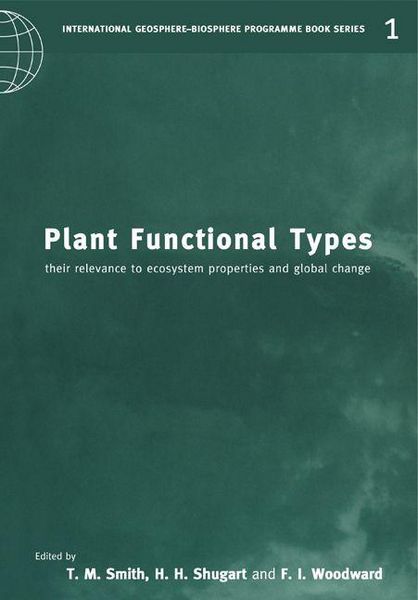
  • Produktbild: Plant Functional Types
  • Produktbild: Plant Functional Types

Plant Functional Types Their Relevance to Ecosystem Properties and Global Change

71,99 €

inkl. gesetzl. MwSt., Versandkostenfrei


Beschreibung

Produktdetails

Einband

Taschenbuch

Erscheinungsdatum

08.04.2011

Herausgeber

Smith T. M. + weitere

Verlag

Cambridge Academic

Seitenzahl

388

Maße (L/B/H)

24,4/17/2,1 cm

Gewicht

790 g

Sprache

Englisch

ISBN

978-0-521-56643-8

Beschreibung

Produktdetails

Einband

Taschenbuch

Erscheinungsdatum

08.04.2011

Herausgeber

Verlag

Cambridge Academic

Seitenzahl

388

Maße (L/B/H)

24,4/17/2,1 cm

Gewicht

790 g

Sprache

Englisch

ISBN

978-0-521-56643-8

Noch keine Bewertungen vorhanden

Verfassen Sie die erste Bewertung zu diesem Artikel

Helfen Sie anderen Kundinnen und Kunden durch Ihre Meinung.

Kundinnen und Kunden meinen

Bewertungen (0)

  • Produktbild: Plant Functional Types
  • Produktbild: Plant Functional Types
  • List of contributors; Preface; Part I: 1. What are functional types and how should we seek them? H. Gitay and I. R. Noble; 2. Plant and ecosystem functional types H. H. Shugart; Part II: 3. Plant functional types: towards a definition by environmental constraints F. I. Woodward and C. K. Kelly; 4. Can we use plant functional types to describe and predict responses to environmental change? R. J. Hobbs; 5. Functional types in non-equilibrium ecosystems B. H. Walker; 6. Categorizing plant species into functional types M. Westoby and M. Leishman; 7. Functional types: testing the concept in Northern England J. P. Grime, J. G. Hodgson, R. Hunt, K. Thopson, G. A. F. Hendry, B. D. Campbell, A. Jalili, S. H. Hillier, S. Diaz and M. J. W. Burke; Part III: 8. Plant functional types and ecosystem change in arctic tundras G. R. Shaver, A. E. Giblin, K. J. Nadelhoffer and E. B. Rastetter; 9. Functional types for predicting changes in biodiversity: a case study in Cape Fynbos W. J. Bond; 10. Defining functional types for models of desertification J. F. Reynolds, R. A. Virginia and W. H. Schlesinger; 11. Plant functional types in temperate semi-arid regions O. E. Sala, W. K. Lauenroth and R. A. Golluscio; 12. Interactions between demographic and ecosystem processes in a semi-arid and an arid grassland: a challenge for plant functional types W. K. Lauenroth, D. P. Coffin, I. C. Burke and R. A. Virginia; 13. Plant functional types in African savannas and grasslands R. J. Scholes, G. Pickett, W. N. Ellery and A. C. Blackmore; Part IV: 14. Using plant functional types in a global vegetation model W. Cramer; 15. The use of plant functional type classifications to model the global land cover and simulate the interactions between the terrestrial biosphere and the atmosphere R. Leemans; Part V: 16. Examining the consequences of classifying species into functional types: a simulation model analysis T. M. Smith; 17. Ecosystem function of biodiversity: the basis of the viewpoint H. A. Mooney; 18. Defining plant functional types: the end view F. I. Woodward, T. M. Smith and H. H. Shugart; Index.