
Gutscheinbedingungen

**Gültig bis 22.07.2026 ab einem Mindestbestellwert von 40€ auf Spielzeug, Schreibwaren, Filme, Geschenke & Trends, Musik, tolino eReader & Zubehör, Hörbücher und Hörbuch-Downloads (außer Abo), nicht preisgebundene Bücher und Kalender online auf thalia.at und in der Thalia App. Einzelne Artikel können ausgeschlossen sein. Aufgrund der Buchpreisbindung sind deutschsprachige Bücher und eBooks ausgenommen. Zusätzlich ausgenommen sind preisgebundene Artikel, Abos & Flatrates, eBooks, Games, Geschenkkarten/-boxen, Shelfies, Software, Zeitschriften sowie einzelne Artikel von tonies®. Pro Einkauf einmal einlösbar. Click & Collect nur bei Onlinevorabzahlung möglich. Keine Barauszahlung. Nicht kombinierbar mit anderen Aktionen und Gutscheinen. Gutschein wird auf max. 500€ Bestellwert angerechnet. Nicht gültig für Versandkosten und Services. Preisgebundene Artikel sind vom Mindestbestellwert ausgeschlossen.

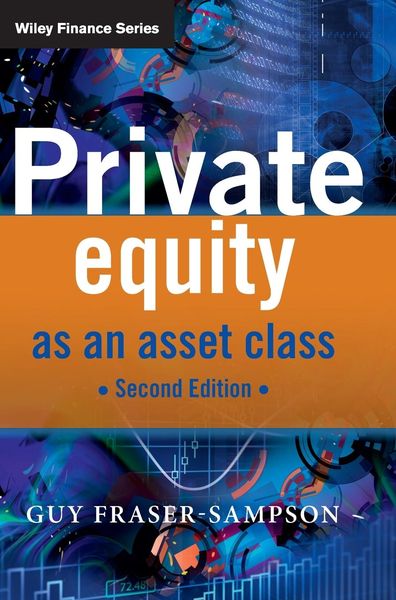
  • Produktbild: Private Equity as an Asset Class
  • Produktbild: Private Equity as an Asset Class

Private Equity as an Asset Class

Aus der Reihe Wiley Finance Series

77,99 €

inkl. gesetzl. MwSt., Versandkostenfrei


Beschreibung

Produktdetails

Einband

Gebundene Ausgabe

Erscheinungsdatum

17.05.2010

Verlag

John Wiley & Sons Inc

Seitenzahl

280

Maße (L/B/H)

25/17,5/2 cm

Gewicht

658 g

Auflage

2. Auflage

Sprache

Englisch

ISBN

978-0-470-66138-3

Beschreibung

Produktdetails

Einband

Gebundene Ausgabe

Erscheinungsdatum

17.05.2010

Verlag

John Wiley & Sons Inc

Seitenzahl

280

Maße (L/B/H)

25/17,5/2 cm

Gewicht

658 g

Auflage

2. Auflage

Sprache

Englisch

ISBN

978-0-470-66138-3

Noch keine Bewertungen vorhanden

Verfassen Sie die erste Bewertung zu diesem Artikel

Helfen Sie anderen Kundinnen und Kunden durch Ihre Meinung.

Kundinnen und Kunden meinen

Bewertungen (0)

Die Leseprobe wird geladen.
  • Produktbild: Private Equity as an Asset Class
  • Produktbild: Private Equity as an Asset Class
  • About the Author xi

    Acknowledgements xiii

    Introduction xv

    1 What is Private Equity? 1

    What is Private Equity? 2

    Fund investing versus direct investing 3

    Co-investment 4

    Terminology 6

    Different types of Private Equity investment 7

    Summary 13

    2. What are Private Equity Funds, and How do They Work? 15

    Capital: Allocated, Committed, Drawn Down and Invested 17

    How do Private Equity Funds Work? 18

    Structure 18

    Cash flow 20

    Investment 22

    Fundraising 23

    Private Equity Funds Distinguished from Other Fund Types 25

    Hedge funds 25

    Infrastructure 27

    Private (Equity) Real Estate 28

    A Note on International Issues 28

    Summary 29

    3. Private Equity Returns - The Basics 31

    Understanding the J-curve and Compound Returns 31

    Upper Quartile Figures 37

    Median Returns 38

    Average Returns 39

    Pooled Returns 41

    Using Vintage Year Returns for Benchmarking Purposes 41

    Time-weighted Returns 42

    Summary 43

    4 Private Equity Returns - Multiples and Muddles 45

    Multiples 45

    Distributed over paid in (DPI) 47

    Paid in to committed capital (PICC) 47

    Residual value to paid in (RVPI) 47

    Total value to paid in (TVPI) 48

    Use of multiples in industry research 48

    Muddles, Muggles and Markowitz 51

    Returns 52

    Risk 54

    Liquidity 56

    Summary 58

    5 Buyout 59

    Types of Buyout Transaction 59

    Mbo 59

    Mbi 60

    Bimbo 60

    Lbo 60

    Take Private (P2P) 61

    Roll-up 62

    Secondary Buyouts 62

    Other 'Buyout' Activity 62

    PIPEs 63

    How do Buyouts Work? 63

    Characteristics of Buyout 67

    Established businesses 67

    Debt 69

    Earnings 70

    Size 71

    Control 74

    Barriers to entry 75

    Summary 77

    6 How to Analyse Buyouts 79

    Earnings 80

    Ebit 81

    Ebitda 82

    Earnings Growth 83

    Multiple 84

    Multiple increase (sometimes called multiple arbitrage) 85

    Leverage 88

    Recapitalisation 89

    Timing 89

    Modelling and Analysing Buyout Funds 91

    Enterprise value 91

    Summary 94

    7 Buyout Returns 97

    US versus European Buyout 97

    Buyout skill bases 100

    Imperfect markets 100

    Earnings multiples 101

    Earnings growth 104

    Leverage 105

    Contribution of different drivers 106

    Fund size 107

    Summary 112

    8 Venture Capital 113

    What is Venture Capital? 113

    Backing New Applications, Not New Technology 114

    Classification by Sector 115

    It 116

    Telecoms 118

    Life Science 120

    Classification by Stage 123

    Seed stage 124

    Early stage 127

    Mid and late stages 128

    Summary 128

    9 How to Analyse Venture 129

    The Fundamentals (1) - Money Multiples 129

    The Fundamentals (2) - Valuation 131

    Valuation as an element of stated returns 131

    Differences in valuation approach between Europe and the US 132

    Variability of Venture valuations 133

    Pre-money and post-money valuations 135

    Share classes 136

    The Fundamentals (3) - Cost and Value 136

    IRRs and multiples 138

    Going in equity (GI%) 139

    Percentage of the holding within the fund 139

    The Impact of Home Runs 139

    Summary 142

    10 Venture Returns 145

    US Outperformance versus Europe 145

    Money multiples drive IRRs 145

    Home runs and the golden circle 147

    Market conditions 149

    European Venture - Is it as Bad as it Seems? 151

    Returns and Fund Size 154

    Venture returns by stage 158

    What of the Future? 159

    Summary 161

    11. Growth and Development Capital 163

    The PLC and the BCG Growth Matrix 164

    Development Capital 166

    Target companies 166

    Money in deals 166

    Money out deals 167

    Objectives 167

    Growth Capital 168

    Target companies 168

    Objectives 169

    Growth capital and late-stage Venture 170

    Common Issues 171

    Minority protection 171

    Exit protection 173

    The Future 174

    Summary 175

    12. Secondary Private Equity Fund Investing 177

    Why do People Buy Secondaries? 178

    Time and the J-curve 178

    Diversification by time 180

    Diversification by geography and sector 181

    Treasury and Portfolio Secondaries 181

    Why do People Sell Secondaries? 182

    Change of strategy/leaving the asset class 182

    Overconcentration by time, sector or geography 183

    Unexpected need for cash 183

    Housekeeping 184

    Dissatisfaction with the GP 184

    Restrictions on Transfer 184

    Stapled primaries 185

    Secondary Methodology 186

    Tails 187

    Fees etc. 188

    Secondary Buyouts - A Warning 189

    Summary 189

    13. Due Diligence 191

    Buyout Funds 193

    Venture Funds 194

    Co-investors 196

    Cross-fund Investing 197

    Buyout Companies 198

    Venture Companies 199

    Funds of Funds 200

    Growth and Development Capital 201

    Monitoring Private Equity Funds 202

    The Changing Nature of Due Diligence 204

    Summary 204

    14. Planning Your Investment Programme 207

    Cash Flow Planning 207

    Allocated, Committed and Invested Capital 208

    Diversification by Time 209

    Proper Commitment Levels 210

    Diversification by Sector and Geography 212

    Total Return 215

    How to deal with uninvested capital 215

    Towards a New World of Private Equity Programmes? 218

    Summary 219

    15. Trends and Issues 221

    Financial Crisis 222

    Credit 222

    Valuation 224

    Holding periods 225

    Secondaries 227

    Emerging Markets 228

    Concluding Thoughts 229

    Track record 230

    Returns 230

    Fee structures 231

    Private Equity at a Crossroads? 232

    Summary 233

    Glossary of Private Equity Terms 235

    Index 259