Gutscheinbedingungen

**Gültig bis 25.08.2026 ab einem Mindestbestellwert von 30€ auf Spielzeug, Schreibwaren, Filme, Geschenke & Trends, Musik, tolino eReader & Zubehör, Hörbücher und Hörbuch-Downloads (außer Abo), nicht preisgebundene Bücher und Kalender online auf thalia.at und in der Thalia App. Einzelne Artikel können ausgeschlossen sein. Aufgrund der Buchpreisbindung sind deutschsprachige Bücher und eBooks ausgenommen. Zusätzlich ausgenommen sind preisgebundene Artikel, Abos & Flatrates, eBooks, Games, Geschenkkarten/-boxen, Shelfies, Software, Zeitschriften sowie einzelne Artikel von tonies®. Pro Einkauf einmal einlösbar. Click & Collect nur bei Onlinevorabzahlung möglich. Keine Barauszahlung. Nicht kombinierbar mit anderen Aktionen und Gutscheinen. Gutschein wird auf max. 500€ Bestellwert angerechnet. Nicht gültig für Versandkosten und Services. Preisgebundene Artikel sind vom Mindestbestellwert ausgeschlossen.

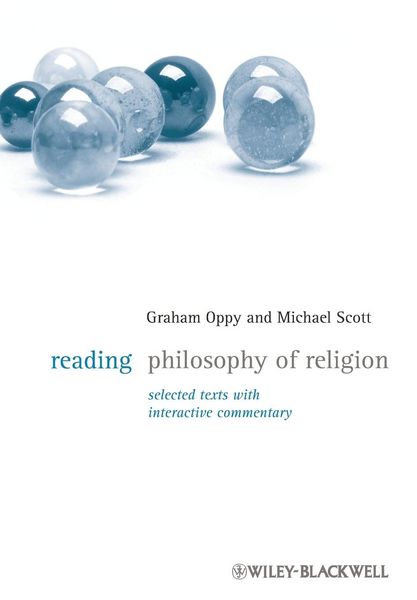
Produktbild: Reading Philosophy Religion

Reading Philosophy Religion

44,99 €

inkl. gesetzl. MwSt., Versandkostenfrei


Beschreibung

Produktdetails

Einband

Taschenbuch

Erscheinungsdatum

16.04.2010

Herausgeber

Oppy Graham + weitere

Verlag

WILEY

Seitenzahl

328

Maße (L/B/H)

24,4/17/1,8 cm

Gewicht

568 g

Sprache

Englisch

ISBN

978-1-4051-7081-9

Beschreibung

Produktdetails

Einband

Taschenbuch

Erscheinungsdatum

16.04.2010

Herausgeber

Verlag

WILEY

Seitenzahl

328

Maße (L/B/H)

24,4/17/1,8 cm

Gewicht

568 g

Sprache

Englisch

ISBN

978-1-4051-7081-9

Herstelleradresse

Libri GmbH
Europaallee 1
36244 Bad Hersfeld
DE

Email: GPSR Kontakt

Noch keine Bewertungen vorhanden

Verfassen Sie die erste Bewertung zu diesem Artikel

Helfen Sie anderen Kundinnen und Kunden durch Ihre Meinung.

Kundinnen und Kunden meinen

Bewertungen (0)

  • Produktbild: Reading Philosophy Religion
  • Introduction.

    1 Religious Language.

    Introduction to the issues.

    Introduction to Ayer.

    A. J. Ayer, 'Critique of Theology' (selection from Language, Truth and Logic ch. 6) (5).

    Commentary on Ayer.

    Introduction to BerkeleyGeorge Berkeley, 'Alciphron' (selection from the seventh dialogue) (5).

    Commentary on Berkeley.

    Introduction to PutnamHilary Putnam 'Wittgenstein on Religious Language' (selection from Renewing Philosophy ch. 7-8) (15).

    Commentary on Putnam.

    Introduction to AlstonWilliam Alston 'Referring to God' (11).

    Commentary on Alston.

    2 Reason, Argument and Belief in God.

    Introduction to the issues.

    Introduction to New.

    Christopher New, 'Antitheism' (8).

    Commentary on New.

    Introduction to Clifford.

    William Clifford, 'The Ethics of Belief' (8).

    Commentary on Clifford.

    Introduction to James.

    William James, 'The Will to Believe' (17).

    Commentary on James.

    Introduction to Plantinga.

    Alvin Plantinga, 'Is Belief in God Properly Basic?' (10).

    Commentary on Plantinga.

    Introduction to Rae.

    Georges Rey, 'Meta-Atheism: Religious Avowal as Self-Deception' (8).

    Commentary on Rae.

    3 The Existence of God.

    Introduction to the issues.

    Introduction to Anselm.

    Anselm, Proslogion: The Ontological Argument (selection) (5).

    Commentary on Anselm.

    Introduction to Aquinas.

    Aquinas, Summa Theologica: First Way, Third Way (3).

    Commentary on Aquinas.

    Introduction to Pascal.

    Blaise Pascal, Pensées: The Wager (2).

    Commentary on Pascal.

    Introduction to Paley.

    William Paley, 'Natural Theology' (selection) (10).

    Commentary on Paley.

    Introduction to Hume.

    David Hume 'Dialogues Concerning Natural Religion' (selection) (12).

    Commentary on Hume.

    Introduction to Everitt.

    Nicholas Everitt 'Teleological Arguments' (selection from The Non-Existence of God,ch. 5) (5).

    Commentary on Everitt.

    Introduction to Rowe.

    William Rowe, 'The Problem of Evil and Some Varieties of Atheism' (6).

    Commentary on Rowe.

    4 Divine Properties.

    Introduction to the issues.

    Introduction to Boethius.

    Boethius, The Consolation of Philosophy (selection) (3).

    Commentary on Boethius.

    Introduction to Savage.

    C. Wade Savage, 'The Paradox of the Stone' (5).

    Commentary on Savage.

    Introduction to Pike.

    Nelson Pike, 'Divine Omniscience and Voluntary Action' (6).

    Commentary on Pike.

    Introduction to Kretzmann.

    Norman Kretzmann, 'Abraham, Isaac and Euthyphro: God and the Basis of .

    Morality' (11).

    Commentary on Kretzmann.

    5 Pluralism.

    Introduction to the issues.

    Introduction to Hick.

    John Hick, The Interpretation of Religion (selection) (6).

    Commentary on Hick.

    Introduction to Plantinga.

    Alvin Plantinga, 'Pluralism: A Defense of Religious Exclusivism' .

    (selection) (12).

    Commentary on Plantinga.

    .

    Further reading and essay questions