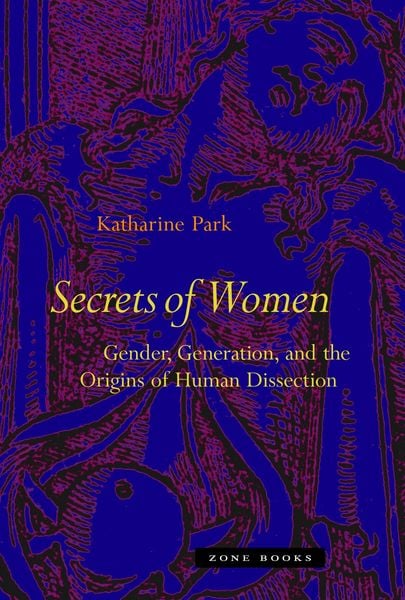
Secrets of Women Gender, Generation, and the Origins of Human Dissection
-
- Taschenbuch ausgewählt
- eBook
-
Sprache:Englisch
28,99 €
inkl. gesetzl. MwSt.,
- Kostenlose Lieferung ab 30 € Einkaufswert
- Versandkostenfrei für Bonuscard-Kund*innen
Beschreibung
Produktdetails
Einband
Taschenbuch
Erscheinungsdatum
23.04.2010
Verlag
University PressesSeitenzahl
424
Maße (L/B/H)
23/15,4/3,7 cm
Gewicht
654 g
Sprache
Englisch
ISBN
978-1-890951-68-9
Toward the end of the Middle Ages, medical writers and philosophers began to devote increasing attention to what they called "women's secrets," by which they meant female sexuality and generation. At the same time, Italian physicians and surgeons began to open human bodies in order to study their functions and the illnesses that afflicted them, culminating in the great illustrated anatomical treatise of Andreas Vesalius, in 1543.
Katharine Park traces these two closely related developments through a series of case studies of women whose bodies were dissected after their deaths: an abbess, a lactating virgin, several patrician wives and mothers, and an executed criminal. Drawing on texts and images, she explores the history of women's bodies in Italy between the late thirteenth and the mid-sixteenth centuries in the context of family identity, religious observance, and women's health care.
Secrets of Women explodes the myth that medieval religious prohibitions hindered the practice of human dissection in medieval and Renaissance Italy, arguing that female bodies, real and imagined, played a central role in the history of anatomy during that time. The opened corpses of holy women revealed sacred objects, while the opened corpses of wives and mothers yielded crucial information about where babies came from and about the forces that shaped their vulnerable flesh.
In the process, what male writers knew as the "secrets of women" came to symbolize the most difficult challenges posed by human bodies - challenges that dissection promised to overcome. Thus Park demonstrates the centrality of gender to the development of early modern anatomy through a study of women's bodies and men's attempts to know them and, through them, to know their own.
Noch keine Bewertungen vorhanden
Verfassen Sie die erste Bewertung zu diesem Artikel
Helfen Sie anderen Kundinnen und Kunden durch Ihre Meinung.
Kurze Frage zu unserer Seite
Vielen Dank für Ihr Feedback
Wir nutzen Ihr Feedback, um unsere Produktseiten zu verbessern. Bitte haben Sie Verständnis, dass wir Ihnen keine Rückmeldung geben können. Falls Sie Kontakt mit uns aufnehmen möchten, können Sie sich aber gerne an unseren Kund*innenservice wenden.
zum Kundenservice