Gutscheinbedingungen

**Gültig bis 14.09.2026 auf Spielzeug, Schreibwaren, Filme, Geschenke & Trends, Musik, tolino eReader & Zubehör, Hörbücher, nicht preisgebundene Bücher und Kalender in der Thalia App. Einzelne Artikel können ausgeschlossen sein. Aufgrund der Buchpreisbindung sind deutschsprachige Bücher und eBooks ausgenommen. Zusätzlich ausgenommen sind Abos & Flatrates, Games, Geschenkkarten/-boxen, Shelfies, Software, Zeitschriften sowie einzelne Artikel von tonies®. Pro Einkauf einmal einlösbar. Nur gültig mit im Onlineshop hinterlegter Bonuscard. Click & Collect nur bei Onlinevorabzahlung möglich. Keine Barauszahlung. Nicht kombinierbar mit anderen Aktionen und Gutscheinen. Gutschein wird auf max. 500€ Bestellwert angerechnet. Nicht gültig für Versandkosten und Services.

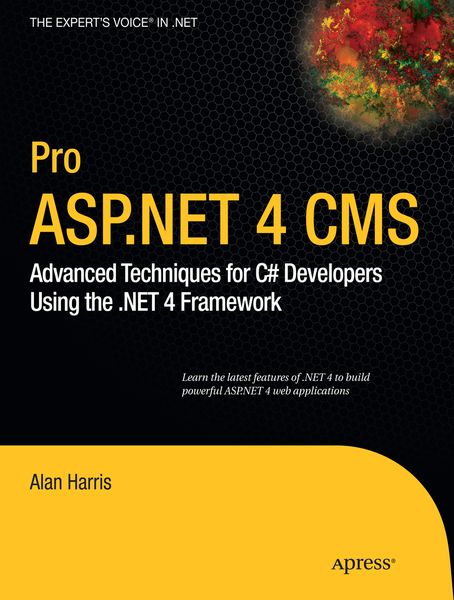
  • Produktbild: Pro ASP.NET 4 CMS
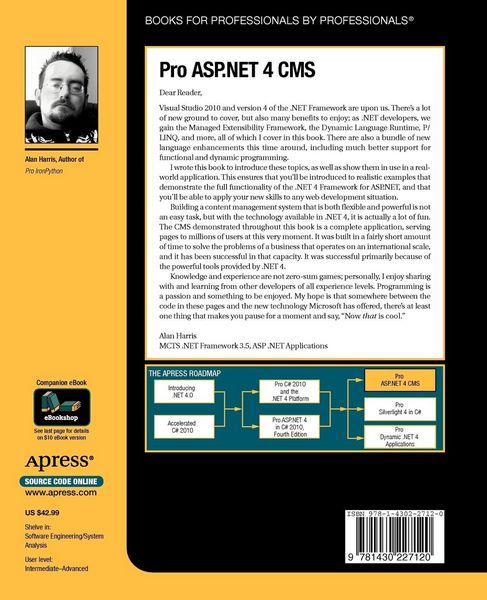
  • Produktbild: Pro ASP.NET 4 CMS

Pro ASP.NET 4 CMS Advanced Techniques for C# Developers Using the .NET 4 Framework

34,99 €

inkl. gesetzl. MwSt., Versandkostenfrei


Beschreibung

Produktdetails

Einband

Taschenbuch

Erscheinungsdatum

22.06.2010

Abbildungen

320 p.

Verlag

Apress

Seitenzahl

320

Maße (L/B/H)

23,5/19,1/1,8 cm

Gewicht

593 g

Auflage

1st ed.

Sprache

Englisch

ISBN

978-1-4302-2712-0

Beschreibung

Produktdetails

Einband

Taschenbuch

Erscheinungsdatum

22.06.2010

Abbildungen

320 p.

Verlag

Apress

Seitenzahl

320

Maße (L/B/H)

23,5/19,1/1,8 cm

Gewicht

593 g

Auflage

1st ed.

Sprache

Englisch

ISBN

978-1-4302-2712-0

Herstelleradresse

Springer-Verlag GmbH
Tiergartenstr. 17
69121 Heidelberg
DE

Email: ProductSafety@springernature.com

Noch keine Bewertungen vorhanden

Verfassen Sie die erste Bewertung zu diesem Artikel

Helfen Sie anderen Kundinnen und Kunden durch Ihre Meinung.

Kundinnen und Kunden meinen

Bewertungen (0)

  • Produktbild: Pro ASP.NET 4 CMS
  • Produktbild: Pro ASP.NET 4 CMS
  • Chapter 1: Visual Studio 2010 and .NET 4.0, An introduction to the terms, technology and general course of the book and what readers should hope to gain, as well as a broad overview of what's new in both Visual Studio 2010 and .NET 4.0
    Chapter 2: N-Tier Architecture and Component-Based Development, An overview of n-tier architecture and how it will be utilized throughout development of the code within this book, and instruction on coding practices such as coding to interfaces and reusable components. Introduces 'Bookshelf', the storefront / review application to be built throughout the book
    Chapter 3: Data Tier via P/LINQ and the Entity Framework, Describes the creation of the data tier, touching on LINQ, the Entity Framework and the PLINQ extensions that allow for parallel processing of LINQ queries
    Chapter 4: Business Tier via DLR and MEF, Walks through creating a business tier for the shop. This chapter addresses the Dynamic Language Runtime as well as the Managed Extensibility Framework with the intention of building a business tier that can easily be expanded and modified in the future
    Chapter 5: Presentation Tier via MVC and AJAX, Explains how to most effectively use the MVC Framework to develop a standards-compliant, lean, fast UI that supports a variety of user-friendly AJAX features. Also explains the Routing changes made in the SP1 release of .NET 3.5 and fully integrated in .NET 4.0 with new convenience methods
    Chapter 6: Caching Tier via Memcached / Velocity, A functional app is not sufficient on the modern web; a functional and highly available app is the yardstick of development success. This chapter describes how to use a distributed caching system (either Memcached, which is not a Microsoft component, or alternatively I can use MS Velocity) to easethe load on the database and increase overall system responsiveness
    Chapter 7: VS2010 Black Box Debugging, Shows how to use the new 'black box debugging' features of Visual Studio 2010 to 'rewind' the state of an application and track down bugs in a reproducible fashion. Also explains how and why to use WinDbg when tracing and basic debugging steps fail to produce the desired solution
    Chapter 8: Data Mining via IronPython and Axum, Explains how to use IronPython and the Axum languages to perform data mining tasks in a highly-scalable, concurrent fashion, enabling the user to extract information from large amounts of system data
    Chapter 9: Search Engine Optimization, Details how to apply SEO techniques to the Bookshelf application (as well as what techniques we've already applied without explicitly walking through them previously). Also examines how to make use of the new MS SEO Toolkit that can be integrated with IIS7 to improve the way search engines view your site