KI-Beratung Beta

Gutscheinbedingungen

**Gültig bis 30.11.2026 auf Spielzeug, Schreibwaren, Filme, Geschenke & Trends, Musik, tolino eReader & Zubehör, Hörbücher und Hörbuch-Downloads, nicht preisgebundene Bücher und Kalender online auf thalia.at und in der Thalia App. Einzelne Artikel können ausgeschlossen sein. Aufgrund der Buchpreisbindung sind deutschsprachige Bücher und eBooks ausgenommen. Zusätzlich ausgenommen sind Abos & Flatrates, Games, Geschenkkarten/-boxen, Shelfies, Software, Zeitschriften sowie einzelne Artikel von tonies®. Pro Einkauf einmal einlösbar. Nur gültig mit im Onlineshop hinterlegter Bonuscard. Click & Collect nur bei Onlinevorabzahlung möglich. Keine Barauszahlung. Nicht kombinierbar mit anderen Aktionen und Gutscheinen. Gutschein wird auf max. 500€ Bestellwert angerechnet. Nicht gültig für Versandkosten und Services.

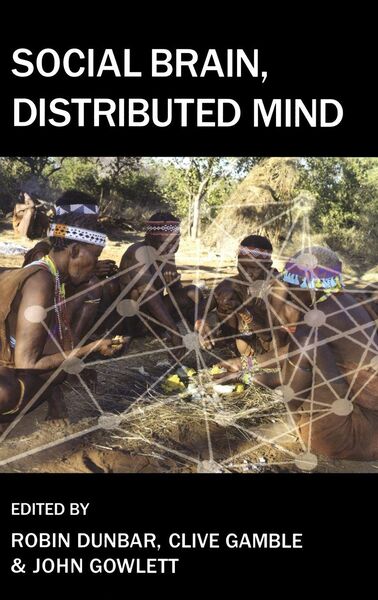
Produktbild: Social Brain, Distributed Mind

Social Brain, Distributed Mind

119,99 €

inkl. gesetzl. MwSt., Versandkostenfrei


Beschreibung

To understand who we are and why we are, we need to understand both modern humans and the ancestral stages that brought us to this point. The core to that story has been the role of evolving cognition -the social brain - in mediating the changes in behaviour that we see in the archaeological record....

Beschreibung

To understand who we are and why we are, we need to understand both modern humans and the ancestral stages that brought us to this point. The core to that story has been the role of evolving cognition -the social brain - in mediating the changes in behaviour that we see in the archaeological record.
This volume brings together two powerful approaches - the social brain hypothesis and the concept of the distributed mind. The volume compares perspectives on these two approaches from a range of disciplines, including archaeology, psychology, philosophy, sociology and the cognitive and evolutionary sciences.
A particular focus is on the role that material culture plays as a scaffold for distributed cognition, and how almost three million years of artefact and tool uses provides the data for tracing key changes in areas such as language, technology, kinship, music, social networks and the politics of local, everyday interaction in small-world societies. A second focus is on how, during the course of hominin evolution, increasingly large spatially distributed communities created stresses that threatened social cohesion.
This volume offers the possibility of new insights into the evolution of human cognition and social lives that will further our understanding of the relationship between mind and world.

Produktdetails

Einband

Gebundene Ausgabe

Erscheinungsdatum

28.07.2011

Herausgeber Robin Dunbar + weitere
Verlag Oxford Academic

Produktdetails

Einband

Gebundene Ausgabe

Erscheinungsdatum

28.07.2011

Herausgeber
Verlag Oxford Academic
Seitenzahl

550

Maße (L/B/H)

24/16,1/3,4 cm

Gewicht

934 g

Sprache

Englisch

ISBN

978-0-19-726452-2

Herstelleradresse

Libri GmbH
Europaallee 1
36244 Bad Hersfeld
DE

Email: gpsr@libri.de

Noch keine Bewertungen vorhanden

Verfassen Sie die erste Bewertung zu diesem Artikel

Helfen Sie anderen Kundinnen und Kunden durch Ihre Meinung.

Kundinnen und Kunden meinen

Bewertungen (0)

  • Produktbild: Social Brain, Distributed Mind
    • Framing the Issues: Evolution of the Social Brain

    • 1: Robin Dunbar, Clive Gamble, and John Gowlett: The Social Brain and its Distributed Mind

    • 2: Clive Gamble: Technologies of Separation and the Evolution of Social Extension

    • 3: Yonas Beyene: Herto Brains and Minds: Behaviour of Early Homo Sapiens from the Middle Awash, Ethiopia

    • The Nature of Network: Bonds of Sociality

    • 4: Julia Lehmann, Katherine Andrews, and Robin Dunbar: Social Complexity and the Importance of Indirect Relationships: Social Networks in Primates

    • 5: Robert Layton and Sean O'Hara: Fission-Fusion Behaviour in Chimpanzees and Hunter-Gatherers

    • 6: Sam Roberts: Constraints on Social Networks

    • 7: Anna Wallette: Social Networks and Community in the Viking Age

    • Evolving Bonds of Sociality

    • 8: Robin Dunbar: Deacon's Dilemma: the Problem of Pairbonding in Human Evolution

    • 9: Julie Hui and Terrence Deacon: The Evolution of Altruism via Social Addiction

    • 10: Dwight Read: From Experiential-Based to Relational-Based forms of Social Organization: a Major Transition in the Evolution of Homo Sapiens

    • 11: Carl Knappett: Networks and the Evolution of Socio-Material Differentiation

    • The Reach of the Brain: Modern Humans and Distributed Minds

    • 12: Alan Barnard: When Individuals Do Not Stop at the Skin

    • 13: Holly Arrow: Cliques, Coalitions, Comrades, and Colleagues: Sources of Cohesion in Groups

    • 14: Richard Sosis: Evolutionary Signalling Theory and Religion: Recent Advances and Future Directions

    • 15: Paul Connerton: Some Functions of Collective Forgetting

    • 16: Mark Rowlands: Consciousness and Culture

    • Testing the Past: Archaeology and the Social Brain in Past Action

    • 17: John Gowlett: Firing up the Intellect

    • 18: Lawrence Barham: Multi-Tasking and the Social Brain in Middle Pleistocene Africa

    • 19: Matt Grove: The Archaeology of Group Size

    • 20: John Chapman: Fragmenting Hominins and the Presencing of Early Palaeolithic Social Worlds

    • 21: Fiona Coward: Small Worlds, Material Culture and Ancient Near Eastern Social Networks

    • 22: Steve Mithen: Brain, Mind and Material Culture in Evolutionary Perspective