Gutscheinbedingungen

**Gültig bis 14.09.2026 auf Spielzeug, Schreibwaren, Filme, Geschenke & Trends, Musik, tolino eReader & Zubehör, Hörbücher, nicht preisgebundene Bücher und Kalender in der Thalia App. Einzelne Artikel können ausgeschlossen sein. Aufgrund der Buchpreisbindung sind deutschsprachige Bücher und eBooks ausgenommen. Zusätzlich ausgenommen sind Abos & Flatrates, Games, Geschenkkarten/-boxen, Shelfies, Software, Zeitschriften sowie einzelne Artikel von tonies®. Pro Einkauf einmal einlösbar. Nur gültig mit im Onlineshop hinterlegter Bonuscard. Click & Collect nur bei Onlinevorabzahlung möglich. Keine Barauszahlung. Nicht kombinierbar mit anderen Aktionen und Gutscheinen. Gutschein wird auf max. 500€ Bestellwert angerechnet. Nicht gültig für Versandkosten und Services.

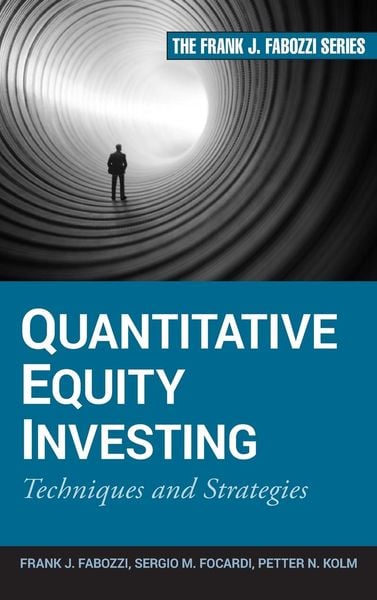
Produktbild: Equity (Fabozzi)

Equity (Fabozzi) Techniques and Strategies

Aus der Reihe Frank J. Fabozzi Series

85,99 €

inkl. gesetzl. MwSt., Versandkostenfrei


Beschreibung

Produktdetails

Einband

Gebundene Ausgabe

Erscheinungsdatum

01.03.2010

Verlag

John Wiley & Sons

Seitenzahl

528

Maße (L/B/H)

23,5/15,7/3,3 cm

Gewicht

909 g

Auflage

1. Auflage

Sprache

Englisch

ISBN

978-0-470-26247-4

Beschreibung

Produktdetails

Einband

Gebundene Ausgabe

Erscheinungsdatum

01.03.2010

Verlag

John Wiley & Sons

Seitenzahl

528

Maße (L/B/H)

23,5/15,7/3,3 cm

Gewicht

909 g

Auflage

1. Auflage

Sprache

Englisch

ISBN

978-0-470-26247-4

Herstelleradresse

Libri GmbH
Europaallee 1
36244 Bad Hersfeld
DE

Email: gpsr@libri.de

Noch keine Bewertungen vorhanden

Verfassen Sie die erste Bewertung zu diesem Artikel

Helfen Sie anderen Kundinnen und Kunden durch Ihre Meinung.

Kundinnen und Kunden meinen

Bewertungen (0)

Die Leseprobe wird geladen.
  • Produktbild: Equity (Fabozzi)
  • Preface.
     
    About the Authors.
     
    Chapter 1 Introduction.
     
    In Praise of Mathematical Finance.
     
    Studies of the Use of Quantitative Equity Management.
     
    Looking Ahead for Quantitative Equity Investing.
     
    Chapter 2 Financial Econometrics I: Linear Regressions.
     
    Historical Notes.
     
    Covariance and Correlation.
     
    Regressions, Linear Regressions, and Projections.
     
    Multivariate Regression.
     
    Quantile Regressions.
     
    Regression Diagnostic.
     
    Robust Estimation of Regressions.
     
    Classification and Regression Trees.
     
    Summary.
     
    Chapter 3 Financial Econometrics II: Time Series.
     
    Stochastic Processes.
     
    Time Series.
     
    Stable Vector Autoregressive Processes.
     
    Integrated and Cointegrated Variables.
     
    Estimation of Stable Vector Autoregressive (Var) Models.
     
    Estimating the Number of Lags.
     
    Autocorrelation and Distributional Properties of Residuals.
     
    Stationary Autoregressive Distributed Lag Models.
     
    Estimation of Nonstationary VAR models.
     
    Estimation with Canonical Correlations.
     
    Estimation with Principal Component Analysis.
     
    Estimation with the Eigenvalues of the Companion Matrix.
     
    Nonlinear Models in Finance.
     
    Causality.
     
    Summary.
     
    Chapter 4 Common Pitfalls in Financial Modeling.
     
    Theory and Engineering.
     
    Engineering and Theoretical Science.
     
    Engineering and Product Design in Finance.
     
    Learning, Theoretical, and Hybrid Approaches to Portfolio Management.
     
    Sample Biases.
     
    The Bias in Averages.
     
    Pitfalls in Choosing from Large Data Sets.
     
    Time Aggregation of Models and Pitfalls in the Selection of Data Frequency.
     
    Model Risk and its Mitigation.
     
    Summary.
     
    Chapter 5 Factor Models and Their Estimation.
     
    The Notion of Factors.
     
    Static Factor Models.
     
    Factor Analysis and Principal Components Analysis.
     
    Why Factor Models of Returns.
     
    Approximate Factor Models of Returns.
     
    Dynamic Factor Models.
     
    Summary.
     
    Chapter 6 Factor-Based Trading Strategies I: Factor Construction and Analysis.
     
    Factor-Based Trading.
     
    Developing Factor-Based Trading Strategies.
     
    Risk to Trading Strategies.
     
    Desirable Properties of Factors.
     
    Sources for Factors.
     
    Building Factors from Company Characteristics.
     
    Working with Data.
     
    Analysis of Factor Data.
     
    Summary.
     
    Chapter 7 Factor-Based Trading Strategies II: Cross-Sectional Models and Trading Strategies.
     
    Cross-Sectional Methods for Evaluation of Factor Premiums.
     
    Factor Models.
     
    Performance Evaluation of Factors.
     
    Model Construction Methodologies for a Factor-Based Trading Strategy.
     
    Backtesting.
     
    Backtesting Our Factor Trading Strategy.
     
    Summary.
     
    Chapter 8 Portfolio Optimization: Basic Theory and Practice.
     
    Mean-Variance Analysis: Overview.
     
    Classical Framework for Mean-Variance Optimization.
     
    Mean-variance Optimization with a Risk-Free Asset.
     
    Portfolio Constraints Commonly Used in Practice.
     
    Estimating the Inputs Used in Mean-Variance Optimization: Expected Return and Risk.
     
    Portfolio Optimization with Other Risk Measures.
     
    Summary.
     
    Chapter 9 Portfolio Optimization: Bayesian Techniques and the Black-Litterman Model.
     
    Practical Problems Encountered in Mean-Variance Optimization.
     
    Shrinkage Estimation.
    &nb