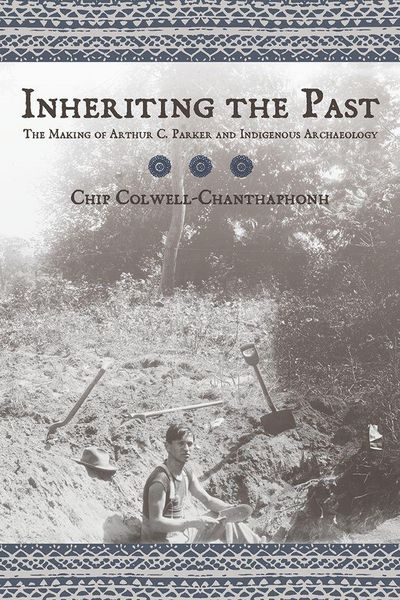
Inheriting the Past The Making of Arthur C. Parker and Indigenous Archaeology
-
- Englisch ausgewählt
42,99 €
inkl. gesetzl. MwSt.,
Beschreibung
Produktdetails
Einband
Taschenbuch
Erscheinungsdatum
15.10.2009
Verlag
University Of Arizona PressSeitenzahl
256
Maße (L/B/H)
22,7/15,2/1,8 cm
Gewicht
404 g
Sprache
Englisch
ISBN
978-0-8165-2656-7
In recent years, archaeologists and Native American communities have struggled to find common ground even though more than a century ago a man of Seneca descent raised on New York's Cattaraugus Reservation, Arthur C. Parker, joined the ranks of professional archaeology. Until now, Parker's life and legacy as the first Native American archaeologist have been neither closely studied nor widely recognized. At a time when heated debates about the control of Native American heritage have come to dominate archaeology, Parker's experiences form a singular lens to view the field's tangled history and current predicaments with Indigenous peoples.
In Inheriting the Past, Chip Colwell-Chanthaphonh examines Parker's winding career path and asks why it has taken generations for Native peoples to follow in his footsteps. Closely tracing Parker's life through extensive archival research, Colwell-Chanthaphonh explores how Parker crafted a professional identity and negotiated dilemmas arising from questions of privilege, ownership, authorship, and public participation. How Parker, as well as the discipline more broadly, chose to address the conflict between Native American rights and the pursuit of scientific discovery ultimately helped form archaeology's moral community. Parker's rise in archaeology just as the field was taking shape demonstrates that Native Americans could have found a place in the scholarly pursuit of the past years ago and altered its trajectory. Instead, it has taken more than a century to articulate the promise of an Indigenous archaeology--an archaeological practice carried out by, for, and with Native peoples. As the current generation of researchers explores new possibilities of inclusiveness, Parker's struggles and successes serve as a singular reference point to reflect on archaeology's history and its future.Noch keine Bewertungen vorhanden
Verfassen Sie die erste Bewertung zu diesem Artikel
Helfen Sie anderen Kundinnen und Kunden durch Ihre Meinung.
Kurze Frage zu unserer Seite
Vielen Dank für Ihr Feedback
Wir nutzen Ihr Feedback, um unsere Produktseiten zu verbessern. Bitte haben Sie Verständnis, dass wir Ihnen keine Rückmeldung geben können. Falls Sie Kontakt mit uns aufnehmen möchten, können Sie sich aber gerne an unseren Kund*innenservice wenden.
zum Kundenservice