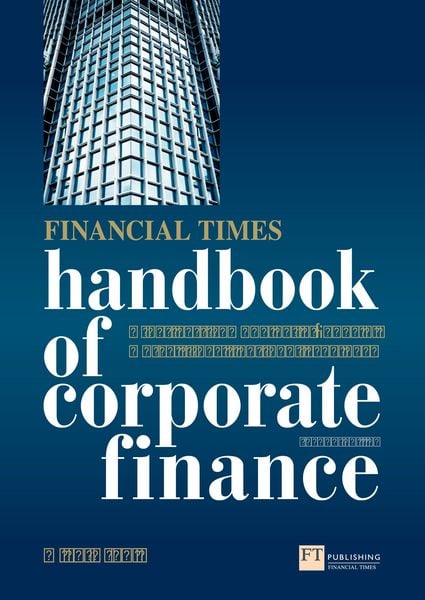
Financial Times Handbook of Corporate Finance, The
-
- Taschenbuch ausgewählt
- eBook
-
Sprache:Englisch
63,99 €
UVP
74,99 €
inkl. gesetzl. MwSt.,
Beschreibung
Produktdetails
Einband
Taschenbuch
Erscheinungsdatum
23.09.2024
Verlag
Pearson Education LimitedSeitenzahl
816
Maße (L/B/H)
24/17/4,4 cm
Gewicht
1166 g
Auflage
2
Sprache
Englisch
ISBN
978-0-273-72656-2
The Financial Times Handbook of Corporate Finance is the authoritative introduction to the principles and practices of corporate finance and the financial markets. Whether you are an experienced manager or finance officer, or youre new to financial decision making, this handbook identifies all those things that you really need to know:
· An explanation of value-based management
· Mergers and the problem of merger failures
· Investment appraisal techniques
· How to enhance shareholder value
· How the finance and money markets really work
· Controlling foreign exchange rate losses
· How to value a company
The second edition of this bestselling companion to finance has been thoroughly updated to ensure that your decisions continue to be informed by sound business principles. New sections include corporate governance, the impact of taxation on investment strategies, using excess return as a new value metric, up-to-date statistics which reflect the latest returns on shares, bonds and merger activities and a jargon-busting glossary to help you understand words, phrases and concepts.
Corporate finance touches every aspect of your business, from deciding which capital expenditure projects are worth backing, through to the immediate and daily challenge of share holder value, raising finance or managing risk.
The Financial Times Handbook of Corporate Finance will help you and your business back the right choices, make the right decisions and deliver improved financial performance. It covers the following areas:
· Evaluating your firms objectives
· Assessment techniques for investment
· Traditional finance appraisal techniques
· Investment decision-making in companies
· Shareholder value
· Value through strategy
· The cost of capital
· Mergers: failures and success
· Merger processes
· How to value companies
· Pay outs to shareholders
· Debt finance
· Raising equity capital
· Managing risk
· Options
· Futures, forwards and swaps
· Exchange rate risk
Noch keine Bewertungen vorhanden
Verfassen Sie die erste Bewertung zu diesem Artikel
Helfen Sie anderen Kundinnen und Kunden durch Ihre Meinung.
Kurze Frage zu unserer Seite
Vielen Dank für Ihr Feedback
Wir nutzen Ihr Feedback, um unsere Produktseiten zu verbessern. Bitte haben Sie Verständnis, dass wir Ihnen keine Rückmeldung geben können. Falls Sie Kontakt mit uns aufnehmen möchten, können Sie sich aber gerne an unseren Kund*innenservice wenden.
zum Kundenservice