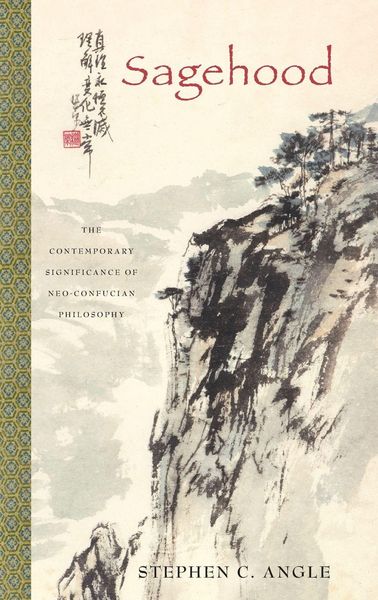
Sagehood The Contemporary Significance of Neo-Confucian Philosophy
-
- Hardcover ausgewählt
- Taschenbuch
-
Sprache:Englisch
105,99 €
inkl. gesetzl. MwSt.,
Beschreibung
Produktdetails
Einband
Gebundene Ausgabe
Erscheinungsdatum
01.10.2009
Verlag
Oxford University PressSeitenzahl
310
Maße (L/B/H)
24/16,1/2,3 cm
Gewicht
688 g
Sprache
Englisch
ISBN
978-0-19-538514-4
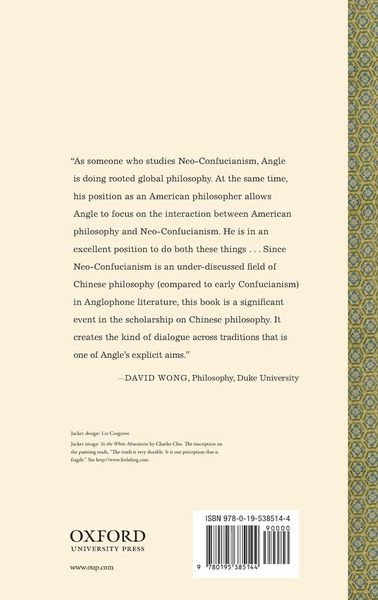
Neo-Confucianism is the sophisticated revival of Confucian theorizing, responding to challenges from Buddhism and Daoism, which began around 1000 C.E. and came to dominate the Chinese intellectual scene for centuries thereafter. What would happen if we took Neo-Confucianism and its central ideal of sagehood seriously as contemporary philosophy? Sagehood represents supreme human virtue: a flawless, empathetic responsiveness to every situation in which one finds oneself. How could this be possible? How might one work toward such a state? According to Neo-Confucians, we should all strive to become sages, whether or not we ultimately achieve it. Taking neo-Confucianism seriously means to explore the ways that its theories of psychology, ethics, education, and politics engage with the views of contemporary philosophers. Angle's book is therefore both an exposition of Neo-Confucian philosophy and a sustained dialogue with many leading Western thinkers--and especially with those philosophers leading the current renewal of interest in virtue ethics. The book's significance is two-fold: it argues for a new stage in the development of contemporary Confucian philosophy, and it demonstrates the value to Western philosophers of engaging with the Neo-Confucian tradition. "Rarely is a work in comparative philosophy itself an original philosophical contribution. But that is the case in this instance in which Angle brings Neo-Confucian philosophy into fruitful conversation with contemporary Western, virtue-ethics based analytic philosophers.The result is a presentation of Neo-Confucianism that advances it beyond any previous Neo-Confucian: Angle is the best in the line so far, at least among those writing or written about in English." - Robert Cummings Neville, The Review of Metaphysics "This book does an outstanding job of engaging a wide range of sources not only from different areas of philosophy (such as virtue ethics and Chinese philosophy) but also from the disciplines of religious studies and Asian studies. Indeed, one thing that makes this book worth reading is the way it puts new and interesting sources into conversation with one another in order to shed new light on the topics at hand. While this work is certainly recommended for specialists in comparative ethics and Chinese philosophy, it is also a resource for philosophers interested in learning how non-Western philosophy might potentially contribute to work in ethics today." - Eric Cline, Mind "Throughout the book, Angle makes good use of recent empirical studies. His book is very accessible for readers with a wide variety of backgrounds. Philosophers with no background in Chinese thought will find challenging and interesting discussions of many issues relevant to their own work. Furthermore, I think this book is also quite appropriate to assign to strong undergraduate students. I recommend it highly." - Bryan W. van Norden, Notre Dame Philosophical Reviews
Noch keine Bewertungen vorhanden
Verfassen Sie die erste Bewertung zu diesem Artikel
Helfen Sie anderen Kundinnen und Kunden durch Ihre Meinung.
Kurze Frage zu unserer Seite
Vielen Dank für Ihr Feedback
Wir nutzen Ihr Feedback, um unsere Produktseiten zu verbessern. Bitte haben Sie Verständnis, dass wir Ihnen keine Rückmeldung geben können. Falls Sie Kontakt mit uns aufnehmen möchten, können Sie sich aber gerne an unseren Kund*innenservice wenden.
zum Kundenservice