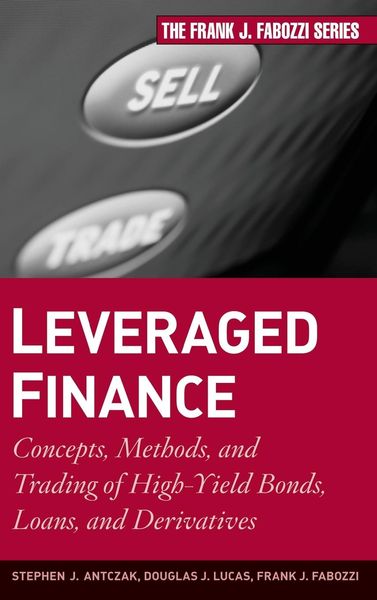
Leveraged Finance Concepts, Methods, and Trading of High-Yield Bonds, Loans, and Derivatives
-
- Englisch ausgewählt
84,99 €
inkl. gesetzl. MwSt.,
Beschreibung
Produktdetails
Einband
Gebundene Ausgabe
Erscheinungsdatum
01.07.2009
Verlag
John Wiley & SonsSeitenzahl
368
Maße (L/B/H)
23,5/15,7/2,4 cm
Gewicht
688 g
Auflage
1. Auflage
Sprache
Englisch
ISBN
978-0-470-50370-6
Leveraged Finance doesn't attempt to predict the future of markets or the ultimate outcome of this crisis. It was written to put the principles of the leveraged finance market in perspective. With this reliable resource as your guide, you'll quickly become familiar with the tools available in the leveraged finance market, how they are related to assets and investment opportunities in other markets, and how to apply these concepts in the real world.
In the past, the assets within the leveraged finance market fell into one of two categories: cash bonds or cash loans. But times have changed. With the introduction of products such as credit default swaps, synthetic indexes, and index tranches, leveraged finance investors have many tools to work with and assets to consider. This book attempts to tie the various pieces that comprise the leveraged finance market together. Its fourteen chapters are divided into five comprehensive parts:
Part One covers the cash markets, which include high-yield bonds--also known as speculative-grade or junk bonds--and leveraged loans
Part Two takes a look into the structured market, focusing on one type of collateralized debt obligation--collateralized loan obligations (CLOs)
Part Three examines the relatively young synthetic markets, which include credit default swaps (CDS), traded credit indexes, and index tranches
Part Four reviews trading strategies that investors can employ within the leveraged finance market
Part Five addresses default correlation--the phenomenon that the likelihood of one obligor defaulting on its debt is affected by whether or not another obligor has defaulted on its debts
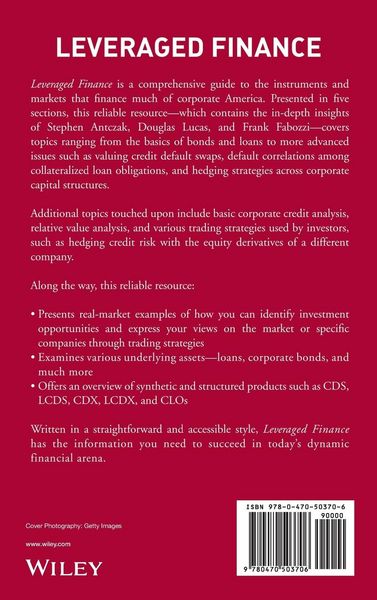
Those with the knowledge and skill to participate in the leveraged finance space stand to benefit from the many opportunities that the current environment is creating. Filled with in-depth insights and expert advice, Leveraged Finance will help you identify and take advantage of these opportunities. Leveraged Finance is a comprehensive guide to the instruments and markets that finance much of corporate America. Presented in five sections, this reliable resource--which contains the in-depth insights of Stephen Antczak, Douglas Lucas, and Frank Fabozzi--covers topics ranging from the basics of bonds and loans to more advanced issues such as valuing credit default swaps, default correlations among collateralized loan obligations, and hedging strategies across corporate capital structures.
Additional topics touched upon include basic corporate credit analysis, relative value analysis, and various trading strategies used by investors, such as hedging credit risk with the equity derivatives of a different company.
Along the way, this reliable resource:
Presents real-market examples of how you can identify investment opportunities and express your views on the market or specific companies through trading strategies
Examines various underlying assets-loans, corporate bonds, and much more
Offers an overview of synthetic and structured products such as CDS, LCDS, CDX, LCDX, and CLOs
Written in a straightforward and accessible style, Leveraged Finance has the information you need to succeed in today's dynamic financial arena.
Noch keine Bewertungen vorhanden
Verfassen Sie die erste Bewertung zu diesem Artikel
Helfen Sie anderen Kundinnen und Kunden durch Ihre Meinung.
Kurze Frage zu unserer Seite
Vielen Dank für Ihr Feedback
Wir nutzen Ihr Feedback, um unsere Produktseiten zu verbessern. Bitte haben Sie Verständnis, dass wir Ihnen keine Rückmeldung geben können. Falls Sie Kontakt mit uns aufnehmen möchten, können Sie sich aber gerne an unseren Kund*innenservice wenden.
zum Kundenservice