Gutscheinbedingungen

**Gültig nur für Bestellungen an die Wunsch-Poststation bis 10.06.2026 auf Spielzeug, Schreibwaren, Filme, Geschenke & Trends, Musik, tolino eReader & Zubehör, Hörbücher und Hörbuch-Downloads (außer Abo), nicht preisgebundene Bücher und Kalender online auf thalia.at und in der Thalia App. Einzelne Artikel können ausgeschlossen sein. Aufgrund der Buchpreisbindung sind deutschsprachige Bücher und eBooks ausgenommen. Zusätzlich ausgenommen sind preisgebundene Artikel, Abos & Flatrates, eBooks, Games, Geschenkkarten/-boxen, Shelfies, Software, Zeitschriften sowie einzelne Artikel von tonies®. Pro Einkauf einmal einlösbar. Kein Click & Collect möglich. Keine Barauszahlung. Nicht kombinierbar mit anderen Aktionen und Gutscheinen. Gutschein wird auf max. 500€ Bestellwert angerechnet. Nicht gültig für Versandkosten und Services.

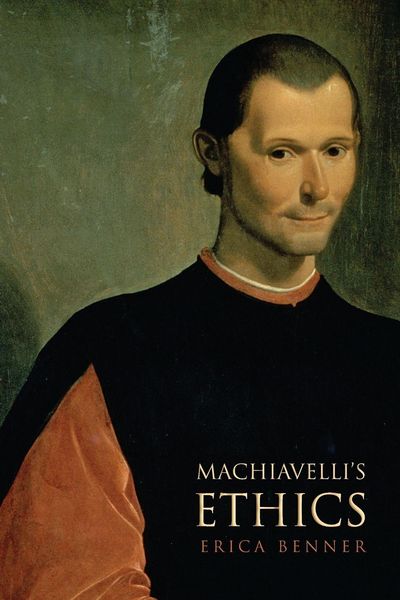
Produktbild: Machiavelli's Ethics

Machiavelli's Ethics

39,99 €

inkl. gesetzl. MwSt., Versandkostenfrei


Beschreibung

Produktdetails

Einband

Taschenbuch

Erscheinungsdatum

15.11.2009

Verlag

University Presses

Seitenzahl

544

Maße (L/B/H)

23,4/15,6/3,2 cm

Gewicht

482 g

Sprache

Englisch

ISBN

978-0-691-14177-0

Beschreibung

Produktdetails

Einband

Taschenbuch

Erscheinungsdatum

15.11.2009

Verlag

University Presses

Seitenzahl

544

Maße (L/B/H)

23,4/15,6/3,2 cm

Gewicht

482 g

Sprache

Englisch

ISBN

978-0-691-14177-0

Herstelleradresse

Libri GmbH
Europaallee 1
36244 Bad Hersfeld
DE

Email: gpsr@libri.de

Kundinnen und Kunden meinen

0 Bewertungen

Informationen zu Bewertungen

Zur Abgabe einer Bewertung ist eine Anmeldung im Konto notwendig. Die Authentizität der Bewertungen wird von uns nicht überprüft. Wir behalten uns vor, Bewertungstexte, die unseren Richtlinien widersprechen, entsprechend zu kürzen oder zu löschen.

Die Bewertungen sind nach Format, Anzahl Sterne und Datum sortiert.

Verfassen Sie die erste Bewertung zu diesem Artikel

Helfen Sie anderen Kund*innen durch Ihre Meinung

Kundinnen und Kunden meinen

0 Bewertungen filtern

Die Leseprobe wird geladen.
  • Produktbild: Machiavelli's Ethics
  • Acknowledgments xiii Abbreviations xv Introduction 1 Arguments: Philosophical ethics and the rule of law 5 Sources: Greek ethics 8 Part I: Contexts Chapter 1: Civil Reasonings: Machiavelli's Practical Filosofia 15 1.1. Florentine Histories: Decent words, indecent deeds 16 1.2. Flawed remedies: Rhetoric and power politics 25 1.3. Flawed analyses: Self-celebratory versus self-critical histories 30 1.4. Philosophy and the vita activa in Florentine humanism 37 1.5. What is, has been, and can reasonably be: Machiavelli's correspondence 43 1.6. The Socratic tradition of philosophical politics 49 1.7. Forming republics in writing and in practice: The Discursus 54 Chapter 2: Ancient Sources: Dissimulation in Greek Ethics 63 2.1. Constructive dissimulation: Writing as civil "medicine" 64 2.2. Inoculation for citizens: Words and deeds in Xenophon's Cyropaedia 71 2.3. Conversations with rulers: Plutarch and Xenophon on purging tyranny 78 2.4. Dissimulating about deception: Xenophon's Cambyses 84 2.5. Dissimulating about justice: Thucydides' Diodotus 88 Part II: Foundations Chapter 3: Imitation and Knowledge 101 3.1. The ancient tradition of imitating ancients 101 3.2. Inadequate imitation: The "unreasonable praise of antiquity" 107 3.3. Historical judgment: Criticism of sources and self-examination 111 3.4. The Socratic metaphor of hunting 116 3.5. Ethical judgment: The "true knowledge of histories" 124 3.6. Machiavelli's dangerous new reasonings 132 Chapter 4: N ecessity and Virtue 135 4.1. The rhetoric of necessity 136 4.2. Necessita as an excuse 140 4.3. Necessita as a pretext 142 4.4. Imposing and removing necessita 147 4.5. Virtu as reflective prudence: Taking stock of ordinary constraints 150 4.6. Under- and overassertive responses to necessity 153 4.7. Virtu as self-responsibility: Authorizing constraints on one's own forces 156 4.8. Virtu as autonomy: Imposing one's own orders and laws 161 4.9. Necessita and fortuna 166 Chapter 5: Human Nature and Human Orders 169 5.1. Fortune and free will 170 5.2. How to manage fortuna: Impetuosity and respetto 175 5.3. Practical theology: Heavenly judgments and human reasons 180 5.4. Practical prophecies: Foreseeing the future by "natural virtues" 184 5.5. Moral psychology: The malignita of human nature and the discipline of virtu 190 5.6. Human zoology: The ways of men and beasts 197 5.7. Human cities, where modes are neither delicate nor too harsh 201 5.8. Who is responsible for the laws? Human reasoning and civilita 206 Part III: Principles Chapter 6: Free Agency and Desires for Freedom 213 6.1. The Discourses on desires for freedom in and among cities 214 6.2. The Florentine Histories on freedom and the need for self-restraint 221 6.3. Are desires for freedom universal? 226 6.4. Inadequate conceptions of freedom 231 6.5. The rhetoric of liberta in republics 239 6.6. Free will and free agency 244 Chapter 7: Free Orders 254 7.1. Priorities I: Respect for free agency as a condition for stable orders 255 7.2. Priorities II: Willing authorization as the foundation of free orders 259 7.3. Conditions I: Universal security 262 7.4. Conditions II: Transparency and publicity 266 7.5. Conditions III: Equal opportunity 269 7.6. Foundations of political freedom: Procedural constraints and the rule of law 279 7.7. Persuasions: Why should people choose free orders? 287 Chapter 8: Justice and Injustice 290 8.1. Justice as the basis of order and liberta 291 8.2. Partisan accounts of justice 299 8.3. Non-partisan persuasions toward justice 306 8.4. Why it is dangerous to violate the law of nations 309 8.5. Forms of justice: Promises, punishments, and distributions 314 8.6. Ignorance of justice: Who is responsible for upholding just orders? 320 Chapter 9: Ends and Means 325 9.1. Responsibility for bad outcomes: The dangers of giving counsel 326 9.2. Judging wars by post facto outcomes 331 9.3. Judging wars by anticipated outcomes 335 9.4. Reflective consequentialism or deontology? 340 9.5. Problem 1: Unjust means corrupt good ends 343 9.6. Problem 2: Who can be trusted to foresee effects? 347 9.7. Problem 3: Who can be trusted to identify good ends? 351 9.8. Problem 4: Corrupting examples 357 9.9. Corrupt judgments: Means and ends in the Prince 360 Part IV: Politics Chapter 10: Ordinary and Extraordinary Authority 367 10.1. The antithesis between ordinary and extraordinary modes 367 10.2. Are conspiracies ever justified? 373 10.3. Extraordinary and ordinary ways to renovate corrupt cities 380 10.4. Unreasonable uses of religion: Easy ways to acquire authority 386 10.5. Reasonable uses of religion: Fear of God and fear of human justice 394 10.6. Folk religion and civil reasoning 400 Chapter 11: Legislators and Princes 407 11.1. Spartan founders and refounders: Lycurgus, Agis, and Cleomenes 408 11.2. Roman founders and legislators: Romulus and Aeneas 418 11.3. God's executors and modes of free building: Moses 424 11.4. Ordinary mortals and the ancient ideal of the one-man legislator 432 11.5. Persuasion in the Prince: On maintaining one's own arms 437 11.6. Princely knowledge and the "knowledge of peoples" 447 Chapter 12: E xpansion and Empire 451 12.1. Why republics must expand: The defects of non-expansionist republics 451 12.2. Three modes: Equal partnership, subjection to one, and the Roman mode 454 12.3. The Roman "middle way": Making subjects or partners 458 12.4. Bad Roman modes, good Roman orders: The choice between extremes 464 12.5. Why Roman imperio became pernicious: The wars with Carthage 468 12.6. Expansion by partnership: The forgotten Tuscan league 475 12.7. Should Florence imitate Rome? 478 Conclusions 484 This interpretation and others 490 Machiavelli and the ethical foundations of political philosophy 496 Bibliography 499 Index 509