KI-Beratung Beta

Gutscheinbedingungen

**Gültig bis 30.11.2026 auf Spielzeug, Schreibwaren, Filme, Geschenke & Trends, Musik, tolino eReader & Zubehör, Hörbücher und Hörbuch-Downloads, nicht preisgebundene Bücher und Kalender online auf thalia.at und in der Thalia App. Einzelne Artikel können ausgeschlossen sein. Aufgrund der Buchpreisbindung sind deutschsprachige Bücher und eBooks ausgenommen. Zusätzlich ausgenommen sind Abos & Flatrates, Games, Geschenkkarten/-boxen, Shelfies, Software, Zeitschriften sowie einzelne Artikel von tonies®. Pro Einkauf einmal einlösbar. Nur gültig mit im Onlineshop hinterlegter Bonuscard. Click & Collect nur bei Onlinevorabzahlung möglich. Keine Barauszahlung. Nicht kombinierbar mit anderen Aktionen und Gutscheinen. Gutschein wird auf max. 500€ Bestellwert angerechnet. Nicht gültig für Versandkosten und Services.

  • Produktbild: The calcitonin gene-related peptide family
  • Produktbild: The calcitonin gene-related peptide family
- 12%

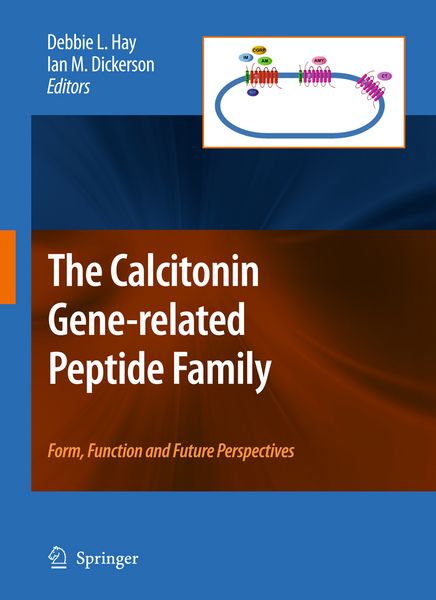
The calcitonin gene-related peptide family form, function and future perspectives

12% sparen

144,99 € UVP 164,99 €

inkl. gesetzl. MwSt., Versandkostenfrei


Beschreibung

In 1925, J. B. Collip (1925) reported that extracts of parathyroid gland contained an activity that raised calcium levels in the blood of parathyroidectomized animals, and suggested that this was due to a hormone produced in the parathyroid gland. The story of parathyroid hormone discovery was indicative...

Beschreibung

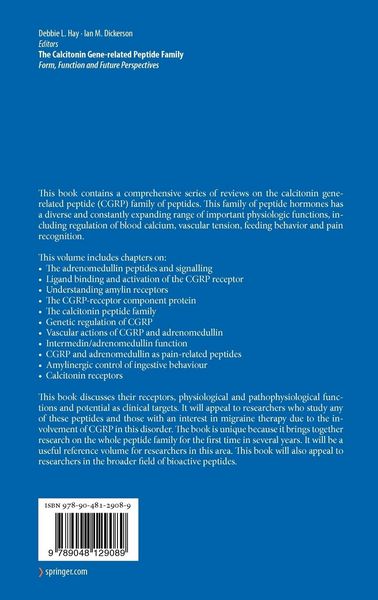
In 1925, J. B. Collip (1925) reported that extracts of parathyroid gland contained an activity that raised calcium levels in the blood of parathyroidectomized animals, and suggested that this was due to a hormone produced in the parathyroid gland. The story of parathyroid hormone discovery was indicative of ever-increasing sophistication in sample preparation and protein isolation techniques. This paper resolved earlier controversies over the function of the parathyroid glands and c- trol of blood calcium. The year 1961 was a banner year for parathyroid research, in which the peptides parathyroid hormone and calcitonin were purified, and in which it was suggested that calcitonin could lower blood calcium (Copp and Cameron 1961). In 1982 it was discovered that in neurons the primary RNA transcript for calcitonin could be alternatively-spliced to give calcitonin gene-reated peptide (CGRP), and shortly thereafter amylin (previously named islet amyloid polyp- tide, IAPP) was identified and shown to have homology to CGRP. Since then a and b CGRP have been delineated and adrenomedullin and intermedin discovered, and this family of homologous peptides has emerged. This family of peptide hormones has a diverse and constantly expanding range of important physiologic functions, including regulation of blood calcium, vascular tension, feeding behavior and pain recognition.

Produktdetails

Einband

Gebundene Ausgabe

Erscheinungsdatum

14.10.2009

Abbildungen

VIII, 236 p.

Herausgeber Deborah L. Hay + weitere

Produktdetails

Einband

Gebundene Ausgabe

Erscheinungsdatum

14.10.2009

Abbildungen

VIII, 236 p.

Herausgeber
Verlag Springer Netherland
Seitenzahl

236

Maße (L/B/H)

24,1/16/2 cm

Gewicht

528 g

Auflage

1. Auflage

Sprache

Englisch

ISBN

978-90-481-2908-9

Herstelleradresse

Springer-Verlag GmbH
Europaplatz 3
69115 Heidelberg
DE

Email: ProductSafety@springernature.com

Noch keine Bewertungen vorhanden

Verfassen Sie die erste Bewertung zu diesem Artikel

Helfen Sie anderen Kundinnen und Kunden durch Ihre Meinung.

Kundinnen und Kunden meinen

Bewertungen (0)

  • Produktbild: The calcitonin gene-related peptide family
  • Produktbild: The calcitonin gene-related peptide family
  • Molecular and Functional Evolution of the Adrenomedullin Family in Vertebrates: What Do Fish Studies Tell Us?.- Ligand Binding and Activation of the CGRP Receptor.- Understanding Amylin Receptors.- The CGRP-Receptor Component Protein: A Regulator for CLR Signaling.- The Calcitonin Peptide Family: What Can We Learn from Receptor Knock Out and Transgenic Mice.- Gene Targeted Mouse Models of Adrenomedullin Signaling.- Genetic Regulation of CGRP and Its Actions.- Vascular Actions of CGRP and Adrenomedullin: Mechanisms and Potential Contribution to Inflammation in the Cutaneous Microvasculature.- Insights into the Function of Intermedin/Adrenomedullin 2.- CGRP and Adrenomedullin as Pain-Related Peptides.- Amylinergic Control of Ingestive Behaviour.- CGRP Receptor Antagonists for Migraine: Challenges and Promises.- Calcitonin Receptor Expression in Embryonic, Foetal and Adult Tissues: Developmental and Pathophysiological Implications.- Conclusions and Future Perspectives.