KI-Beratung Beta

Gutscheinbedingungen

**Gültig am 27.11.2026 auf Spielzeug, Schreibwaren, Filme, Geschenke & Trends, Musik, tolino eReader & Zubehör, Hörbücher und Hörbuch-Downloads, nicht preisgebundene Bücher und Kalender online auf thalia.at und in der Thalia App. Einzelne Artikel können ausgeschlossen sein. Aufgrund der Buchpreisbindung sind deutschsprachige Bücher und eBooks ausgenommen. Zusätzlich ausgenommen sind Abos & Flatrates, Games, Geschenkkarten/-boxen, Shelfies, Software, Zeitschriften sowie einzelne Artikel von tonies®. Pro Einkauf einmal einlösbar. Click & Collect nur bei Onlinevorabzahlung möglich. Keine Barauszahlung. Nicht kombinierbar mit anderen Aktionen und Gutscheinen. Gutschein wird auf max. 500€ Bestellwert angerechnet. Nicht gültig für Versandkosten und Services.

  • Produktbild: HIV Interactions with Host Cell Proteins
  • Produktbild: HIV Interactions with Host Cell Proteins
Band 339 - 13%

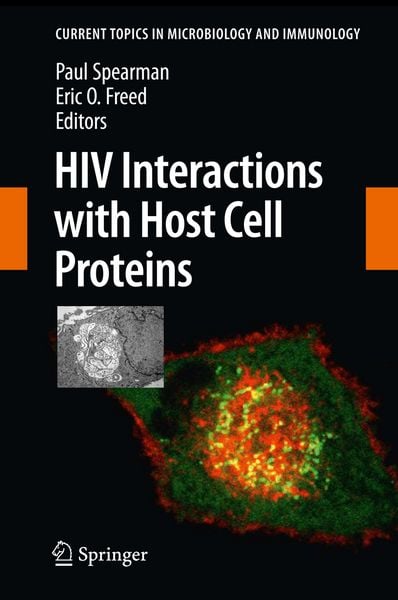
HIV Interactions with Host Cell Proteins

13% sparen

219,99 € UVP 252,99 €

inkl. gesetzl. MwSt., Versandkostenfrei


Beschreibung

The study of viruses necessarily involves dissecting the intimate details of cellular pathways. Viruses have often been employed as tools in studying cellular pathways, as was done by early retrovirologists such as Peyton Rous in attempting to understand the mechanism of cellular transformation and oncogenesis....

Beschreibung

The study of viruses necessarily involves dissecting the intimate details of cellular pathways. Viruses have often been employed as tools in studying cellular pathways, as was done by early retrovirologists such as Peyton Rous in attempting to understand the mechanism of cellular transformation and oncogenesis. On the other side of the coin, virologists seek to de?ne those cellular elements interacting intimatelywiththeir virus ofinterestinorder to better understand viral replication itself, and in some cases to develop antiviral strategies. It is in the intersection of virology and cell biology that many of us ?nd the most rewarding aspects of our research. When a new discovery yields insights into basic cellular mechanisms and presents new targets for int- vention to ?ght a serious pathogen, the impact can be high and the excitement intense. HIV has been no exception to the rule that viruses reveal many basic aspects of cellular biology. In recent years, in part because of the importance of HIV as a major cause of human suffering, numerous cellular processes have been elucidated through work on processes or proteins of this human retrovirus. The excitement in this ?eld is especially well illustrated by the discovery of new innate means of resisting viral replication, such as the work on APOBEC3G, TRIM5a, and BST-2/ tetherin presented in this volume.

Produktdetails

Einband

Gebundene Ausgabe

Erscheinungsdatum

15.12.2009

Abbildungen

X, 204 p. 26 illus., 20 illus. in color.

Herausgeber Paul Spearman + weitere

Produktdetails

Einband

Gebundene Ausgabe

Erscheinungsdatum

15.12.2009

Abbildungen

X, 204 p. 26 illus., 20 illus. in color.

Herausgeber
Verlag Springer Berlin
Seitenzahl

204

Maße (L/B/H)

24,1/16/1,8 cm

Gewicht

482 g

Auflage

2009

Sprache

Englisch

ISBN

978-3-642-02174-9

Herstelleradresse

Springer-Verlag GmbH
Europaplatz 3
69115 Heidelberg
DE

Email: ProductSafety@springernature.com

Noch keine Bewertungen vorhanden

Verfassen Sie die erste Bewertung zu diesem Artikel

Helfen Sie anderen Kundinnen und Kunden durch Ihre Meinung.

Kundinnen und Kunden meinen

Bewertungen (0)

  • Produktbild: HIV Interactions with Host Cell Proteins
  • Produktbild: HIV Interactions with Host Cell Proteins
  • Host Restriction of HIV-1 by APOBEC3 and Viral Evasion Through Vif.- Interactions of Viral protein U (Vpu) with Cellular Factors.- TRIM5alpha.- Human Immunodeficiency Virus Type-1 Gag and Host Vesicular Trafficking Pathways.- The Roles of Tetraspanins in HIV-1 Replication.- Imaging of HIV/Host Protein Interactions.- Virological and Cellular Roles of the Transcriptional Coactivator LEDGF/p75.- Implications of Nef: Host Cell Interactions in Viral Persistence and Progression to AIDS.- Vpr and Its Interactions with Cellular Proteins.