Gutscheinbedingungen

**Gültig bis 06.07.2026 auf fremdsprachige Bücher online auf thalia.at, in der Thalia App ab einem Mindestbestellwert von 30€ und in allen Thalia Buchhandlungen in Österreich. In den Buchhandlungen nur gültig auf lagernde Ware. Einzelne Artikel können ausgeschlossen sein. Ausgenommen sind preisgebundene Artikel & eBooks. Pro Einkauf einmal einlösbar. Nur gültig gegen Vorlage oder im Onlineshop hinterlegter Bonuscard. Infos zur Einlösung in der Buchhandlung sind auf der Bonuscard-Vorteilspreisseite zu finden. Click & Collect nur bei Onlinevorabzahlung möglich. Keine Einlösung bei Scan & Go-Bezahlung. Keine Barauszahlung. Nicht kombinierbar mit anderen Aktionen und Gutscheinen. Gutschein wird auf max. 500€ Bestellwert angerechnet. Nicht gültig für Versandkosten und Services.

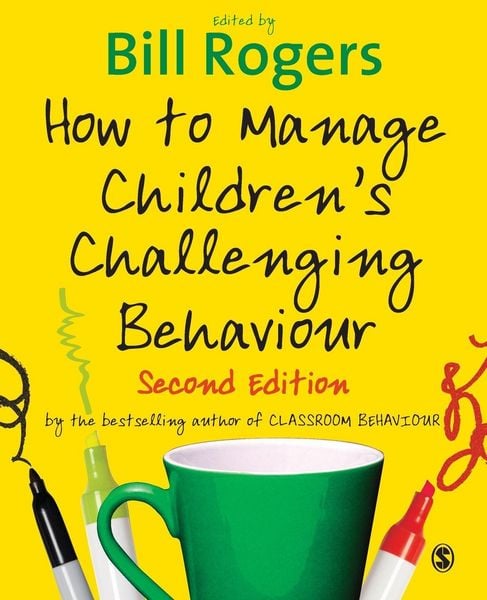
  • Produktbild: How to Manage Children's Challenging Behaviour
  • Produktbild: How to Manage Children's Challenging Behaviour

How to Manage Children's Challenging Behaviour

88,99 €

inkl. gesetzl. MwSt., Versandkostenfrei


Beschreibung

Produktdetails

Einband

Taschenbuch

Erscheinungsdatum

07.08.2009

Herausgeber

Bill Rogers

Verlag

Sage Publications

Seitenzahl

208

Maße (L/B/H)

23,5/19,1/1,2 cm

Gewicht

399 g

Auflage

2. Auflage

Sprache

Englisch

ISBN

978-1-84860-685-2

Beschreibung

Rezension

'Well edited and short, the essays are easy to read and fit in to a busy life...The honest and thoughtful reflections of the teachers provide a sense of hope that prosocial behaviour is achievable and not a dream!' - Youth in Mind

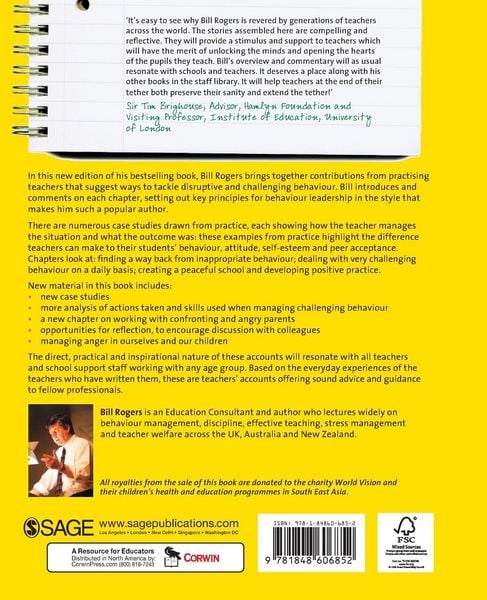
'It's easy to see why Bill Rogers is revered by generations of teachers across the world. The stories assembled here are compelling and reflective. They will provide a stimulus and support to teachers 'cutting and chipping themselves into the shape of the key which will have the merit of unlocking the minds and opening the hearts' of the pupils they teach. Bill's overview and commentary will as usual resonate with schools and teachers. It deserves a place along with his other books in the staff library. Any one of the case studies here, along with Bill's observations, could form the basis of any school working group examining the issue of 'behaviour'. It's bound to lead to an improvement among pupils parents and staff. And it will help teachers at the end of their tether both preserve their sanity and extend the tether!' - Sir Tim Brighouse, Advisor, Hamlyn Foundation and Visiting Professor, Institute of Education, University of London

Produktdetails

Einband

Taschenbuch

Erscheinungsdatum

07.08.2009

Herausgeber

Bill Rogers

Verlag

Sage Publications

Seitenzahl

208

Maße (L/B/H)

23,5/19,1/1,2 cm

Gewicht

399 g

Auflage

2. Auflage

Sprache

Englisch

ISBN

978-1-84860-685-2

Herstelleradresse

Libri GmbH
Europaallee 1
36244 Bad Hersfeld
DE

Email: gpsr@libri.de

Noch keine Bewertungen vorhanden

Verfassen Sie die erste Bewertung zu diesem Artikel

Helfen Sie anderen Kundinnen und Kunden durch Ihre Meinung.

Kundinnen und Kunden meinen

Bewertungen (0)

  • Produktbild: How to Manage Children's Challenging Behaviour
  • Produktbild: How to Manage Children's Challenging Behaviour
  • PART ONE: CHALLENGING BEHAVIOUR: OUR THINKING, ATTITUDES AND STRATEGY
    We Cannot Predict Where Our Students May End up - Bill Rogers
    The ¿Pygmalion Effect¿: Where Expectancy Can Lead - Bill Rogers
    ¿Dear Luke¿: What I Saw at the Outset and How Children¿s Behaviour Challenges us in Positive Ways - Elizabeth McPherson
    My Global Classroom - Peter D¿Angelo
    ¿William¿ and ¿Muddling through¿ - Jim Gilbert
    Parents: The Difficult Chat - Bill Rogers
    PART TWO: UNDERSTANDING CHALLENGING CHILDREN AND CHILDREN WITH EMOTIONAL AND BEHAVIOURAL DISORDER
    Understanding emotional and behavioural disorder in mainstream schools - Bill Rogers
    Measurement of difference or meaning (when working with challenging children) - Ken Sell
    Changing perceptions of challenging behaviour: Tom and his teacher - Larry Taylor
    Finding a connection point for change in behaviour: Alex ¿wins a race¿ - Karen Kearney
    Choosing to teach: choosing to make a difference - Elizabeth McPherson
    PART THREE: TEACHING CHILDREN WITH EMOTIONAL AND BEHAVIOURAL DISORDER
    Introduction - Bill Rogers
    One, two, three, four, out the door - or STOP (Straight To the Office Please) - Bette Blance
    There is always a way back: an individual behaviour management plan - Mara Smart, Mariette West and Pamela Curtain
    Helping a child change his behaviour and his short attention span - Kerrie Miller
    AD/HD and teaching academic survival behaviours - Bill Rogers
    A tall order: a challenging student on day one and after - Patsy Finger
    Individual behaviour management plans and group support with infant-age children: Troy¿s story - Debbie Hoy
    PART FOUR: THE HARD-TO-MANAGE CLASS: WHEN IT IS MORE THAN ONE OR TWO
    The hard-to-manage class: reasons, options, support - Bill Rogers
    My most challenging Year 8 class ever - Leanne Wright
    The ¿class from hell¿ - Denise Frost
    Classroom meetings to the rescue - Carmen Price
    A winner - in a hard class - Heather Fraser
    PART FIVE: WORKING TO BUILD A CO-OPERATIVE CLASSROOM GROUP: CLASSROOM MEETINGS AND BUILDING RELATIONSHIPS
    Introduction - Bill Rogers
    Friendship problems: using a solving circle - Carmen Price
    Relationships and conflict-solving (classroom and playground) with infants - Debbie Hoy and Ros Daniels
    Creating the peaceable school - Carmel Ryan
    A beautiful place: building a multicultural school - Larry Schwartz
    A human story - Unsourced
    PART SIX: PRINCIPLES AND PRACTICES THAT ENABLE US TO MAKE A DIFFERENCE WITH INDIVIDUAL CHILDREN AND CLASSROOM GROUPS - Bill Rogers
    PART SEVEN: SUPPORTING PARENTS OF CHILDREN WITH CHALLENGING BEHAVIOURS
    Communicating with parents who challenge... - Bill Rogers
    Dealing with - and supporting - difficult parents - Gail Doney
    Supporting the parents of children with challenging behaviour - Cathy Whalen
    Working with difficult parents - Maureen Smyth
    Working with parents/ca/carers of children with challenging behaviours (primary) - Alysan Dermody Palmer
    An extended note on anger (primarily from Aristotle) - Bill Rogers
    PART EIGHT: NARRATIVES: HOW TEACHERS¿ STORIES CONNECT US, SUPPORT US, ENCOURAGE US AND ENABLE US AS TEACHERS - Sharn Donnison