• Produktbild: Young Learners, Diverse Children
  • Produktbild: Young Learners, Diverse Children

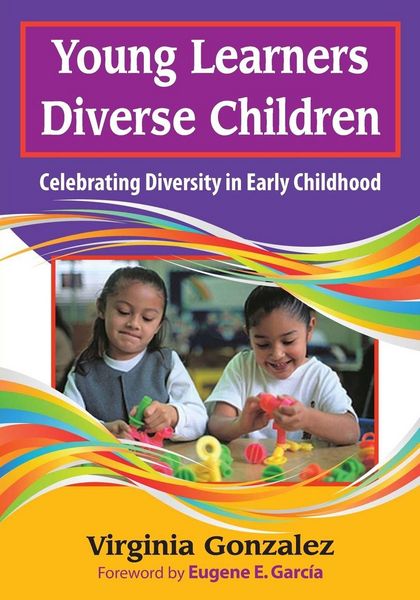
Young Learners, Diverse Children Celebrating Diversity in Early Childhood

46,99 €

inkl. gesetzl. MwSt., Versandkostenfrei


Beschreibung

Produktdetails

Einband

Taschenbuch

Erscheinungsdatum

22.09.2009

Herausgeber

Virginia M. Gonzalez

Verlag

Sage Publications

Seitenzahl

248

Maße (L/B/H)

25,4/17,8/1,4 cm

Gewicht

510 g

Sprache

Englisch

ISBN

978-1-4129-6814-0

Beschreibung

Produktdetails

Einband

Taschenbuch

Erscheinungsdatum

22.09.2009

Herausgeber

Virginia M. Gonzalez

Verlag

Sage Publications

Seitenzahl

248

Maße (L/B/H)

25,4/17,8/1,4 cm

Gewicht

510 g

Sprache

Englisch

ISBN

978-1-4129-6814-0

Herstelleradresse

Produktsicherheitsverantwortliche/r
Europaallee 1
36244 Bad Hersfeld
DE

Email: gpsr@libri.de

Kundinnen und Kunden meinen

0 Bewertungen

Informationen zu Bewertungen

Zur Abgabe einer Bewertung ist eine Anmeldung im Konto notwendig. Die Authentizität der Bewertungen wird von uns nicht überprüft. Wir behalten uns vor, Bewertungstexte, die unseren Richtlinien widersprechen, entsprechend zu kürzen oder zu löschen.

Die Bewertungen sind nach Format, Anzahl Sterne und Datum sortiert.

Verfassen Sie die erste Bewertung zu diesem Artikel

Helfen Sie anderen Kund*innen durch Ihre Meinung

Kundinnen und Kunden meinen

0 Bewertungen filtern

Weitere Artikel finden Sie in

  • Produktbild: Young Learners, Diverse Children
  • Produktbild: Young Learners, Diverse Children
  • Lists of Figures and Tables
    Foreword by Eugene E. Garcia
    Preface: A Letter to the Reader
    Acknowledgments
    About the Author
    Part I. Ethnic-Educator Philosophical and Theoretical Framework
    1. The Ethnic-Educator Philosophy
    Examples of Principle 1
    Examples of Principle 2
    Examples of Principle 3
    Examples of Principle 4
    2. The Ethnic-Educator Pedagogical Model
    How Teachers¿ Personalities Affect Their Assessment and Instructional Decisions
    A Socioconstructivistic Pedagogical Model Supporting the Ethnic-Educator Approach
    The Four Pedagogical Principles for Learning and Academic Achievement
    Part II. Educational Applications of the Ethnic-Educator Approach
    3. Teaching Strategies
    Strategies Supporting the Ethnic-Educator Approach
    First Cluster of Pedagogical Strategies: Thematic Curriculums
    First Cluster of Pedagogical Strategies: Holistic Developmental Curriculums
    Second Cluster of Pedagogical Strategies: Stimulating Critical-Thinking Skills
    Second and Third Clusters of Pedagogical Strategies: A Pluralistic Pedagogy Stimulating Connections to Prior Sociocultural Knowledge and Real-life Experiences
    Fourth Cluster of Pedagogical Strategies: An Advocacy Position for Teachers
    Suggestions for Applying the Strategies
    4. Linking the Teaching Strategies With Academic Content Standards
    Linking Assessment to Instruction Through Classroom-Based Observations
    Instructional Purposes of Assessment
    Integration of Teaching Principles With TESOL Academic Content Standards in the Curriculum
    Linking Assessment to Instruction Through Classroom-Based Observations
    5. Developmental Tasks for Linking Assessment to Instruction
    Case Study Introducing Individual Developmental Tasks
    Discussion of Pauläs Overall Performance Across Developmental Tasks
    6. Storytelling
    Research-Based Knowledge Supporting Storytelling as an Alternative Assessment
    Storytelling as an Assessment Method of First- and Second-Language and Cognitive Development
    Developmental Stages of Narrative and Semantic Development in Children
    Socioconstructivist Perspective for Language Development
    Sociocultural Perspective for Language Development
    Application of Research-Based Knowledge to Actual Assessment Strategies
    Recommended Strategies for Clustering Coding of Responses
    Four Recommended Strategies for Interpreting Evaluation Results
    Conclusions
    7. Alternative Reading Instruction
    Introduction
    Theoretical Framework Supporting Reading Instruction in Young, Diverse Children
    Guided-Reading Approach for Developing Reading-Comprehension Skills
    Application of the Guided-Reading Approach
    Application of the Schema Theory
    Repetition and Practice Make Perfect
    Activities for Increasing Reading Abilities
    Family Involvement for Increasing Reading Skills
    Bridging the Gap Between School and Home Cultures Through Parental Participation
    Conclusions
    8. Conclusions and Recommendations for Educating Diverse Young Children
    Introduction: The BPDC as a Learning Context
    Interviews With Teachers Participating in the BPDC Project
    Interviews With Diverse and Mainstream Parents Participating in the BPDC Project
    Overall Conclusions
    Appendix A. Alignment of Philosophical and Pedagogical Principles and Pedagogical Strategies Endorsed by the Ethnic-Educator Approach for Young, Diverse Children
    References
    Index