Beschreibung
Produktdetails
Einband
Gebundene Ausgabe
Erscheinungsdatum
01.05.2009
Verlag
John Wiley & SonsSeitenzahl
276
Maße (L/B/H)
25/17,5/2 cm
Gewicht
617 g
Auflage
1. Auflage
Sprache
Englisch
ISBN
978-0-470-69744-3
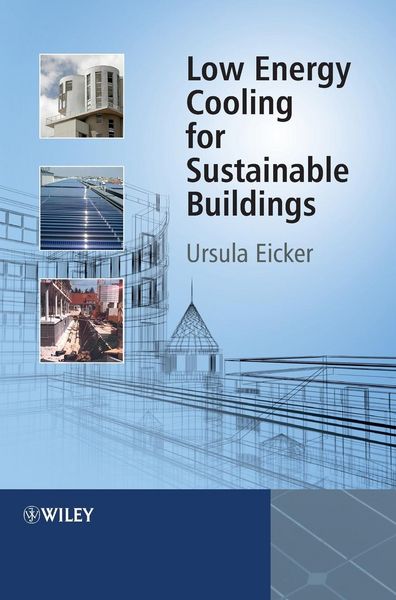
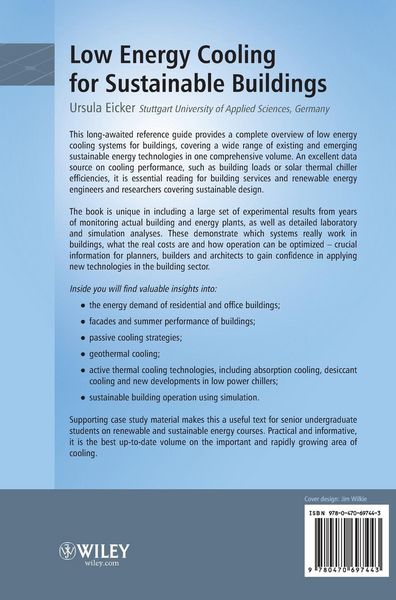
This long-awaited reference guide provides a complete overview of low energy cooling systems for buildings, covering a wide range of existing and emerging sustainable energy technologies in one comprehensive volume. An excellent data source on cooling performance, such as building loads or solar thermal chiller efficiencies, it is essential reading for building services and renewable energy engineers and researchers covering sustainable design.
The book is unique in including a large set of experimental results from years of monitoring actual building and energy plants, as well as detailed laboratory and simulation analyses. These demonstrate which systems really work in buildings, what the real costs are and how operation can be optimized - crucial information for planners, builders and architects to gain confidence in applying new technologies in the building sector.
Inside you will find valuable insights into:
* the energy demand of residential and office buildings;
* facades and summer performance of buildings;
* passive cooling strategies;
* geothermal cooling;
* active thermal cooling technologies, including absorption cooling, desiccant cooling and new developments in low power chillers;
* sustainable building operation using simulation.
Supporting case study material makes this a useful text for senior undergraduate students on renewable and sustainable energy courses. Practical and informative, it is the best up-to-date volume on the important and rapidly growing area of cooling.
The book is unique in including a large set of experimental results from years of monitoring actual building and energy plants, as well as detailed laboratory and simulation analyses. These demonstrate which systems really work in buildings, what the real costs are and how operation can be optimized - crucial information for planners, builders and architects to gain confidence in applying new technologies in the building sector.
Inside you will find valuable insights into:
* the energy demand of residential and office buildings;
* facades and summer performance of buildings;
* passive cooling strategies;
* geothermal cooling;
* active thermal cooling technologies, including absorption cooling, desiccant cooling and new developments in low power chillers;
* sustainable building operation using simulation.
Supporting case study material makes this a useful text for senior undergraduate students on renewable and sustainable energy courses. Practical and informative, it is the best up-to-date volume on the important and rapidly growing area of cooling.
Noch keine Bewertungen vorhanden
Verfassen Sie die erste Bewertung zu diesem Artikel
Helfen Sie anderen Kundinnen und Kunden durch Ihre Meinung.
Kurze Frage zu unserer Seite
Vielen Dank für Ihr Feedback
Wir nutzen Ihr Feedback, um unsere Produktseiten zu verbessern. Bitte haben Sie Verständnis, dass wir Ihnen keine Rückmeldung geben können. Falls Sie Kontakt mit uns aufnehmen möchten, können Sie sich aber gerne an unseren Kund*innenservice wenden.
zum Kundenservice