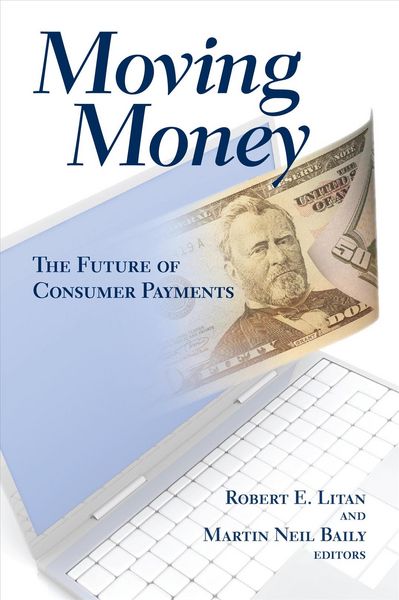
Moving Money The Future of Consumer Payments
-
- Taschenbuch ausgewählt
- eBook
-
Sprache:Englisch
44,99 €
inkl. gesetzl. MwSt.,
Beschreibung
Produktdetails
Einband
Taschenbuch
Erscheinungsdatum
17.06.2009
Herausgeber
Litan Robert E. + weitereVerlag
Rowman & LittlefieldSeitenzahl
160
Maße (L/B/H)
22,9/15,2/0,9 cm
Gewicht
242 g
Sprache
Englisch
ISBN
978-0-8157-0277-1
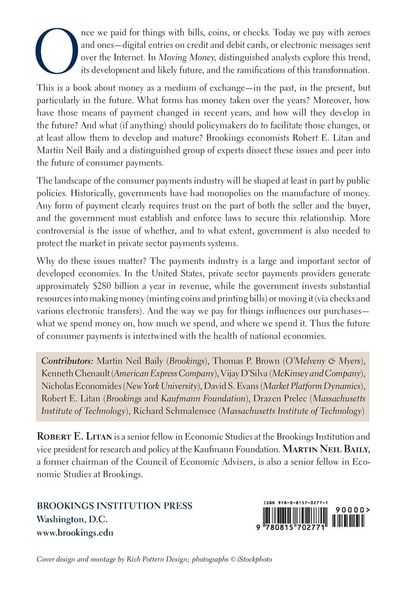
" Once we paid for things with bills, coins, or checks. Today we pay with zeroes and ones—digital entries on credit and debit cards, or electronic messages sent over the Internet. In Moving Money, distinguished analysts explore this trend, its development and likely future, and the ramifications of this transformation. This is a book about money as a medium of exchange—in the past, in the present, but particularly in the future. What forms has money taken over the years? Moreover, how have those means of payment changed in recent years, and how will they develop in the future? And what (if anything) should policymakers do to facilitate those changes, or at least allow them to develop and mature? Brookings economists Robert E. Litan and Martin Neil Baily and a distinguished group of experts dissect these issues and peer into the future of consumer payments. The landscape of the consumer payments industry will be shaped at least in part by public policies. Historically, governments have had monopolies on the manufacture of money. Any form of payment clearly requires trust on the part of both the seller and the buyer, and the government must establish and enforce laws to secure this relationship. More controversial is the issue of whether, and to what extent, government is also needed to protect the market in private sector payments systems. Why do these issues matter? The payments industry is a large and important sector of developed economies. In the United States, private-sector payments providers generate approximately $280 billion a year in revenue, while the government invests substantial resources into making money (minting coins and printing bills) or moving it (via checks and various electronic transfers). And the way we pay for things influences our purchases—what we spend money on, how much we spend, and where we spend it. Thus the future of consumer payments is intertwined with the health of national economies. Contri"
Noch keine Bewertungen vorhanden
Verfassen Sie die erste Bewertung zu diesem Artikel
Helfen Sie anderen Kundinnen und Kunden durch Ihre Meinung.
Kurze Frage zu unserer Seite
Vielen Dank für Ihr Feedback
Wir nutzen Ihr Feedback, um unsere Produktseiten zu verbessern. Bitte haben Sie Verständnis, dass wir Ihnen keine Rückmeldung geben können. Falls Sie Kontakt mit uns aufnehmen möchten, können Sie sich aber gerne an unseren Kund*innenservice wenden.
zum Kundenservice