KI-Beratung Beta

Gutscheinbedingungen

**Gültig am 20.11.2026 ab einem Mindestbestellwert von 30€ auf Spielzeug, Schreibwaren, Filme, Geschenke & Trends, Musik, tolino eReader & Zubehör, Hörbücher und Hörbuch-Downloads, nicht preisgebundene Bücher und Kalender online auf thalia.at und in der Thalia App. Einzelne Artikel können ausgeschlossen sein. Aufgrund der Buchpreisbindung sind deutschsprachige Bücher und eBooks ausgenommen. Zusätzlich ausgenommen sind Abos & Flatrates, Games, Geschenkkarten/-boxen, Shelfies, Software, Zeitschriften sowie einzelne Artikel von tonies®. Pro Einkauf einmal einlösbar. Click & Collect nur bei Onlinevorabzahlung möglich. Keine Barauszahlung. Nicht kombinierbar mit anderen Aktionen und Gutscheinen. Gutschein wird auf max. 500€ Bestellwert angerechnet. Nicht gültig für Versandkosten und Services. Preisgebundene Artikel sind vom Mindestbestellwert ausgeschlossen.

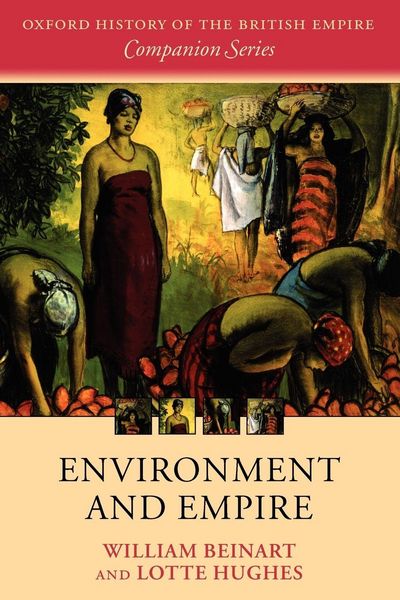
Produktbild: Environment and Empire

Environment and Empire

95,99 €

inkl. gesetzl. MwSt., Versandkostenfrei


Beschreibung

European imperialism was extraordinarily far-reaching: a key global historical process of the last 500 years. It locked disparate human societies together over a wider area than any previous imperial expansion; it underpinned the repopulation of the Americas and Australasia; it was the precursor of...

Beschreibung

European imperialism was extraordinarily far-reaching: a key global historical process of the last 500 years. It locked disparate human societies together over a wider area than any previous imperial expansion; it underpinned the repopulation of the Americas and Australasia; it was the precursor of globalization as we now understand it. Imperialism was inseparable from the history of global environmental change. Metropolitan countries sought raw materials of all kinds, from timber and furs to rubber and oil. They established sugar plantations that transformed island ecologies. Settlers introduced new methods of farming and displaced indigenous peoples. Colonial cities, many of which became great conurbations, fundamentally changed relationships between people and nature. Consumer cultures, the internal combustion engine, and pollution are now ubiquitous. Environmental history deals with the reciprocal interaction between people and other elements in the natural world, and this book illustrates the diverse environmental themes in the history of empire. Initially concentrating on the material factors that shaped empire and environmental change, Environment and Empire discusses the way in which British consumers and manufacturers sucked in resources that were gathered, hunted, fished, mined, and farmed. Yet it is also clear that British settler and colonial states sought to regulate the use of natural resources as well as commodify them. Conservation aimed to preserve resources by exclusion, as in wildlife parks and forests, and to guarantee efficient use of soil and water. Exploring these linked themes of exploitation and conservation, this study concludes with a focus on political reassertions by colonised peoples over natural resources. In a post-imperial age, they have found a new voice, reformulating ideas about nature, landscape, and heritage and challenging, at a local and global level, views of who has the right to regulate nature.

Produktdetails

Einband

Taschenbuch

Erscheinungsdatum

02.04.2009

Abbildungen

13 in-text halftones and maps

Verlag Oxford University Press

Produktdetails

Einband

Taschenbuch

Erscheinungsdatum

02.04.2009

Abbildungen

13 in-text halftones and maps

Verlag Oxford University Press
Seitenzahl

410

Maße (L/B/H)

23,4/15,6/2,3 cm

Gewicht

620 g

Sprache

Englisch

ISBN

978-0-19-956251-0

Herstelleradresse

Libri GmbH
Europaallee 1
36244 Bad Hersfeld
DE

Email: gpsr@libri.de

Noch keine Bewertungen vorhanden

Verfassen Sie die erste Bewertung zu diesem Artikel

Helfen Sie anderen Kundinnen und Kunden durch Ihre Meinung.

Kundinnen und Kunden meinen

Bewertungen (0)

  • Produktbild: Environment and Empire
    • 1: Introduction
    • 2: Environmental Aspects of the Atlantic Slave Trade and CaribbeanPlantations
    • 3: The Fur Trade in Canada
    • 4: Hunting, Wildlife, and Imperialism in Southern Africa
    • 5: Imperial Travellers
    • 6: Sheep, Pastures, and Demography in Australia
    • 7: Forests and Forestry in India
    • 8: Water, Irrigation, and Agrarian Society in India and Egypt
    • 9: Colonial Cities: Environment, Space, and Race
    • 10: Plague and Urban Environments
    • 11: Tsetse and Trypanosomiasis in East and Central Africa
    • 12: Imperial Scientists, Ecology, and Conservation
    • 13: Empire and the Visual Representation of Nature
    • 14: Rubber and the Environment in Malaysia
    • 15: Oil Extraction in the Middle East: the Kuwait Experience
    • 16: Resistance to Colonial Conservation and Resource Management
    • 17: National Parks and the Growth of Tourism
    • 18: The Post-Imperial Urban Environment
    • 19: Reassertion of Indigenous Environmental Rights and Knowledge