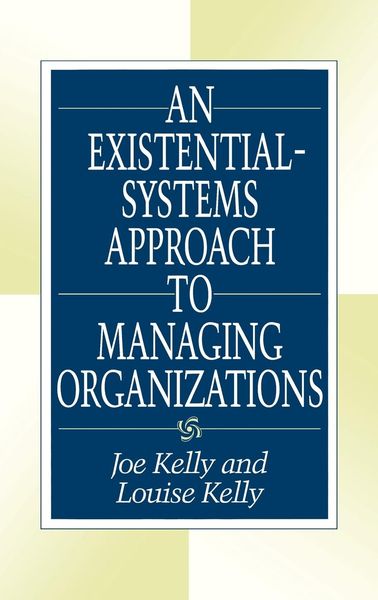
An Existential-Systems Approach to Managing Organizations
112,99 €
inkl. gesetzl. MwSt.,
Beschreibung
Produktdetails
Einband
Gebundene Ausgabe
Altersempfehlung
7 - 17 Jahr(e)
Erscheinungsdatum
30.06.1998
Verlag
Bloomsbury AcademicSeitenzahl
294
Maße (L/B/H)
24/16,1/2 cm
Gewicht
608 g
Sprache
Englisch
ISBN
978-1-56720-035-5
At a time of corporate downsizing and bone-crushing international competition, how can executives reconcile their individual personalities and human needs with the equally compelling needs of the hard-driving organization? It is an existential dilemma, say Joe and Louise Kelly, and one with critical implications, not only for executives but for their organizations as well. The Kellys, by no means blithe theorists, take a hard look at this hard-edged problem by positing a three-pronged model for analysis based upon structure, process, and values. They synthesize these elements under an overarching concept of existentialism, in which the emphasis is on a search for meaning. And with that, they provide a clear-headed look at organizational behavior-its contributions to our understanding of how organizations work but, also its failures and, indeed, its frequent self-deceptions. A well-written, vigorous, far-ranging examination, not only for executives who need the kind of help the Kellys offer in their daily combats on the job, but also for their colleagues in the academic community who have their own organizational problems to deal with.
The Kellys make clear that their book reflects a movement away from the academic-purist position, where the sole concern is with theoretically significant research, to a position which recognizes that organizational behavior is a crossroads subject where traffic [that comes] mainly from behavioral science, computer technology, and economics coalesces with the ideas streaming out of organizational practice. Aimed at professional managers and students, both undergraduates as well as those on the M.B.A. level, this book assumes little prior knowledge of behavioral science or organizational theory. Readers will get what they need of those subjects here, enough to follow Kelly's argument. They will see how behavioral and organizational research has helped (but sometimes hindered) executives as they attempt to deal with critical happenings in their jobs. With case study material woven into the text and with observations from his own experiences with business as well as academic organizations, the Kellys' book is a readable, engrossing argument for and against the orthodoxies of organizational behavior studies-and the assurance that whatever else it may or not be, organizational behavior is certainly not static.
Noch keine Bewertungen vorhanden
Verfassen Sie die erste Bewertung zu diesem Artikel
Helfen Sie anderen Kundinnen und Kunden durch Ihre Meinung.
Kurze Frage zu unserer Seite
Vielen Dank für Ihr Feedback
Wir nutzen Ihr Feedback, um unsere Produktseiten zu verbessern. Bitte haben Sie Verständnis, dass wir Ihnen keine Rückmeldung geben können. Falls Sie Kontakt mit uns aufnehmen möchten, können Sie sich aber gerne an unseren Kund*innenservice wenden.
zum Kundenservice