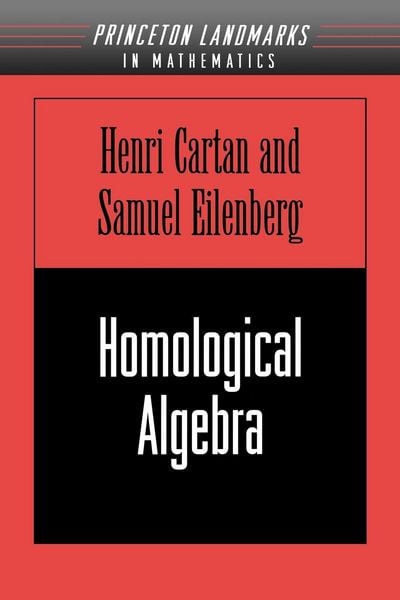
Produktbild: Homological Algebra

Homological Algebra

112,99 €

inkl. gesetzl. MwSt., Versandkostenfrei


Beschreibung

Produktdetails

Einband

Taschenbuch

Erscheinungsdatum

19.12.1999

Verlag

University Presses

Seitenzahl

408

Maße (L/B/H)

22,9/15,2/2,2 cm

Gewicht

539 g

Sprache

Englisch

ISBN

978-0-691-04991-5

Beschreibung

Produktdetails

Einband

Taschenbuch

Erscheinungsdatum

19.12.1999

Verlag

University Presses

Seitenzahl

408

Maße (L/B/H)

22,9/15,2/2,2 cm

Gewicht

539 g

Sprache

Englisch

ISBN

978-0-691-04991-5

Herstelleradresse

Libri GmbH
Europaallee 1
36244 Bad Hersfeld
DE

Email: gpsr@libri.de

Kundinnen und Kunden meinen

0 Bewertungen

Informationen zu Bewertungen

Zur Abgabe einer Bewertung ist eine Anmeldung im Konto notwendig. Die Authentizität der Bewertungen wird von uns nicht überprüft. Wir behalten uns vor, Bewertungstexte, die unseren Richtlinien widersprechen, entsprechend zu kürzen oder zu löschen.

Die Bewertungen sind nach Format, Anzahl Sterne und Datum sortiert.

Verfassen Sie die erste Bewertung zu diesem Artikel

Helfen Sie anderen Kund*innen durch Ihre Meinung

Kundinnen und Kunden meinen

0 Bewertungen filtern

  • Produktbild: Homological Algebra
  • Preface v
    Chapter I. Rings and Modules 3
    1. Preliminaries 3
    2. Projective modules 6
    3. Injective modules 8
    4. Semi-simple rings 11
    5. Hereditary rings 12
    6. Semi-hereditary rings 14
    7. Noetherian rings 15
    Exercises 16
    Chapter II. Additive Functors 18
    1. Definitions 18
    2. Examples 20
    3. Operators 22
    4. Preservation of exactness 23
    5. Composite functors 27
    6. Change of rings 28
    Exercises 31
    Chapter III. Satellites 33
    1. Definition of satellites 33
    2. Connecting homomorphisms 37
    3. Half exact functors 39
    4. Connected sequence of functors 43
    5. Axiomatic description of satellites 45
    6. Composite functors 48
    7. Several variables 49
    Exercises 51
    Chapter IV. Homology 53
    1. Modules with differentiation 53
    2. The ring of dual numbers 56
    3. Graded modules, complexes 58
    4. Double gradings and complexes 60
    5. Functors of complexes 62
    6. The homomorphism x 64
    7. The homomorphism x (continuation) 66
    8. Kunneth relations 71
    Exercises 72
    Chapter V. Derived Functors 75
    1.Complexes over modules; resolutions 75
    2.Resolutions of sequences 78
    3.Definition of derived functors 82
    4.Connecting homomorphisms 84
    5.The functors ROT and LOT 89
    6.Comparison with satellites 90
    7.Computational devices 91
    8.Partial derived functors 94
    9.Sums, products, limits 97
    10.The sequence of a map 101
    Exercises 104
    Chapter VI. Derived Functors of 0 and Hom 106
    1. The functors Tor and Ext 106
    2. Dimension of modules and rings 109
    3. Kunneth relations 112
    4. Change of rings 116
    5. Duality homomorphisms 119
    Exercises 122
    Chapter VII. Integral Domains 127
    1. Generalities 127
    2. The field of quotients 129
    3. Inversible ideals 132
    4. Prufer rings 133
    5. Dedekind rings 134
    6. Abelian groups 135
    7. A description of Tor1, (A,C) 137
    Exercises 139
    Chapter VIII. Augmented Rings 143
    1. Homology and cohomology of an augmented ring 143
    2. Examples 146
    3. Change of rings 149
    4. Dimension 150
    5. Faithful systems 154
    6. Applications to graded and local rings 156
    Exercises 158
    Chapter IX. Associative Algebras 162
    1. Algebras and their tensor products 162
    2. Associativity formulae 165
    3. The enveloping algebra Ae 167
    4. Homology and cohomology of algebras 169
    5. The Hochschild groups as functors of A 171
    6. Standard complexes 174
    7. Dimension 176
    Exercises 180
    Chapter X. Supplemented Algebras 182
    1. Homology of supplemented algebras 182
    2. Comparison with Hochschild groups 185
    3. Augmented monoids 187
    4. Groups 189
    5. Examples of resolutions 192
    6. The inverse process193
    7. Subalgebras and subgroups 196
    8. Weakly injective and projective modules 197
    Exercises 201
    Chapter XI. Products 202
    1. External products 202
    2. Formal properties of the products 206
    3. Isomorphisms 209
    4. Internal products 211
    5. Computation of products
    6. Products in the Hochschild theory 216
    7. Products for supplemented algebras 219
    8. Associativity formulae 222
    9. Reduction theorems 225
    Exercises 228
    Chapter XII. Finite Groups 232
    1. Norms 232
    2. The complete derived sequence 235
    3. Complete resolutions 237
    4. Products for finite groups 242
    5. The uniqueness theorem 244
    6. Duality 247
    7. Examples 250
    8. Relations with subgroups 254
    9. Double cosets 256
    10 p-groups and Sylow groups 258
    11. Periodicity 260
    Exercises 263
    Chapter XIII. Lie Algebras 266
    1. Lie algebras and their enveloping algebras 266
    2. Homology and cohomology of Lie algebras 270
    3. The Poincare-Witt theorem 271
    4. Subalgebras and ideals 274
    5. The diagonal map and its applications 275
    6. A relation in the standard complex 277
    7. The complex V(g) 279
    8. Applications of the complex V(g) 282
    Exercises 284
    Chapter XIV. Extensions 289
    1. Extensions of modules 289
    2. Extensions of associative algebras 293
    3. Extensions of supplemented algebras 295
    4. Extensions of groups 299
    5. Extensions of Lie algebras 304
    Exercises 308
    Chapter XV. Spectral Sequences 315
    1. Filtrations and spectral sequences 315
    2. Convergence 319
    3. Maps and homotopies 321
    4. The graded case 323
    5. Induced homomorphisms and exact sequences 325
    6. Application to double complexes 330
    7. A generalization 333
    Exercises 336
    Chapter XVI. Applications of Spectral Sequences 340
    1. Partial derived functors 340
    2. Functors of complexes 342
    3. Composite functors 343
    4. Associativity formulae 345
    5. Applications to the change of rings 347
    6. Normal subalgebras 349
    7. Associativity formulae using diagonal maps 351
    8. Complexes over algebras 352
    9. Topological applications 355
    10.The almost zero theory 358
    Exercises 360
    Chapter XVII. Hyperhomology 362
    1. Resolutions of complexes 362
    2. The invariants 366
    3. Regularity conditions 368
    4. Mapping theorems 371
    5. Kunneth relations 372
    6. Balanced functors 374
    7. Composite functors 376
    Appendix: Exact categories, by David A. Buchsbaum 379
    List of Symbols 387
    Index of Terminology 389