• Produktbild: Affirming the Comprehensive Ideal
  • Produktbild: Affirming the Comprehensive Ideal

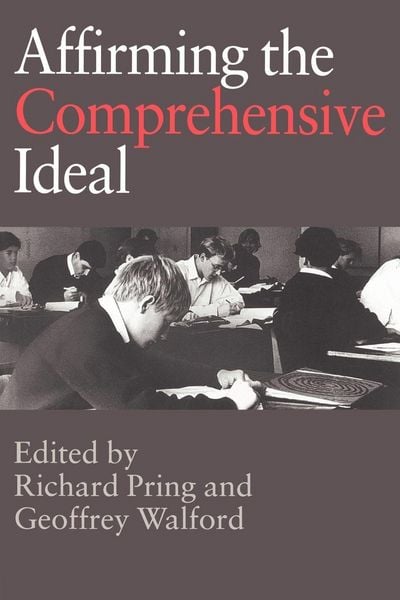
Affirming the Comprehensive Ideal

44,99 €

inkl. gesetzl. MwSt., Versandkostenfrei


Beschreibung

Produktdetails

Einband

Taschenbuch

Erscheinungsdatum

11.03.1997

Herausgeber

Pring Richard + weitere

Verlag

Taylor & Francis

Seitenzahl

220

Maße (L/B/H)

23,4/15,6/1,2 cm

Gewicht

317 g

Sprache

Englisch

ISBN

978-0-7507-0620-9

Beschreibung

Produktdetails

Einband

Taschenbuch

Erscheinungsdatum

11.03.1997

Herausgeber

Verlag

Taylor & Francis

Seitenzahl

220

Maße (L/B/H)

23,4/15,6/1,2 cm

Gewicht

317 g

Sprache

Englisch

ISBN

978-0-7507-0620-9

Herstelleradresse

Libri GmbH
Europaallee 1
36244 Bad Hersfeld
DE

Email: gpsr@libri.de

Kundinnen und Kunden meinen

0 Bewertungen

Informationen zu Bewertungen

Zur Abgabe einer Bewertung ist eine Anmeldung im Konto notwendig. Die Authentizität der Bewertungen wird von uns nicht überprüft. Wir behalten uns vor, Bewertungstexte, die unseren Richtlinien widersprechen, entsprechend zu kürzen oder zu löschen.

Die Bewertungen sind nach Format, Anzahl Sterne und Datum sortiert.

Verfassen Sie die erste Bewertung zu diesem Artikel

Helfen Sie anderen Kund*innen durch Ihre Meinung

Kundinnen und Kunden meinen

0 Bewertungen filtern

Die Leseprobe wird geladen.
  • Produktbild: Affirming the Comprehensive Ideal
  • Produktbild: Affirming the Comprehensive Ideal
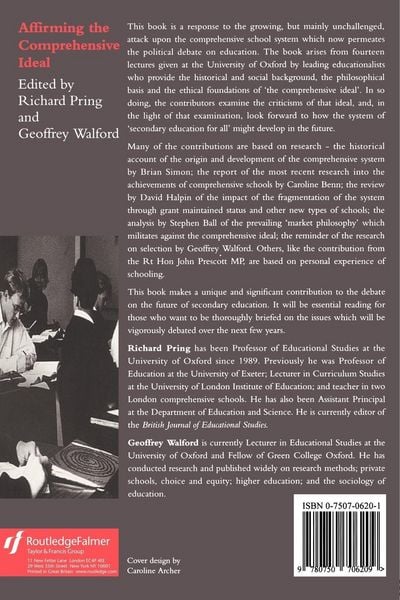
  • Part 1 Ideals and history of comprehensive schooling: a seismic change - process and interpretation, Brian Simon; hopeful travel on a long road, Peter Cornwall. Part 2 Context: fragmentation into different types of school, David Halpin; privatization and selection, Geoffrey Walford. Part 3 Social and political philosophy: markets, equity and values in education, Stephen J. Ball; educating persons, Richard Pring. Part 4 The curriculum: what is worth learning?, Denis Lawton; a comprehensive curriculum 14-19, Sally Tomlinson. Part 5 Effective schools and effective teachers: effective comprehensve education, Caroline Benn; teachers for the comprehensive ideal, Ted Wragg. Part 6 Effective learning: what comprehensive schools do better, Bernard Clarke; information technology and the comprehensive ideal, John Abbot. Part 7 The organization of comprehensive education in the future: a local democratic framework, Tim Brighouse; the comprehensive school within the learning society, Stewart Ransom.