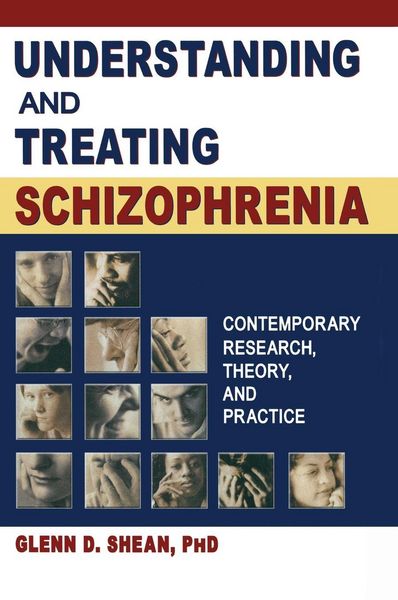
Understanding and Treating Schizophrenia Contemporary Research, Theory, and Practice
-
- Hardcover ausgewählt
- Taschenbuch
- eBook
-
Sprache:Englisch
129,99 €
inkl. gesetzl. MwSt.,
Beschreibung
Produktdetails
Einband
Gebundene Ausgabe
Erscheinungsdatum
03.02.2004
Verlag
Taylor and FrancisSeitenzahl
350
Maße (L/B/H)
22,5/16,1/2,8 cm
Gewicht
708 g
Sprache
Englisch
ISBN
978-0-7890-1887-8
Get a fair and balanced perspective on schizophrenia!
Understanding and Treating Schizophrenia: Contemporary Research, Theory, and Practice is a comprehensive overview of schizophrenia and its treatment from a variety of approaches. The book presents a balanced look at the most influential theoretical perspectives based on empirical research, clinical descriptions, and narrative histories. Dr. Glenn Shean, author of Schizophrenia: An Introduction to Research and Theory, examines neurocognitive and neurodevelopmental models of brain dysfunction, psychodynamic and family factors, up-to-date pharmacological advances, and successful community programs for discharged patients suffering from this debilitating disorder.
Understanding and Treating Schizophrenia: Contemporary Research, Theory, and Practice presents a comprehensive review of evidence concerning the epidemiology and course and outcome of schizophrenia based on theoretical groupings and levels of analysis. The book examines the evolution of diagnostic criteria and guidelines, as well as stress-vulnerability and diathesis-stress models, providing critical reviews of biological, genetic, cognitive-behavioral, and phenomenological, approach to understanding and treating schizophrenia.
Topics addressed in Understanding and Treating Schizophrenia: Contemporary Research, Theory, and Practice include:
- the history of the concept of schizophrenia
- the writings of Emil Kraepelin and Eugene Bleuler
- changes in diagnostic guidelines in the last 50 years
- General System Theory Perspective
- diagnostic and statistical manuals
- Schneider's first rank symptoms
- and much more!
Understanding and Treating Schizophrenia: Contemporary Research, Theory, and Practice is an essential resource for undergraduate and graduate students working in psychology, psychiatry, nursing, social work, and social policy.
Noch keine Bewertungen vorhanden
Verfassen Sie die erste Bewertung zu diesem Artikel
Helfen Sie anderen Kundinnen und Kunden durch Ihre Meinung.
Kurze Frage zu unserer Seite
Vielen Dank für Ihr Feedback
Wir nutzen Ihr Feedback, um unsere Produktseiten zu verbessern. Bitte haben Sie Verständnis, dass wir Ihnen keine Rückmeldung geben können. Falls Sie Kontakt mit uns aufnehmen möchten, können Sie sich aber gerne an unseren Kund*innenservice wenden.
zum Kundenservice