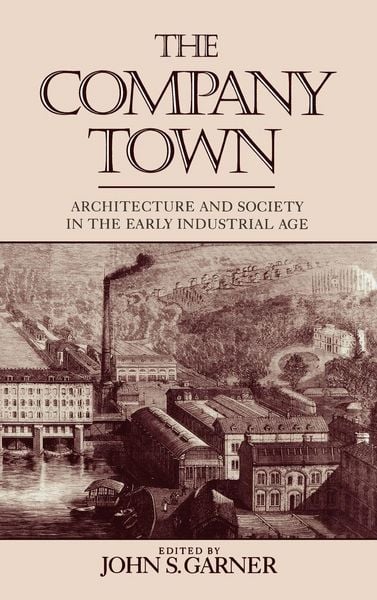
The Company Town Architecture and Society in the Early Industrial Age
261,99 €
inkl. gesetzl. MwSt.,
Beschreibung
Produktdetails
Einband
Gebundene Ausgabe
Erscheinungsdatum
01.09.1992
Abbildungen
halftones, line drawings
Herausgeber
Garner John S.Verlag
Oxford AcademicSeitenzahl
256
Maße (L/B/H)
23,5/15,7/2 cm
Gewicht
571 g
Sprache
Englisch
ISBN
978-0-19-507027-9
Company towns - those associated with textiles, mining, or tool manufacturing, for example - are found worldwide and have been in existence for many centuries. But with the coming of the Industrial Revolution, what had been isolated instances of town building became a veritable phenomenon. With explosive growth, virtually hundreds of them appeared in the Western World until about the time of the Great Depression, with development most intensive and homogenous in Europe and the Americas. Although the technological experience of the Industrial Revolution has been widely chronicled and the stories of misplaced banking and exploited labor well documented, until now the actual settings of company towns and the overall achievement in industrial architecture and town planning have been largely ignored. The Company Town describes the concurrent development and building of selected towns in Europe and the Americas, assessing technical advances in factory building, worker housing, and the public buildings that owner-industrialists, in their capacity as philanthropists, bestowed upon such towns. In many instances, the company town came to symbolize the wrecking of the environment, especially in places associated with extractive industries such as mining and lumber milling. Some resident industrialists, however, took a genuine interest in the welfare of their work forces, and in a number of instances hired architects to provide a model environment. Overtaken by time, these towns were either abandoned or caught up in suburban growth. The most thorough-going and only international assessment of the company town, this collection of essays by specialists and authorities of each region offers a balancedaccount of architectural and social history and provides a better understanding of the architectural and urban experiences of the early industrial age.
Noch keine Bewertungen vorhanden
Verfassen Sie die erste Bewertung zu diesem Artikel
Helfen Sie anderen Kundinnen und Kunden durch Ihre Meinung.
Kurze Frage zu unserer Seite
Vielen Dank für Ihr Feedback
Wir nutzen Ihr Feedback, um unsere Produktseiten zu verbessern. Bitte haben Sie Verständnis, dass wir Ihnen keine Rückmeldung geben können. Falls Sie Kontakt mit uns aufnehmen möchten, können Sie sich aber gerne an unseren Kund*innenservice wenden.
zum Kundenservice