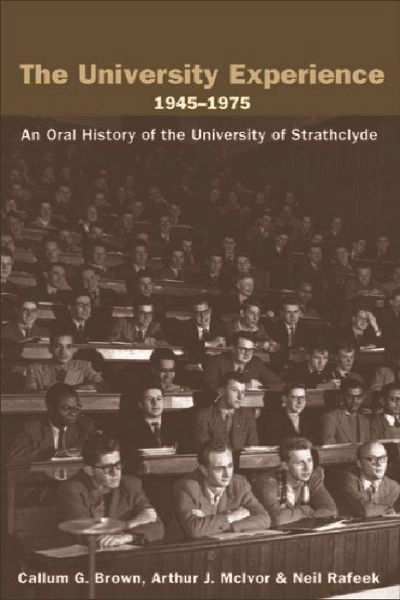
The University Experience 1945-1975 An Oral History of the University of Strathclyde
-
- Englisch ausgewählt
56,99 €
inkl. gesetzl. MwSt.,
Beschreibung
Produktdetails
Einband
Taschenbuch
Erscheinungsdatum
19.07.2004
Verlag
Edinburgh University PressSeitenzahl
288
Maße (L/B/H)
23,3/15,4/2,5 cm
Gewicht
712 g
Sprache
Englisch
ISBN
978-0-7486-1932-0
This is the first book devoted to an oral history of a British university during the 'swinging sixties'. Students, lecturers and support staff are interviewed about teaching and working on campus in the mid-twentieth century. Told in their own words, it is a story of struggle and sacrifice, pride and commitment. It reveals how the modern university transformed lives, how new technologies propelled path-breaking research, and how with new skills its graduates could remodel society. The University of Strathclyde was created in central Glasgow in 1964 from the merger of two higher-education colleges. The Andersonian started in 1796 as Britain's first college to offer technical-based higher education to both women and artisans, whilst the Commercial College's opening literary night in 1847 was chaired by Charles Dickens. By the 1950s, both colleges still offered students 'useful knowledge' in engineering and commercial subjects, and launched them into local employment according to family traditions. But then in the mid-1960s, industrial decline struck Glasgow. Against the backdrop of the city's tough reputation and devastating social problems, lecturers and students with a mission to improve society came to a new University that offered opportunity - especially to women, mature students, the working classes and minority groups. Eschewing institutional history, this book debunks the myth of the drop-out generation of sixties' students, their drugs and underground culture. It shows how one University developed as a community of the dedicated and brilliant, creating the learning and researching environment which made 'Going to the Unie' the classic formative experience of the British people in the late twentieth century.
Noch keine Bewertungen vorhanden
Verfassen Sie die erste Bewertung zu diesem Artikel
Helfen Sie anderen Kundinnen und Kunden durch Ihre Meinung.
Kurze Frage zu unserer Seite
Vielen Dank für Ihr Feedback
Wir nutzen Ihr Feedback, um unsere Produktseiten zu verbessern. Bitte haben Sie Verständnis, dass wir Ihnen keine Rückmeldung geben können. Falls Sie Kontakt mit uns aufnehmen möchten, können Sie sich aber gerne an unseren Kund*innenservice wenden.
zum Kundenservice