Gutscheinbedingungen

**Gültig bis 25.06.2026 auf fremdsprachige Bücher online auf thalia.at und in der Thalia App. Einzelne Artikel können ausgeschlossen sein. Ausgenommen sind preisgebundene Artikel & eBooks. Pro Einkauf einmal einlösbar. Click & Collect nur bei Onlinevorabzahlung möglich. Keine Barauszahlung. Nicht kombinierbar mit anderen Aktionen und Gutscheinen. Gutschein wird auf max. 500€ Bestellwert angerechnet. Nicht gültig für Geschenkkarten, Versandkosten und Services.

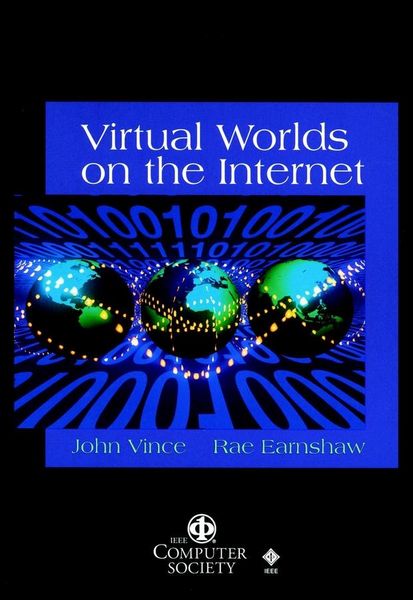
Produktbild: Virtual Worlds on the Internet

Virtual Worlds on the Internet

156,99 €

inkl. gesetzl. MwSt., Versandkostenfrei


Beschreibung

Produktdetails

Einband

Taschenbuch

Erscheinungsdatum

10.01.1999

Verlag

IEEE Computer Society Press,U.S.

Seitenzahl

320

Maße (L/B/H)

25,5/17,9/1,9 cm

Gewicht

658 g

Sprache

Englisch

ISBN

978-0-8186-8700-6

Beschreibung

Produktdetails

Einband

Taschenbuch

Erscheinungsdatum

10.01.1999

Verlag

IEEE Computer Society Press,U.S.

Seitenzahl

320

Maße (L/B/H)

25,5/17,9/1,9 cm

Gewicht

658 g

Sprache

Englisch

ISBN

978-0-8186-8700-6

Herstelleradresse

Libri GmbH
Europaallee 1
36244 Bad Hersfeld
DE

Email: gpsr@libri.de

Kundinnen und Kunden meinen

0 Bewertungen

Informationen zu Bewertungen

Zur Abgabe einer Bewertung ist eine Anmeldung im Konto notwendig. Die Authentizität der Bewertungen wird von uns nicht überprüft. Wir behalten uns vor, Bewertungstexte, die unseren Richtlinien widersprechen, entsprechend zu kürzen oder zu löschen.

Die Bewertungen sind nach Format, Anzahl Sterne und Datum sortiert.

Verfassen Sie die erste Bewertung zu diesem Artikel

Helfen Sie anderen Kund*innen durch Ihre Meinung

Kundinnen und Kunden meinen

0 Bewertungen filtern

  • Produktbild: Virtual Worlds on the Internet
  • Introduction

    Chapter 1: Data Flow Languages for Immersive Virtual Environments (Anthony Steed, Department of Computer Science, University College London).

    Chapter 2: VRML Interfaces to Information Systems (Christine Clark and Adrian F. Clark, VASE Laboratory, University of Essex).

    Chapter 3: VRML: A Designer's View (Stephen Boyd Davis, Centre for Electronic Arts, Middlesex University;
    Helena Athoussaki, BT Laboratories).

    Chapter 4: Ulysse: An Interactive Spoken Dialogue Interface to Navigate in Virtual Worlds (Christopher Godereaux, Pierre-Olivier El Guedj, Frederic Revolta, and Pierre Nugues, Institut des Sciences de la Matiere et du Rayonnement).

    Chapter 5: Information Drill-Down Using Web Tools (Mikael Jern, AVS/UNIRAS).

    Chapter 6: Generic Uses of Real World Data in Virtual Environments (M.W. Wright, G.C. Watson, and R.L. Middleton, Edinburgh Virtual Environment Centre, University of Edinburgh).

    Chapter 7: A Generic Functional Architecture for the Development of Multiuser 3-D Environments (Tao Lin and Kevin Smith, CSIRO Mathematical and Information Sciences).

    Chapter 8: Strategies for Mutability in Virtual Environments (Ben Anderson and Andrew McGrath, BT Laboratories).

    Chapter 9: Bringing the MBone to Web Users (Adrian F. Clark, VASE Laboratory, University of Essex).

    Chapter 10: Handling of Dynamic 2-D/3-D Graphics in Narrow-Band Mobile Services (C. Belz, H. Jung, L. Santos, and R. Strack, Computer Graphics Center (ZGDV);
    P. Latva-Rasku, Nokia Research Center (NRC).

    Chapter 11: Realistic Avatars and Autonomous Virtual Humans in VLNET Networked Virtual Environments (Tolga K. Capin and Daniel Thalmann, Computer Graphics Laboratory, Swiss Federal Institute of Technology;
    Igor Sunday Pandzic and Nadia Magnenat Thalmann, MIRALab, University of Geneva).

    Chapter 12: Interactive Cloth Simulation: Problems and Solutions (Pascal Volino and Nadia Magnenat Thalmann, MIRALab, University of Geneva).

    Chapter 13: The Blob Tree: Implicit Modelling and VRML (Brian Wyvill and Andrew Guy, Department of Computer Science, University of Calgary).

    Chapter 14: Automatic Generation of Virtual Worlds for Electronic Commerce Application on the Internet (Klaus M. Bauer, Computer Graphics Center (ZGDV e.V.).

    Chapter 15: A Case Study in the Use of VRML 2.0 for Marketing a Product (Nick D. Burton, Alistair C. Kilgour, and Hamish Taylor, Department of Computing and Electrical Engineering, Heriot-Watt University).

    Chapter 16: A Virtual Environment for Collaborative Administration (D. England, Connect Centre, University of Liverpool;
    W. Prinz, GMD FIT-CSCW Institute;
    K. Simarian and O. St?hl, Swedish Institute for Computer Science).

    Chapter 17: Collaborative Theatre Set Design across Networks (Ian J. Palmer and Carlton M. Reeve, EIMCU, University of Bradford).

    Chapter 18: Moving the Museum onto the Internet: The Use of Virtual Environments in Education about Ancient Egypt (William L. Mitchell, Department of Computing, Manchester Metropolitan University).

    Chapter 19: The Virtual Reality Responsive Workbench: Applications and Experiences (Lawrence Rosenblum, James Durbin, Robert Doyle, and David Tate, Virtual Reality Lab, Naval Research Laboratory).

    Chapter 20: Inner Space: The Final Frontier (David Leevers, Multimedia Communications, BICC Group).

    Figures in Color

    Index.