KI-Beratung Beta

Gutscheinbedingungen

**Gültig bis 03.11.2026 auf fremdsprachige Bücher online auf thalia.at und in der Thalia App. Einzelne Artikel können ausgeschlossen sein. Ausgenommen sind preisgebundene Artikel & eBooks. Pro Einkauf einmal einlösbar. Click & Collect nur bei Onlinevorabzahlung möglich. Keine Barauszahlung. Nicht kombinierbar mit anderen Aktionen und Gutscheinen. Gutschein wird auf max. 500€ Bestellwert angerechnet. Nicht gültig für Geschenkkarten, Versandkosten und Services.

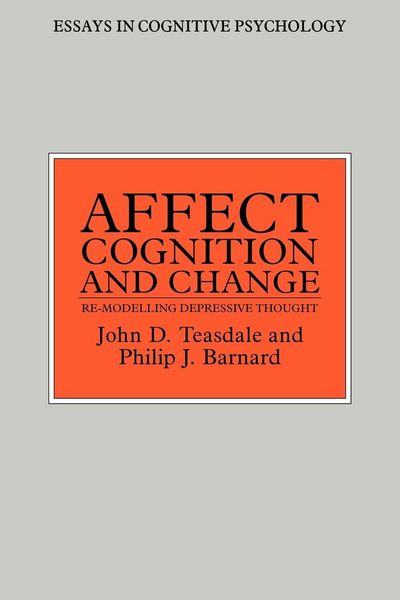
  • Produktbild: Affect, Cognition and Change
  • Produktbild: Affect, Cognition and Change

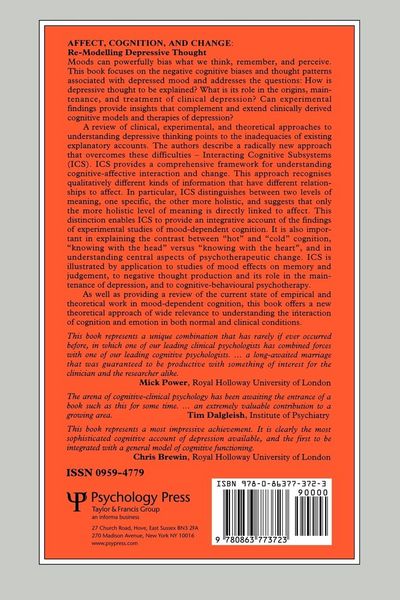
Affect, Cognition and Change Re-Modelling Depressive Thought

142,99 €

inkl. gesetzl. MwSt., Versandkostenfrei


Beschreibung

Produktdetails

Einband

Taschenbuch

Erscheinungsdatum

27.02.1995

Verlag

Taylor and Francis

Seitenzahl

302

Maße (L/B/H)

22,9/15,2/1,6 cm

Gewicht

441 g

Sprache

Englisch

ISBN

978-0-86377-372-3

Beschreibung

Produktdetails

Einband

Taschenbuch

Erscheinungsdatum

27.02.1995

Verlag

Taylor and Francis

Seitenzahl

302

Maße (L/B/H)

22,9/15,2/1,6 cm

Gewicht

441 g

Sprache

Englisch

ISBN

978-0-86377-372-3

Herstelleradresse

Libri GmbH
Europaallee 1
36244 Bad Hersfeld
DE

Email: gpsr@libri.de

Noch keine Bewertungen vorhanden

Verfassen Sie die erste Bewertung zu diesem Artikel

Helfen Sie anderen Kundinnen und Kunden durch Ihre Meinung.

Kundinnen und Kunden meinen

Bewertungen (0)

Die Leseprobe wird geladen.
  • Produktbild: Affect, Cognition and Change
  • Produktbild: Affect, Cognition and Change
  • Part 1: The Problem, Some Evidence, Previous Answers. Negative Thinking and Depression. Effects of Depressed Mood on the Accessibility of Autobiographical Memories. Bower's Associative Network Theory of Mood and Memory and its Applications to Depression. Evaluating the Associative Network Model of Mood Memory. Part 2: The Interacting Cognitive Subsystems ICS Approach. The ICS Framework. Two Levels of Meaning and their Interaction. ICS and Emotion. Part 3: ICS and Mood-Congruous Cognition in the Laboratory. ICS, Mood and Memory. ICS and Mood-congruous Memory. Mood Effects on Evaluative Judgement. Part 4: Negative Thinking and the Maintenance of Depression. The ICS Account. Negative Thought Production and the Maintenance of Depression - The Evidence. ICS and Self-regulatory, Motivational Models of Depression. Part 5: ICS, Depression and Psychological Treatment. ICS and Beck's Cognitive Theory of Depression. Psychological Treatment for Depression - the ICS Perspective. Part 6: Afterword. Applicable Theory - A Puzzle in Three Dimensions.