Beschreibung
Produktdetails
Einband
Taschenbuch
Erscheinungsdatum
10.09.1992
Verlag
Yale University PressSeitenzahl
242
Maße (L/B/H)
21/14/1,9 cm
Gewicht
304 g
Sprache
Englisch
ISBN
978-0-300-05238-1
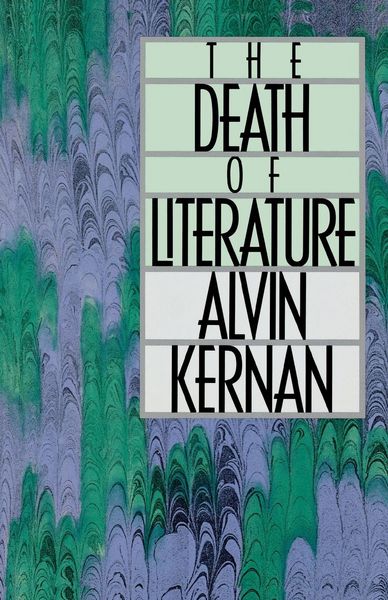
Literature has passed through a crisis of confidence in recent decades--a radical questioning of its traditional values and its importance to humanity. In this witty and eloquent book, a distinguished professor of humanities looks at some of the agents that have contributed to literature's demise and ponders whether its vitality can be restored in the changing circumstances of late twentieth-century culture. Other critics, such as E. D. Hirsch and Allan Bloom, have also explored the growing cultural illiteracy of modern society. Alvin Kernan probes deeper, relating the death of literature to potent forces in our postindustrial world--most obviously, the technological revolution that is rapidly transforming a print to an electronic culture, replacing the authority of the written word with the authority of television, film, and computer screens. The turn taken by literary criticism itself, in deconstructing traditional literature and declaring it void of meaning in itself, and in focusing on what are described as its ideological biases against women and nonwhites, has speeded the disintegration. Recent legal debates about copyright, plagiarism, and political patronage of the arts have exposed the greed and self-interest at work under the old romantic images of the imaginative creative artist and the work of art as a perfect, unchanging icon. Kernan describes a number of the crossroads where literature and society have met and literature has failed to stand up. He discusses the high comedy of the obscenity trial in England against Lady Chatterley's Lover, in which the British literary establishment vainly tried to define literature. He takes alarmed looks at such agents of literary disintegration as schools where children who watch television eight hours a day can't read, decisions about who chooses and defines the words included in dictionaries, faculty fights about the establishment of new departments and categories of study, and courtrooms where criminals try to profit from bestselling books about their crimes. According to Kernan, traditional literature is ceasing to be legitimate or useful in these changed social surroundings. What is needed, he says, if it is any longer possible in electronic culture, is a conception of literature that fits in some positive way with the new ethos of post-industrialism, plausibly claiming a place of importance both to individual lives and to society as a whole for the best kind of writing.
Noch keine Bewertungen vorhanden
Verfassen Sie die erste Bewertung zu diesem Artikel
Helfen Sie anderen Kundinnen und Kunden durch Ihre Meinung.
Kurze Frage zu unserer Seite
Vielen Dank für Ihr Feedback
Wir nutzen Ihr Feedback, um unsere Produktseiten zu verbessern. Bitte haben Sie Verständnis, dass wir Ihnen keine Rückmeldung geben können. Falls Sie Kontakt mit uns aufnehmen möchten, können Sie sich aber gerne an unseren Kund*innenservice wenden.
zum Kundenservice