Gutscheinbedingungen

**Gültig am 28.06.2026 auf Spielzeug, Schreibwaren, Filme, Geschenke & Trends, Musik, tolino eReader & Zubehör, Hörbücher und Hörbuch-Downloads (außer Abo), nicht preisgebundene Bücher und Kalender online auf thalia.at und in der Thalia App. Einzelne Artikel können ausgeschlossen sein. Aufgrund der Buchpreisbindung sind deutschsprachige Bücher und eBooks ausgenommen. Zusätzlich ausgenommen sind preisgebundene Artikel, Abos & Flatrates, eBooks, Games, Geschenkkarten/-boxen, Shelfies, Software, Zeitschriften sowie einzelne Artikel von tonies®. Pro Einkauf einmal einlösbar. Click & Collect nur bei Onlinevorabzahlung möglich. Keine Barauszahlung. Nicht kombinierbar mit anderen Aktionen und Gutscheinen. Gutschein wird auf max. 500€ Bestellwert angerechnet. Nicht gültig für Versandkosten und Services.

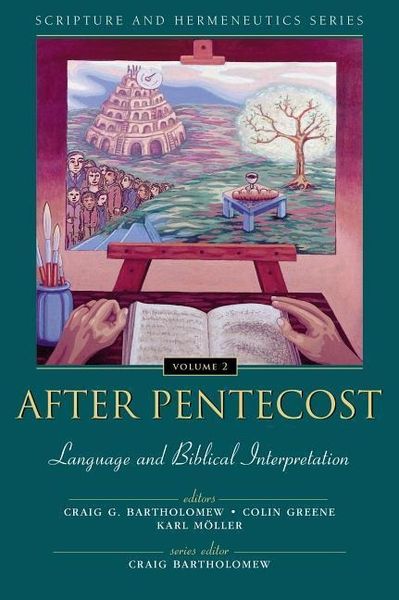
Produktbild: A After Pentecost

A After Pentecost Language and Biblical Interpretation

Aus der Reihe Zondervan Academic

35,99 €

inkl. gesetzl. MwSt., Versandkostenfrei


Beschreibung

Produktdetails

Einband

Taschenbuch

Erscheinungsdatum

27.11.2001

Herausgeber

Karl Moller + weitere

Verlag

Zondervan

Seitenzahl

464

Maße (L/B/H)

23,6/15,9/3,6 cm

Gewicht

1270 g

Sprache

Englisch

ISBN

978-0-310-23412-8

Beschreibung

Produktdetails

Einband

Taschenbuch

Erscheinungsdatum

27.11.2001

Herausgeber

Verlag

Zondervan

Seitenzahl

464

Maße (L/B/H)

23,6/15,9/3,6 cm

Gewicht

1270 g

Sprache

Englisch

ISBN

978-0-310-23412-8

Herstelleradresse

Libri GmbH
Europaallee 1
36244 Bad Hersfeld
DE

Email: gpsr@libri.de

Kundinnen und Kunden meinen

0 Bewertungen

Informationen zu Bewertungen

Zur Abgabe einer Bewertung ist eine Anmeldung im Konto notwendig. Die Authentizität der Bewertungen wird von uns nicht überprüft. Wir behalten uns vor, Bewertungstexte, die unseren Richtlinien widersprechen, entsprechend zu kürzen oder zu löschen.

Die Bewertungen sind nach Format, Anzahl Sterne und Datum sortiert.

Verfassen Sie die erste Bewertung zu diesem Artikel

Helfen Sie anderen Kund*innen durch Ihre Meinung

Kundinnen und Kunden meinen

0 Bewertungen filtern

  • Produktbild: A After Pentecost
  • Contributors xiii Abbreviations xvii The Artists xix Introduction by Craig G. Bartholomew xxi 1. From Speech Acts to Scripture Acts: The 1 Covenant of Discourse and the Discourse of Covenant Kevin J. Vanhoozer Introduction: Language in Jerusalem and Athens 1 The Covenant of Discourse: Speech Acts 4 The Discourse of Covenant: Canonical Action 31 Conclusion: The Covenant Community 44 Summary of Theses 46 2. Ricoeur, Speech-act Theory, and the Gospels 50 as History Dan R. Stiver The Gospels between History and Fiction 52 Ricoeur’s Interweaving of History and Fiction 55 Speech-act Theory’s Integration of History and Fiction 62 An Interweaving of Ricoeur and Austin 67 3. The Promise of Speech-act Theory for 73 Biblical Interpretation Nicholas Wolterstorff Where We Are Now in Theory of Interpretation 73 The Promise of Authorial-Discourse Interpretation for Biblical 82 Interpretation Interpreting Scripture for Divine Discourse is ‘Dogmatic’ 85 Interpretation Objections and Answers to Objections 87 Should We Practice Divine-Discourse Interpretation? 89 4. How to Be a Postmodernist and Remain a 91 Christian: A Responce to Nicholas Wolterstorff Mary Hesse 5. ‘Behind’ and ‘In Front Of’ the Text: Language, 97 Reference and Indeterminacy Anthony C. Thiselton The Metaphorical Force of ‘Behind’ and ‘In Front Of ’ in 97 Hermeneutics Why is there Dissatisfaction with Representational or Referential 102 Accounts of Texts and Language? Is there Still Value in Drawing Distinctions between Worlds 107 ‘Behind’ the Text and ‘In Front Of ’ the Text? The Conflict between Consumerist Hermeneutics and Both 111 Theism and Reasonableness: Two Sides of the Case? Concluding Postscript 116 6. A ‘Polite’ Response to Anthony Thiselton 121 William Olhausen Language, Meaning and Theology 122 Politeness 125 Biblical Interpretation and the Holy Spirit 127 Conclusion 129 7. Before Babel and After Pentecost: Language, 131 Literature and Biblical Interpretation Craig G. Bartholomew Summary of Argument 131 Introduction 132 Origins and Development of the Modern and Late Modern 132 Debate about Language Relevance of this Debate to Biblical Interpretation 134 Derrida, Language and Biblical Interpretation 139 Postmodernism as Confronting Us with Our Ultimate or Religious 142 Orientations Towards the World and Language Scripture and Language 147 Theology and Language, and Biblical Interpretation 151 Conclusion 163 8. Language at the Frontiers of Language 171 Gregory J. Laughery Introduction 171 Religious Language versus Other Types of Language 173 Should Scripture be Read as any Other Book or in a Special Manner? 183 Conclusion 189 9. ‘Starting a Rockslide’ - Deconstructing History 195 and Language via Christological Detonators Colin J.D. Greene Introduction 195 Apocalyptic and the Metaphor of the Kingdom of God 196 The Meaning of Apocalyptic and Eschatology within Recent 198 Biblical Scholarship Jesus, Apocalyptic and the Kingdom of God 201 The Early Christian Communities, Apocalyptic and the Kingdom 205 of God Further Implications for the Philosophy of History 209 Further Implications for the Philosophy of Language 215 10. Words of Power: Biblical Language and 224 Literary Criticism with Reference to Stephen Prickett’s Words and the Word and Mark 1:21-28 Stephen I. Wright The Transparent Text? 225 Religious and Poetic Language 229 The Prophet and the Poet 231 ‘Disconfirmation’ and Revelation 234 Metaphor and Reality 236 11. Reviving the Power of Biblical Language: 241 The Bible, Literature and Literary Language Brian D. Ingraffia and Todd E. Pickett General and Special Hermeneutics in Vanhoozer and Ricoeur 243 (Ingraffia) Informing and Reforming the Scriptural Imagination: The Guest 248 in Parable and Poetry (Pickett) Reforming or Deforming the Scriptural Imagination 259 12. Naming the Father: The Teaching Authority 263 of Jesus and Contemporary Debate David L. Jeffrey Religious Language versus Other Types of Language 173 Should Scripture be Read as any Other