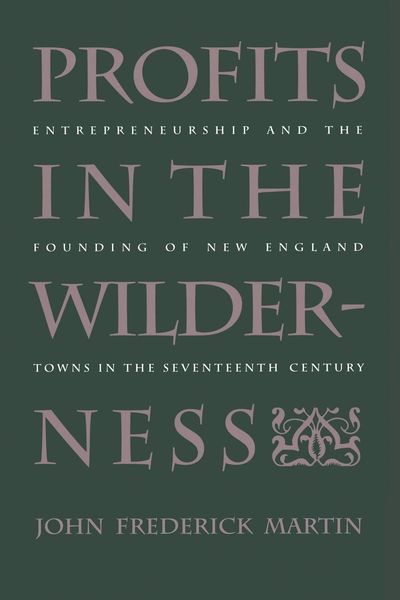
Profits in the Wilderness Entrepreneurship and the Founding of New England Towns in the Seventeenth Century
-
- Taschenbuch ausgewählt
- eBook
-
Sprache:Englisch
63,99 €
inkl. gesetzl. MwSt.,
Beschreibung
Produktdetails
Einband
Taschenbuch
Erscheinungsdatum
14.12.1991
Verlag
Omohundro Institute and UNC PressSeitenzahl
384
Maße (L/B/H)
22,9/15,2/2,3 cm
Gewicht
622 g
Sprache
Englisch
ISBN
978-0-8078-4346-8
In examining the founding of New England towns during the seventeenth century, John Frederick Martin investigates an old subject with fresh insight. Whereas most historians emphasize communalism and absence of commerce in the seventeenth century, Martin demonstrates that colonists sought profits in town-founding, that town founders used business corporations to organize themselves into landholding bodies, and that multiple and absentee landholding was common. In reviewing some sixty towns and the activities of one hundred town founders, Martin finds that many town residents were excluded from owning common lands and from voting. It was not until the end of the seventeenth century, when proprietors separated from towns, that town institutions emerged as fully public entities for the first time. Martin's study will challenge historians to rethink not only social history but also the cultural history of early New England. Instead of taking sides in the long-standing debate between Puritan scholars and business historians, Martin identifies strains within Puritanism and the rest of the colonists' culture that both discouraged and encouraged land commerce, both supported and undermined communalism, both hindered and hastened development of the wilderness. Rather than portray colonists one-dimensionally, Martin analyzes how several different and competing ethics coexisted within a single, complex, and vibrant New England culture.
Noch keine Bewertungen vorhanden
Verfassen Sie die erste Bewertung zu diesem Artikel
Helfen Sie anderen Kundinnen und Kunden durch Ihre Meinung.
Kurze Frage zu unserer Seite
Vielen Dank für Ihr Feedback
Wir nutzen Ihr Feedback, um unsere Produktseiten zu verbessern. Bitte haben Sie Verständnis, dass wir Ihnen keine Rückmeldung geben können. Falls Sie Kontakt mit uns aufnehmen möchten, können Sie sich aber gerne an unseren Kund*innenservice wenden.
zum Kundenservice