Gutscheinbedingungen

**Gültig bis 14.09.2026 auf Spielzeug, Schreibwaren, Filme, Geschenke & Trends, Musik, tolino eReader & Zubehör, Hörbücher, nicht preisgebundene Bücher und Kalender in der Thalia App. Einzelne Artikel können ausgeschlossen sein. Aufgrund der Buchpreisbindung sind deutschsprachige Bücher und eBooks ausgenommen. Zusätzlich ausgenommen sind Abos & Flatrates, Games, Geschenkkarten/-boxen, Shelfies, Software, Zeitschriften sowie einzelne Artikel von tonies®. Pro Einkauf einmal einlösbar. Nur gültig mit im Onlineshop hinterlegter Bonuscard. Click & Collect nur bei Onlinevorabzahlung möglich. Keine Barauszahlung. Nicht kombinierbar mit anderen Aktionen und Gutscheinen. Gutschein wird auf max. 500€ Bestellwert angerechnet. Nicht gültig für Versandkosten und Services.

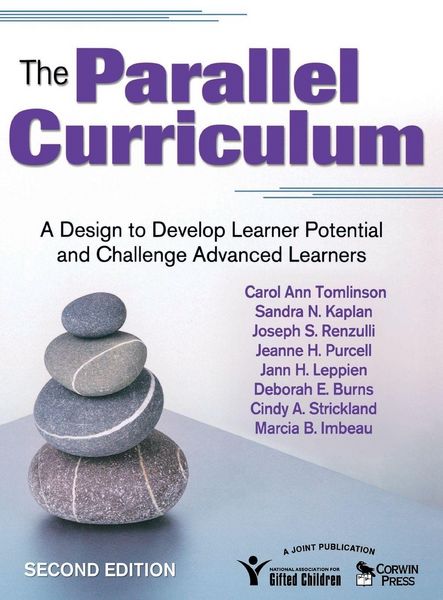
  • Produktbild: The Parallel Curriculum
  • Produktbild: The Parallel Curriculum

The Parallel Curriculum A Design to Develop Learner Potential and Challenge Advanced Learners

114,99 €

inkl. gesetzl. MwSt., Versandkostenfrei


Beschreibung

Produktdetails

Einband

Gebundene Ausgabe

Erscheinungsdatum

29.10.2008

Verlag

Sage Publications

Seitenzahl

336

Maße (L/B/H)

28,6/22,1/2,3 cm

Gewicht

1130 g

Auflage

2. Auflage

Sprache

Englisch

ISBN

978-1-4129-6130-1

Beschreibung

Produktdetails

Einband

Gebundene Ausgabe

Erscheinungsdatum

29.10.2008

Verlag

Sage Publications

Seitenzahl

336

Maße (L/B/H)

28,6/22,1/2,3 cm

Gewicht

1130 g

Auflage

2. Auflage

Sprache

Englisch

ISBN

978-1-4129-6130-1

Herstelleradresse

Libri GmbH
Europaallee 1
36244 Bad Hersfeld
DE

Email: gpsr@libri.de

Noch keine Bewertungen vorhanden

Verfassen Sie die erste Bewertung zu diesem Artikel

Helfen Sie anderen Kundinnen und Kunden durch Ihre Meinung.

Kundinnen und Kunden meinen

Bewertungen (0)

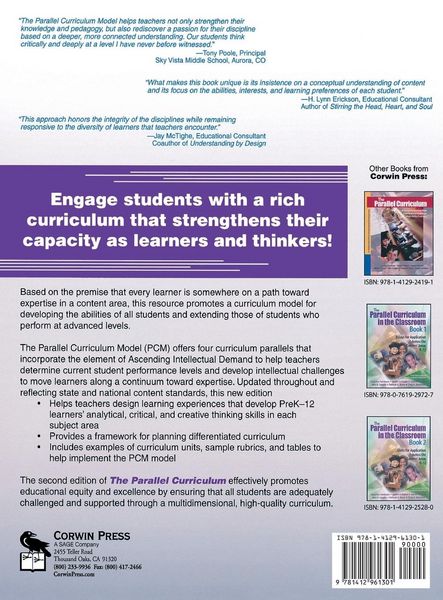
  • Produktbild: The Parallel Curriculum
  • Produktbild: The Parallel Curriculum
  • Preface to the Second Edition
    Acknowledgments
    About the Authors
    1. The Rationale and Guiding Principles for an Evolving Conception of Curriculum
    A Word to New Readers About This Chapter
    Reasons for Another Curriculum Model
    Theoretical and Research-Based Underpinnings of the Parallel Curriculum Model
    2. An Overview of the Parallel Curriculum Model
    A Look at the Four Curriculum Parallels
    The Core Curriculum
    The Curriculum of Connections
    The Curriculum of Practice
    The Curriculum of Identity
    Curriculum Combining the Four Parallels
    Planning Quality Curriculum
    Ensuring Fidelity to the Parallel Curriculum Model
    Looking Ahead in the Book
    3. Thinking About the Elements of Curriculum Design
    The Big Picture
    Planning Quality Curriculum
    Some Key Components of Curriculum Design
    Components of a Comprehensive Curriculum Plan
    Content/Standards
    Assessment
    Introductory Activities
    Teaching Methods
    Learning Activities
    Grouping Strategies
    Products
    Resources
    Extension Activities
    Differentiation Based on Learner Need (Including AID)
    Lesson and Unit Closure
    Remodeling a Unit Using the Comprehensive Curriculum Framework: One Teacher¿s Approach
    Looking Back and Ahead
    4. The Core Curriculum Parallel
    Why Four Approaches to Curriculum Design? Isn¿t One Good Enough?
    What Is "Core" in the Core Curriculum Parallel?
    How Are the Key Curriculum Components Reconfigured to Achieve the Goals of the Core Curriculum Parallel?
    Revising the Remaining Curriculum Components to Address the Goals of the Core Curriculum Parallel
    Using the Goals of the Core Curriculum Parallel and Key Curricular Elements for Lydia Janis¿s Civil War Unit
    Looking Back and Ahead
    5. The Curriculum of Connections Parallel
    What Is the Curriculum of Connections?
    The Purpose of a Curriculum of Connections: Why Should a Teacher Emphasize Connections and Relationships?
    The Curriclum of Connections: When Should I Use This Parallel?
    The Characteristics of the Curriculum Components Within the Curriculum of Connections
    Reconfiguring Other Curriculum Components for the Curriculum of Connections
    An Example of the Curriculum of Connections Using the Civil War Unit
    Looking Back and Ahead
    6. The Curriculum of Practice Parallel
    What Does It Mean to "Practice" in a Curriculum?
    Why Does It Matter to Have Students Engage in the Curriculum of Practice?
    Key Features of the Components of Curriculum in the Curriculum of Practice?
    An Example of the Curriculum of Practice Using Lydiäs Civil War Unit
    Looking Back and Ahead
    7. The Curriculum of Identity Parallel
    What Does Identity Mean in the Curriculum of Identity?
    Why Should We Be Concerned About a Student¿s Identity?
    What Are the Key Features and Characteristics of Curriculum Components Within the Curriculum of Identity?
    An Example of the Curriculum of Identity Using Lydiäs Civil War Unit
    Looking Back and Ahead
    8. Ascending Intellectual Demand in the Parallel Curriculum Model: The Journey Toward Expertise
    Ascending Intellectual Demand: The Path to Expertise
    Planning Backwards From Expertise
    Understanding the AID Continuum
    On the Continuum Novice
    On the Continuum Apprentice
    On the Continuum Practitioner
    On the Continuum Expert
    Transitions on the AID Continuum
    A Model for Planning Student Movement Along the AID Continuum
    The Novice in Science
    The Apprentice in Science
    The Practitioner in Science
    The Expert in Science
    Planning the Path Toward Expertise in Science
    The Novice in Mathematics
    The Apprentice in Mathematics
    The Practitioner in Mathematics
    The Expert in Mathematics
    The Novice in History
    The Apprentice in History
    The Practitioner in History
    The Expert in History
    The Novice in English and Language Arts
    The Apprentice in English and Language Arts
    The Practitioner in English and Language Arts
    The Expert in English and Language Arts
    Using the AID Continuum
    Resource A: Teaching Resources for Chapter 8
    References
    Index