• Produktbild: Basic Concepts in Family Therapy
  • Produktbild: Basic Concepts in Family Therapy

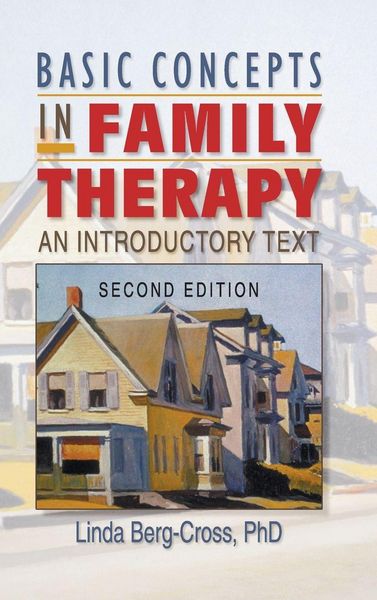
Basic Concepts in Family Therapy An Introductory Text, Second Edition

229,99 €

inkl. gesetzl. MwSt., Versandkostenfrei


Beschreibung

Produktdetails

Einband

Gebundene Ausgabe

Erscheinungsdatum

05.04.2000

Verlag

Taylor & Francis

Seitenzahl

643

Maße (L/B/H)

23,5/15,7/3,8 cm

Gewicht

1111 g

Sprache

Englisch

ISBN

978-0-7890-0646-2

Beschreibung

Produktdetails

Einband

Gebundene Ausgabe

Erscheinungsdatum

05.04.2000

Verlag

Taylor & Francis

Seitenzahl

643

Maße (L/B/H)

23,5/15,7/3,8 cm

Gewicht

1111 g

Sprache

Englisch

ISBN

978-0-7890-0646-2

Herstelleradresse

Libri GmbH
Europaallee 1
36244 Bad Hersfeld
DE

Email: gpsr@libri.de

Kundinnen und Kunden meinen

0 Bewertungen

Informationen zu Bewertungen

Zur Abgabe einer Bewertung ist eine Anmeldung im Konto notwendig. Die Authentizität der Bewertungen wird von uns nicht überprüft. Wir behalten uns vor, Bewertungstexte, die unseren Richtlinien widersprechen, entsprechend zu kürzen oder zu löschen.

Die Bewertungen sind nach Format, Anzahl Sterne und Datum sortiert.

Verfassen Sie die erste Bewertung zu diesem Artikel

Helfen Sie anderen Kund*innen durch Ihre Meinung

Kundinnen und Kunden meinen

0 Bewertungen filtern

Die Leseprobe wird geladen.
  • Produktbild: Basic Concepts in Family Therapy
  • Produktbild: Basic Concepts in Family Therapy
  • Contents * About the Author * Contributors * Preface * Acknowledgments * Introduction * Unit I: Getting Acquainted with The Family * Chapter 1. Exploring the Family Structure * What Is a Family? * The Family Life Cycles * Techniques for Focusing on the Family * Self-Exploration: Discovering Your Family Life Space * Self-Exploration: Using the Jack * Unit II: Family Concepts-A Systems Perspective * Chapter 2. Individuation * Parents' Socioemotional Investment in Children: Precursors to Successful Individuation and Separation * Theories of Individuation * Generational Boundaries, Closeness, and Role Behaviors * Individuation As a Lifelong Process * Self-Expoloration: Individuation * Chapter 3. Separation * Infancy and Early Childhood * Middle Childhood and Early Adolescence * Late Adolescence and Leaving Home * Divorce and Joint Custody * Parental Death and a Child's Grief * Self-Exploration: Separations * Chapter 4. Cutoffs * The Concept of Cutting Off * The Painful Process of Cutting Off * Reconstructing the Relationship * Developmental Timing * When Are Cutoffs Beneficial? * Self-Exploration: Family Cutoffs * Chapter 5. Triangles * Vulnerability and Self-Protection * The Universal Triangle: Father/Mother/Child * Dysfunctional Triangles * Triangles and Family Types * Recent Research on Triangular Effects * Self-Exploration: Family Triangles * Chapter 6. Rituals * Types of Rituals * Positive Aspects of the Ritual * How Family Rituals Evolve and Develop * Altering Rituals and Establishing New Ones * Rituals and the Family Life Cycle * Self-Exploration: Family Rituals * Chapter 7. Secrets * Kinds of Family Secrets * Adaptive versus Maladaptive Secrets * Self-Exploration: Family Secrets * Chapter 8. Multigenerational Effects * Patterns of Multigenerational Transmission * The Family Legacy * Family Myths * Appreciating One's Multigenerational Heritage * Self-Exploration: Multigenerational Effects * Chapter 9. Networks and Ecosystems * Networks and In-Laws * Networks and Childhood Resiliency * Zones of Intimacy * The Importance of Networks * Networks and Elderly People * Networks and Black Americans * Using--and Not Using--Networks * Self-Exploration: Networking * Unit III: Family Concepts-Ecological Stressors * Chapter 10. Family Resiliency and Poverty * Poverty-Associated Risks * The Resilience Model * Multifamily Groups * Professional Consultation and Training * Self-Exploration: Family Resiliency and Poverty * Chapter 11. Chronic Illness in Children: Stressors and Family Coping Strategies * Prevalence and Nature of Psychological Disorders * The Bad News About Prevalence * The Good News About Prevalence * A Family Systems Framework for Understanding Chronic Illness * Illness Demands * Family System Resources and Family System Dynamics * Clinical Assessment of Family Meanings: The Meaning of Illness Evolves * A Treatment Model for Medical Family Therapy: Strategies for Chronic Illness * A Medical Family Therapy Toolbox * Self-Exploration: Chronic Illness * Chapter 12. Adoption and Infertility * Types of Adoption * Normative Processes and Developmental Issues of Adoptive Families * Transracial Adoptions * Conclusion * Self-Exploration: Are We Ready to Adopt a Child? * Unit IV: Family Concepts-A Cognitive Perspective * Chapter 13. Communication Styles * Individual Communication Styles * Spousal Communication * Communicating Intimately * Parental Communication * The "Ka" Solution: New Terms for Stepfamilies and the New Times * Self-Exploration: Family Types * Self-Exploration: Parenting Style * Self-Exploration: Intimacy * Chapter 14. Problem Solving * Strategies for Reducing Conflict * Hostility and In