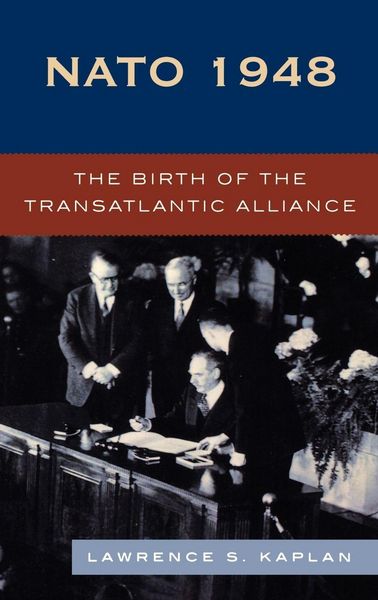
NATO 1948 The Birth of the Transatlantic Alliance
-
- Hardcover ausgewählt
- Taschenbuch
- eBook
-
Sprache:Englisch
173,99 €
inkl. gesetzl. MwSt.,
Beschreibung
Produktdetails
Einband
Gebundene Ausgabe
Erscheinungsdatum
21.06.2007
Verlag
Rowman & LittlefieldSeitenzahl
286
Maße (L/B/H)
24/16,1/2 cm
Gewicht
596 g
Sprache
Englisch
ISBN
978-0-7425-3916-7
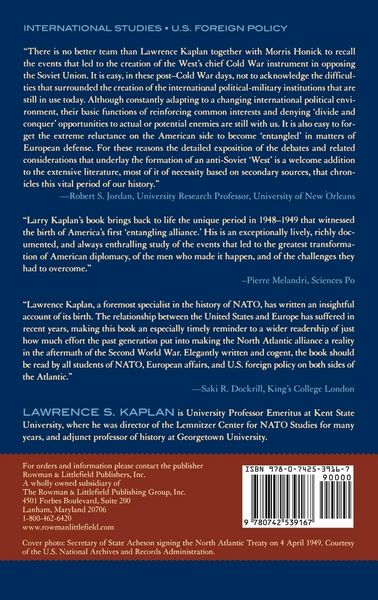
This compelling history brings to life the watershed year of 1948, when the United States reversed its long-standing position of political and military isolation from Europe and agreed to an "entangling alliance" with ten European nations. Not since 1800, when the United States ended its alliance with France, had the nation made such a commitment. The historic North Atlantic Treaty was signed on April 4, 1949, but the often-contentious negotiations stretched throughout the preceding year. Lawrence S. Kaplan, the leading historian of NATO, traces the tortuous and dramatic process, which struggled to reconcile the conflicting concerns on the part of the future partners. Although the allies could agree on the need to cope with the threat of Soviet-led Communism and on the vital importance of an American association with a unified Europe, they differed over the means of achieving these ends. The United States had to contend with domestic isolationist suspicions of Old World intentions, the military's worries about over extension of the nation's resources, and the apparent incompatibility of the projected treaty with the UN charter. For their part, Europeans had to be convinced that American demands to abandon their traditions would provide the sense of security that economic and political recovery from World War II required. Kaplan brings to life the colorful diplomats and politicians arrayed on both sides of the debate. The end result was a remarkably durable treaty and alliance that has linked the fortunes of America and Europe for over fifty years. Despite differences that have persisted and occasionally flared over the past fifty years, NATO continues to bind America and Europe in the twenty-first century. Kaplan's detailed and lively account draws on a wealth of primary sources-newspapers, memoirs, and diplomatic documents-to illuminate how the United States came to assume international obligations it had scrupulously avoided for the previous 150 years.
Noch keine Bewertungen vorhanden
Verfassen Sie die erste Bewertung zu diesem Artikel
Helfen Sie anderen Kundinnen und Kunden durch Ihre Meinung.
Kurze Frage zu unserer Seite
Vielen Dank für Ihr Feedback
Wir nutzen Ihr Feedback, um unsere Produktseiten zu verbessern. Bitte haben Sie Verständnis, dass wir Ihnen keine Rückmeldung geben können. Falls Sie Kontakt mit uns aufnehmen möchten, können Sie sich aber gerne an unseren Kund*innenservice wenden.
zum Kundenservice