Gutscheinbedingungen

**Gültig am 28.06.2026 auf Spielzeug, Schreibwaren, Filme, Geschenke & Trends, Musik, tolino eReader & Zubehör, Hörbücher und Hörbuch-Downloads (außer Abo), nicht preisgebundene Bücher und Kalender online auf thalia.at und in der Thalia App. Einzelne Artikel können ausgeschlossen sein. Aufgrund der Buchpreisbindung sind deutschsprachige Bücher und eBooks ausgenommen. Zusätzlich ausgenommen sind preisgebundene Artikel, Abos & Flatrates, eBooks, Games, Geschenkkarten/-boxen, Shelfies, Software, Zeitschriften sowie einzelne Artikel von tonies®. Pro Einkauf einmal einlösbar. Click & Collect nur bei Onlinevorabzahlung möglich. Keine Barauszahlung. Nicht kombinierbar mit anderen Aktionen und Gutscheinen. Gutschein wird auf max. 500€ Bestellwert angerechnet. Nicht gültig für Versandkosten und Services.

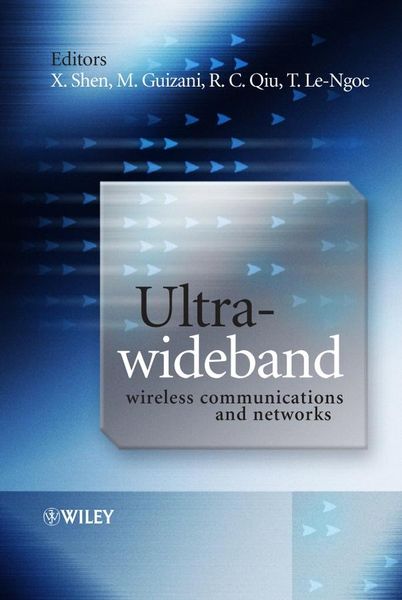
Produktbild: Ultra-Wideband Wireless Communications and Networks

Ultra-Wideband Wireless Communications and Networks

174,99 €

inkl. gesetzl. MwSt., Versandkostenfrei


Beschreibung

Produktdetails

Einband

Gebundene Ausgabe

Erscheinungsdatum

01.04.2006

Herausgeber

Xuemin Shen + weitere

Verlag

John Wiley & Sons

Seitenzahl

320

Maße (L/B/H)

25,1/17,4/2,5 cm

Gewicht

767 g

Sprache

Englisch

ISBN

978-0-470-01144-7

Beschreibung

Produktdetails

Einband

Gebundene Ausgabe

Erscheinungsdatum

01.04.2006

Herausgeber

Verlag

John Wiley & Sons

Seitenzahl

320

Maße (L/B/H)

25,1/17,4/2,5 cm

Gewicht

767 g

Sprache

Englisch

ISBN

978-0-470-01144-7

Herstelleradresse

Produktsicherheitsverantwortliche/r
Europaallee 1
36244 Bad Hersfeld
DE

Email: gpsr@libri.de

Kundinnen und Kunden meinen

0 Bewertungen

Informationen zu Bewertungen

Zur Abgabe einer Bewertung ist eine Anmeldung im Konto notwendig. Die Authentizität der Bewertungen wird von uns nicht überprüft. Wir behalten uns vor, Bewertungstexte, die unseren Richtlinien widersprechen, entsprechend zu kürzen oder zu löschen.

Die Bewertungen sind nach Format, Anzahl Sterne und Datum sortiert.

Verfassen Sie die erste Bewertung zu diesem Artikel

Helfen Sie anderen Kund*innen durch Ihre Meinung

Kundinnen und Kunden meinen

0 Bewertungen filtern

  • Produktbild: Ultra-Wideband Wireless Communications and Networks
  • List of Contributors xi

    Preface xiii

    1 Introduction 1
    Robert Caiming Qiu, Xuemin (Sherman) Shen, Mohsen Guizani and Tho Le-Ngoc

    1.1 Fundamentals 1

    1.1.1 Overview of UWB 1

    1.1.2 History 2

    1.1.3 Regulatory 2

    1.1.4 Applications 2

    1.1.5 Pulse- or Multicarrier-Based UWB 3

    1.2 Issues Unique to UWB 4

    1.2.1 Antennas 4

    1.2.2 Propagation and Channel Model 4

    1.2.3 Modulations 5

    1.2.4 A/D Sampling 6

    1.2.5 Timing Acquisition 7

    1.2.6 Receiver Structures 7

    1.2.7 Multiple Access 8

    1.3 Emerging Technologies 8

    1.3.1 Low-Complexity Noncoherent Receivers 8

    1.3.2 Location-Based Sensor Networks 9

    1.3.3 Time Reversal 9

    1.3.4 MAC 10

    1.3.5 Future Directions 12

    References 13

    2 Modulation and Signal Detection in UWB 15
    Uzoma A. Onunkwo and Ye (Geoffrey) Li

    2.1 Overview 15

    2.1.1 Evolution and Definition 15

    2.1.2 Major Differences from Narrowband and CDMA Systems 16

    2.1.3 Types of UWB Modulation 16

    2.1.4 UWB Applications 16

    2.2 Single-Carrier-Based Modulation 17

    2.2.1 Time-Hopping PPM 17

    2.2.2 Other Types of Modulations 21

    2.2.3 Channel Estimation 23

    2.2.4 Signal Detection 27

    2.3 OFDM-Based Modulation 29

    2.3.1 Basic OFDM for UWB 29

    2.3.2 Channel Estimation 30

    2.3.3 Interference Suppression 31

    2.4 Conclusion and Further Reading 34

    References 34

    3 UWB Pulse Propagation and Detection 37
    Robert Caiming Qiu

    3.1 Introduction 37

    3.2 UWB Pulse Propagation 37

    3.2.1 Generalized Multipath Model 37

    3.2.2 IEEE 802.15.4a Channel Model 39

    3.3 UWB Pulse Signal Detection 39

    3.3.1 Optimum Receiver 39

    3.3.2 Generalized RAKE Receiver 41

    3.3.3 Optimum Receiver with Intersymbol Interference 44

    3.3.4 Receiver with Time-Reversal Channel Impulse Response 47

    3.3.5 Optimum Receiver with Multiuser Detection 48

    References 51

    4 Timing Synchronization for UWB Impulse Radios 53
    Zhi Tian and Georgios B. Giannakis

    4.1 Introduction 53

    4.2 Signal Model 55

    4.3 Signal Detection and Symbol-Level Acquisition 57

    4.3.1 Analog Energy Detectors 57

    4.3.2 Discrete-Time Energy Detectors 57

    4.4 SAT and MAT: Templates with and without Timing 59

    4.5 Coarse Synchronization Using Symbol-Rate Samples 60

    4.5.1 Discrete-Time Correlator Output Model under Mistiming 61

    4.5.2 CML Timing Synchronization 62

    4.5.3 Analytic and Simulated Performance 62

    4.6 Synchronization with Flexible Timing Resolution 64

    4.6.1 Timing-Offset Search via Sample Mean Square 64

    4.6.2 Timing-Offset Search via Cross-Correlation Mean Square 66

    4.6.3 Comparative Study and Implementation Aspects 68

    4.7 Timing Acquisition for Ad Hoc Multiple Access 70

    4.7.1 Training-Based Multiuser TOE 70

    4.7.2 Blind Synchronization for Multiuser Ad Hoc Access 71

    4.7.3 TOE Performance Analysis 75

    4.8 Demodulation and BER Sensitivity to Mistiming 76

    4.9 Concluding Summary 78

    References 79

    5 Error Performance of Pulsed Ultra-wideband Systems in Indoor Environments 83
    Huaping Liu

    5.1 Introduction 83

    5.2 System Model 85

    5.3 Error Performance in Indoor Environments 89

    5.3.1 Pulse Amplitude Modulation and Pulse Position Modulation 90

    5.3.2 Receiver with Self-Derived Template Waveforms 92

    5.3.3 System with Multiple Antennas 95

    References 101

    6 Mixed-Signal Ultra-wideband Communications Receivers 103
    Sebastian Hoyos and Brian M. Sadler

    6.1 Introduction 103

    6.2 Analog-to-Digital Conversion via Signal Expansion 105

    6.3 Mixed-Signal Communication Receivers Based on A/D Conversion via Signal Expansion 107

    6.3.1 Transmitted Signal and Channel Model 107

    6.3.2 Digital Linear Receivers Based on ADC via Signal Expansion 107

    6.4 Analog-to-Digital Conversion in the Frequency Domain 109

    6.5 Frequency-Domain Mixed-Signal Receivers 111

    6.5.1 Multicarrier Communication Systems Based on A/D Conversion in the Frequency Domain 111

    6.5.2 Relationship to the Fourier Series Coefficients 117

    6.5.3 Mixed-Signal Transmitted-Reference Receiver 118

    6.6 Conclusions 124

    References 125

    7 Trends in Ultra-wideband Transceiver Design 127
    Zhengyuan Xu

    7.1 Introduction 127

    7.2 Status of UWB Transceiver Design 128

    7.3 Digital UWB Receivers 130

    7.3.1 PPM-Based TH-UWB System Model 131

    7.3.2 Channel Estimation Techniques 132

    7.3.3 Design of Linear Receivers 133

    7.3.4 Some Thoughts about Complexity Reduction 134

    7.3.5 Finite Resolution Digital Receivers 135

    7.4 Analog/Digital UWB Transceivers 136

    7.4.1 Near Full-Rate TR Transceivers 136

    7.4.2 Full-Rate TR Transceivers 144

    7.5 Conclusions 149

    Acknowledgments 149

    References 149

    8 UWB MAC and Ad Hoc Networks 155
    Zihua Guo and Richard Yao

    8.1 Introduction 155

    8.1.1 Overview of IEEE 802.15.3 MAC 155

    8.1.2 Overview of MBOA MAC 157

    8.2 QoS Scheduling in PNC 158

    8.2.1 Problem Definition 159

    8.2.2 Deadline-Aware Scheduling Algorithm 160

    8.2.3 Calculation of the Reserved CTA 161

    8.2.4 Simulation Results 161

    8.3 Power Management in IEEE 802.15.3 163

    8.3.1 Problem Definition 164

    8.3.2 Proposed Approach 165

    8.3.3 Simulation Results 167

    8.4 Adaptive Dly-ACK 168

    8.4.1 Problem Definition 170

    8.4.2 Adaptive Dly-ACK 172

    8.4.3 Simulation Results 177

    8.5 Ad Hoc Networks 183

    8.5.1 Child Piconet 183

    8.5.2 Independent Piconets 184

    8.6 Summary 187

    References 187

    9 Radio Resource Management for Ultra-wideband Communications 189
    Xuemin (Sherman) Shen, Weihua Zhuang, Hai Jiang and Jun Cai

    9.1 Introduction 189

    9.2 Radio Resource Management 191

    9.2.1 Pulse-Based UWB Physical Layer Characteristics 191

    9.2.2 Challenges and Opportunities 192

    9.3 Multiple Access 193

    9.3.1 Exclusive versus Concurrent Transmissions 193

    9.3.2 Code Assignment 194

    9.3.3 Interference Mitigation in TH-UWB 196

    9.4 Overhead Reduction 197

    9.4.1 ACK Mechanisms 198

    9.4.2 Long Acquisition Time 199

    9.5 Power/Rate Allocation 200

    9.5.1 Power Allocation 200

    9.5.2 Rate Guarantee 202

    9.5.3 Rate Control 203

    9.5.4 Cross-Layer Design 205

    9.6 Conclusions 206

    References 207

    10 Pulsed UWB Interference to Narrowband Receivers 211
    Jay E. Padgett

    10.1 Introduction 211

    10.2 Pulsed UWB Signal Model 212

    10.3 Narrowband Receiver Model 216

    10.4 Equivalent Receiver Model and Response to a Pulse 218

    10.5 Response to a Pulse Sequence 220

    10.6 Simulating the Response to a Pulse Sequence 223

    10.6.1 I/Q Component Formulation 223

    10.6.2 Simulation Parameters 224

    10.6.3 Normalization 224

    10.6.4 Example Filter Response: The n-Pole Filter 225

    10.7 General Properties of the IF Output 227

    10.7.1 Case 1: Pulse Rate Less than IF Bandwidth 227

    10.7.2 Case 2: Pulse Rate Greater than IF Bandwidth 228

    10.8 Power Spectral Density 230

    10.9 Discrete PDF PSD Example: Equally Spaced, Equally Likely Time Offsets 233

    10.10 Continuous PDF PSD Examples 239

    10.10.1 The Poisson Process 239

    10.10.2 Continuous PDF Uniform Random Pulse Position 240

    10.11 Comparison of PSD and Simulation Results 242

    10.12 Statistical Properties of the Output Envelope 247

    10.13 Summary 249

    References 250

    11 Digital-Carrier Spreading Codes for Baseband UWB Multiaccess 251
    Liuqing Yang and Georgios B. Giannakis

    11.1 Introduction 251

    11.2 Digital-Carrier Multiband User Codes 252

    11.2.1 Baseband Single-Carrier UWB 252

    11.2.2 Baseband Multicarrier UWB 254

    11.3 Low Duty-Cycle Access in the Presence of NBI 255

    11.3.1 General Rake Reception Model 255

    11.3.2 SINR Analysis 259

    11.3.3 Simulations and Numerical Results 260

    11.4 Improved Rate Access in the Presence of Multipath 263

    11.4.1 Rake Reception Model with IFI 263

    11.4.2 Performance Comparisons 266

    11.4.3 Simulated Examples 271

    11.5 Multiuser Interference Mitigation 273

    11.6 Summary 276

    References 276

    12 Localization 279
    Kegen Yu, Harri Saarnisaari, Jean-Philippe Montillet, Alberto Rabbachin, Ian Oppermann and Giuseppe Thadeu Freitas de Abreu

    12.1 Introduction 279

    12.2 Time-of-Arrival Estimation 279

    12.2.1 Estimation Accuracy 280

    12.2.2 Energy-Collection-Based TOA Estimation 281

    12.2.3 Two-Stage TOA Estimation 282

    12.2.4 Simulation Results 286

    12.3 Location and Tracking 286

    12.3.1 Position Estimation 287

    12.3.2 Tracking 292

    12.3.3 Simulation Results 292

    12.4 Location in Distributed Architectures 294

    12.4.1 Overview 294

    12.4.2 Proposed Algorithm 295

    12.4.3 Simulation Results 296

    12.5 Theoretical Positioning Accuracy 297

    12.5.1 Analysis Tool 298

    12.5.2 Hyperbolic Location Accuracy 299

    12.6 Conclusions 301

    Acknowledgment 301

    References 301

    Index 305