Beschreibung
Produktdetails
Einband
Taschenbuch
Erscheinungsdatum
08.04.2004
Herausgeber
Geoffrey Brennan + weitereVerlag
Cambridge AcademicSeitenzahl
256
Maße (L/B/H)
24,6/18,9/1,4 cm
Gewicht
460 g
Sprache
Englisch
ISBN
978-0-521-55631-6
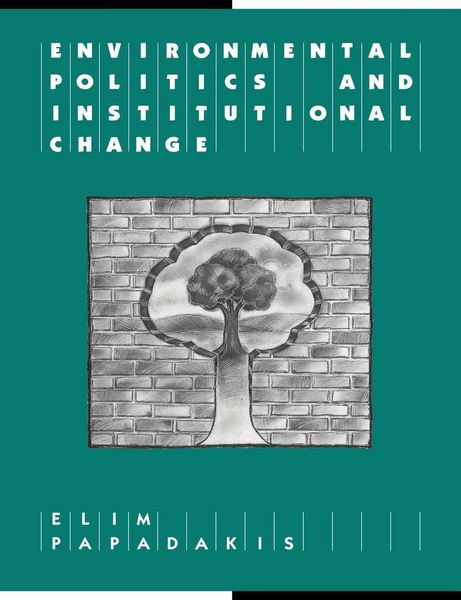
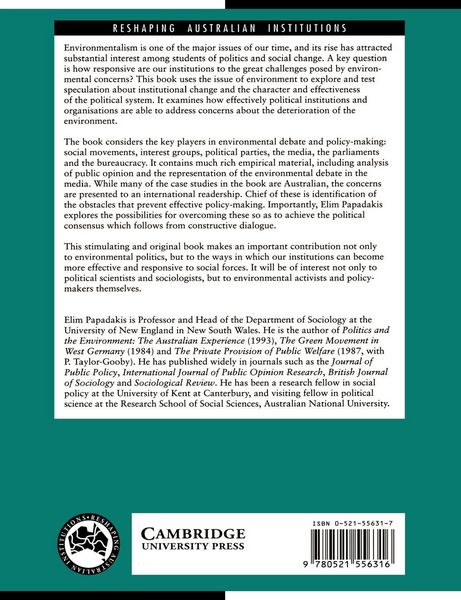
Environmentalism is one of the major issues of our time. A key question is how responsive are Australian institutions to the challenges posed by environmental issues? This book focuses on how effectively political institutions and organisations are able to address concerns about the deterioration of the environment. The book considers the key players in environmental debate and policy-making: social movements, interest groups, political parties, the media, the parliaments and the bureaucracy. It contains much rich empirical material. This stimulating and original book makes an important contribution not only to environmental politics, but to the ways in which institutions can become more effective and responsive to social forces. It will be of interest not only to political scientists and sociologists, but to environmental activists and policy-makers themselves.
Noch keine Bewertungen vorhanden
Verfassen Sie die erste Bewertung zu diesem Artikel
Helfen Sie anderen Kundinnen und Kunden durch Ihre Meinung.
Kurze Frage zu unserer Seite
Vielen Dank für Ihr Feedback
Wir nutzen Ihr Feedback, um unsere Produktseiten zu verbessern. Bitte haben Sie Verständnis, dass wir Ihnen keine Rückmeldung geben können. Falls Sie Kontakt mit uns aufnehmen möchten, können Sie sich aber gerne an unseren Kund*innenservice wenden.
zum Kundenservice