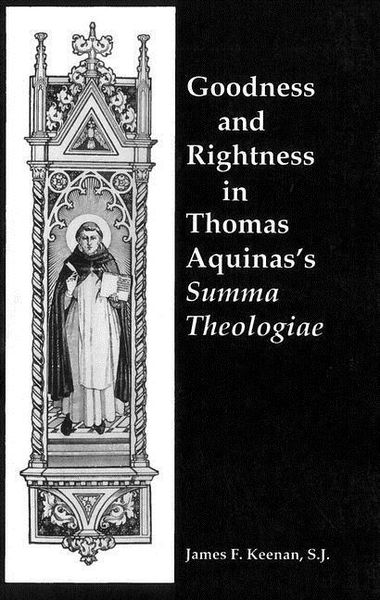
Goodness and Rightness in Thomas Aquinas's Summa Theologiae
-
- Englisch ausgewählt
69,99 €
inkl. gesetzl. MwSt.,
Beschreibung
Produktdetails
Einband
Taschenbuch
Erscheinungsdatum
01.11.1992
Verlag
University PressesSeitenzahl
224
Maße (L/B/H)
22,9/15,4/1,5 cm
Gewicht
381 g
Sprache
Englisch
ISBN
978-0-87840-530-5
This appraisal of two of the most fundamental terms in the moral language of Thomas Aquinas draws on the contemporary moral distinction between the goodness of a person and the rightness of a person's living. Keenan thus finds that Aquinas's earlier writings do not permit the possibility of such a distinction. But in his mature works, specifically the Summa Theologiae, Thomas describes the human act of moral intentionality, and even the virtues in a way analogous to our use of the term moral rightness. To Thomas, only the virtue of charity expresses moral goodness. And, although Thomas describes vices and sin as wrong conduct, he never really develops a description for moral badness.Keenan compels us to carefully examine Thomas's central moral concepts and to measure them against contemporary standards for meaning and correctness. As a result, any student of Thomas will find here a forceful argument that his notion of the good is considerably different from ours. Similarly, ethicists and moral theologians will find in the Thomas presented here a consistent-virtue ethicist concerned with descriptions for right living. Any student of theology will also find here a Thomas whose critical and concrete thinking enabled him to develop and even abandon earlier positions as his comprehension of the Good evolved.
This analysis prompts a re-examination of our own concepts. Measuring Thomas's standards against our own, Keenan obliges us to ask whether we sufficiently understand rightness and moral intentionality. He also asks whether we correctly describe what it means to will or to desire something. He further questions whether we have surrendered our understanding of the virtues to the voluntarism and subjectivism which Thomas relentlessly critiqued. This historically sophisticated reading of the Summa Thologiae both allows Thomas to speak again as he once did, and affords us the chance to evaluate the way we describe ourselves and one another as being good and living rightly.
Noch keine Bewertungen vorhanden
Verfassen Sie die erste Bewertung zu diesem Artikel
Helfen Sie anderen Kundinnen und Kunden durch Ihre Meinung.
Kurze Frage zu unserer Seite
Vielen Dank für Ihr Feedback
Wir nutzen Ihr Feedback, um unsere Produktseiten zu verbessern. Bitte haben Sie Verständnis, dass wir Ihnen keine Rückmeldung geben können. Falls Sie Kontakt mit uns aufnehmen möchten, können Sie sich aber gerne an unseren Kund*innenservice wenden.
zum Kundenservice