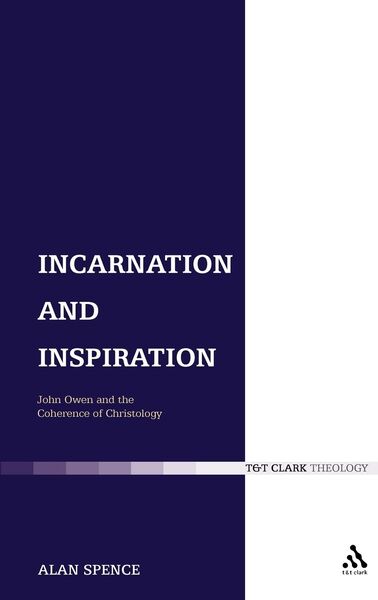
Incarnation and Inspiration John Owen and the Coherence of Christology
279,99 €
inkl. gesetzl. MwSt.,
Beschreibung
Produktdetails
Einband
Gebundene Ausgabe
Erscheinungsdatum
15.04.2007
Verlag
Continnuum-3plSeitenzahl
182
Maße (L/B/H)
24/16,1/1,5 cm
Gewicht
393 g
Sprache
Englisch
ISBN
978-0-567-04537-9
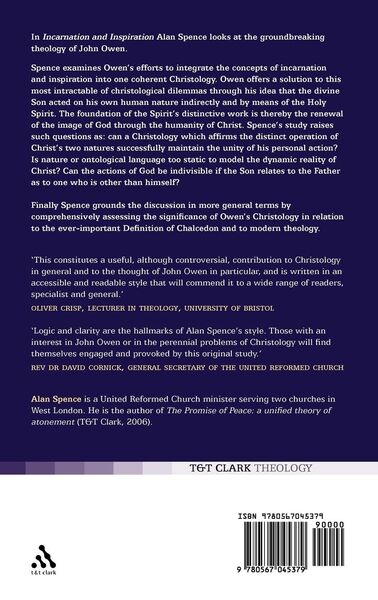
Through engagement with the historical debate Incarnation and Inspiration offers a systematic exposition of the person of Jesus that brings together dissonant aspects of the tradition. It serves as an introduction to the theology to John Owen, the most able of the Puritan theologians and provides a way of understanding the theological dynamic underlying the Christology of the Fathers and the Definition of Chalcedon. Through its emphasis on coherence it seeks to illuminate the inner rationality of God's triune being and his mission among us through the Son and Spirit. Incarnation and inspiration are concepts which can be used to characterize two quite different ways of thinking about Christ.
Although the history of doctrine suggests they are mutually exclusive, John Owen's theology effectively integrates them in one coherent Christology. The underlying structure of his exposition is that of incarnation, whereby the Son willingly assumed human nature into personal subsistence with himself. But his distinctive idea was that the divine Son acted on his own human nature indirectly and by means of the Holy Spirit. The foundation of the Spirit's distinctive work was the renewal of the image of God in the humanity of Christ, which the Spirit formed, sanctified, empowered, comforted and glorified. Owen thus affirmed an inspirational Christology within the framework of an Alexandrian interpretation of the incarnation. The coherence of this account is tested with respect to four areas of concern.
Firstly, can a Christology which affirms the distinct operation of Christ's two natures successfully maintain the unity of his personal action? Secondly, is nature or ontological language too static to model the dynamic reality of Christ? Thirdly, is Owen justified in arguing that, other than in its assumption, the divine Son acts on his own human nature only indirectly and by means of the Spirit? Fourthly, does Owen's interpretation of the distinct action of the Trinitarian persons undermine the doctrine of the indivisibility of their external operations? Finally the significance of Owen's Christology is considered in relation to the Definition of Chalcedon and to modern theology.
Noch keine Bewertungen vorhanden
Verfassen Sie die erste Bewertung zu diesem Artikel
Helfen Sie anderen Kundinnen und Kunden durch Ihre Meinung.
Kurze Frage zu unserer Seite
Vielen Dank für Ihr Feedback
Wir nutzen Ihr Feedback, um unsere Produktseiten zu verbessern. Bitte haben Sie Verständnis, dass wir Ihnen keine Rückmeldung geben können. Falls Sie Kontakt mit uns aufnehmen möchten, können Sie sich aber gerne an unseren Kund*innenservice wenden.
zum Kundenservice